If you are an art collector and want to know what is an oleograph painting and its history, you have landed on the right page. In this article, we will explain everything about what is oleograph and its rich heritage.
Walk into any high-end estate, vintage gallery, or heritage home, and your eyes will inevitably land on an artwork boasting an ethereal, glowing texture. Upon closer inspection, you might mistake it for an original 19th-century canvas. What you are actually looking at is a rare, preserved slice of history: a true lithographic oleograph. But what exactly defines this complex antique craft, and why is the modern collector community paying premium prices to hunt down surviving pieces? Let’s unlock the secrets of this majestic medium.
What Is an Oleograph?
An oleograph is a highly specialized, multi-layered color print specifically engineered to replicate an oil painting with astonishing precision. Developed during the industrial age, it was the world’s first successful technology capable of rendering the fine nuances, heavy brushstrokes, and brilliant color saturation of fine canvas art at scale. Far from being a simple ink copy, it is a structural reproduction that tricks the human eye into perceiving authentic artistic relief and physical depth.
Oleograph Meaning
Etymologically, the term "oleograph" combines the Latin word oleum (meaning oil) with the Greek suffix graph (meaning to write or draw). Literally translated as an "oil-drawing," the name perfectly encapsulates the physical identity of the medium. Unlike standard prints that utilize flat, water-based dyes, an authentic oleograph is built utilizing thick, oil-based inks applied directly onto textured materials. This process mimics the light-reflective qualities that give oil-on-canvas works their signature glowing depth.
History of Oleographs
The historical trajectory of the oleograph represents a revolutionary bridge between fine art and mass printing. Pioneered in the 1830s by German inventor Alois Senefelder and refined by European master printers throughout the 1860s, oleography exploded across the globe as a commercial marvel.
Before its advent, fine art was strictly gatekept by royalty, religious institutions, and the ultra-wealthy. Oleographs completely broke down these institutional walls, allowing middle-class households to replace bare walls with grand, narrative depictions of classical history, romantic landscapes, and sacred mythology. By the early 1900s, it had become the premier global method for distributing cultural imagery.
How Oleographs Are Made
The manufacturing of an antique oleograph was a brutal exercise in manual chemistry and artistic endurance, requiring up to several months to complete a single edition. The foundational process relied on the chemical principle that oil and water naturally repel each other:
-
Stone Separation: A master lithographer carefully analyzed the original oil painting and broke down its entire color spectrum. For every single individual color or shade used, a unique, massive slab of porous Bavarian limestone had to be carved by hand.
-
Chemical Treatment: The desired image pattern was drawn onto the stone with greasy crayons. The stone was then treated with acid and water. When oil-based ink was rolled across the slab, it stuck only to the greasy, drawn lines, while the wet areas completely repelled it.
-
Multi-Stage Pressing: A single sheet of heavy paper was pressed sequentially against these distinct stones—often requiring anywhere from 15 to over 30 separate ink alignments to compile the final image.
-
The Canvas Canvas Mimicry: Finally, the smooth print was laid face down onto an intricately carved metal plate embossed with canvas-like grains or brushstroke grooves. Under immense pressure, this texture was permanently stamped into the paper fibers, completing the illusion of an original oil painting.
Oleograph vs Lithograph
While the terms are frequently used interchangeably by casual collectors, there is a distinct structural dividing line between them. A lithograph is a broad, overarching category that covers any print pulled from a stone or metal surface—including simple black-and-white newspaper illustrations, line art, or dual-tone political posters.
An oleograph, on the other hand, is a premium sub-genre of chromolithography (color lithography). It specifically mandates the exclusive use of heavy, oil-based pigments layered in precise density, followed by physical canvas embossing to accurately mirror a painting rather than a sketch.
Oleograph vs Print
Comparing a vintage oleograph to a modern commercial print is like comparing a handcrafted luxury watch to a digital screen. Modern prints use inkjets to spray tiny, flat dots of liquid dye across smooth paper, resulting in a flat image that degrades quickly under sunlight.
An oleograph features rich, raised layers of physical, historical oil pigment that catch the ambient room lighting across real embossed ridges. It feels heavy, possesses organic textures, and carries a distinct, warm vintage soul that digital printers simply cannot recreate.
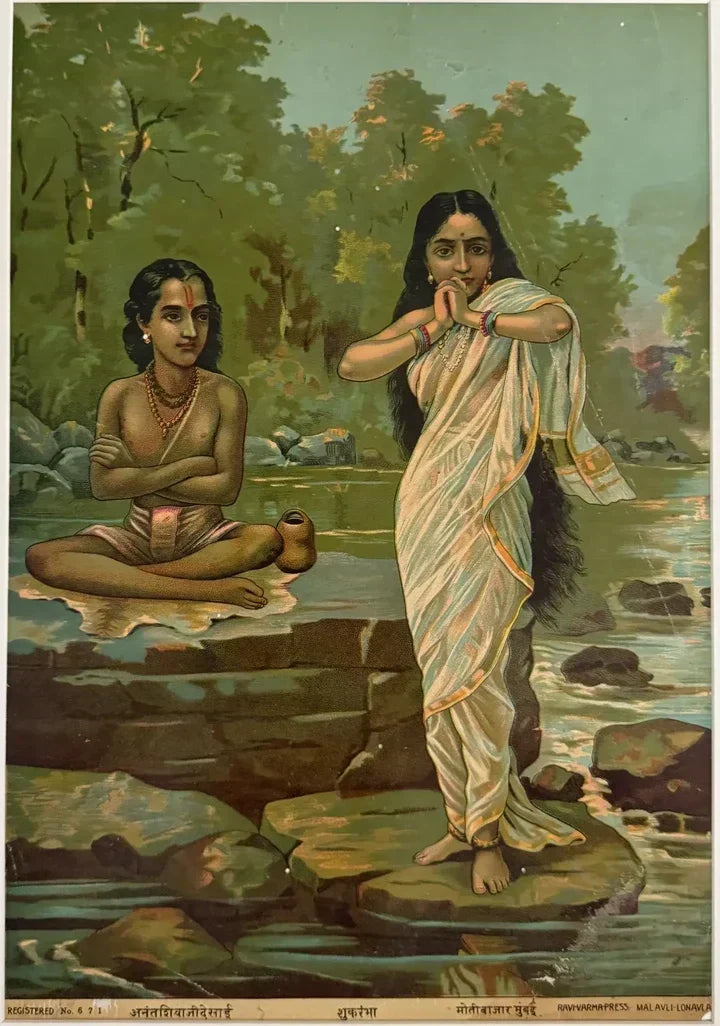
Raja Ravi Varma Oleographs
In the context of the Indian subcontinent, oleography represents the single most significant artistic revolution in history, orchestrated entirely by the legendary painter Raja Ravi Varma. In 1894, he established the historic Ravi Varma Fine Art Lithographic Press near Mumbai to realize a profound vision: bringing the divine imagery of Indian deities out of royal palace vaults and straight into ordinary homes.
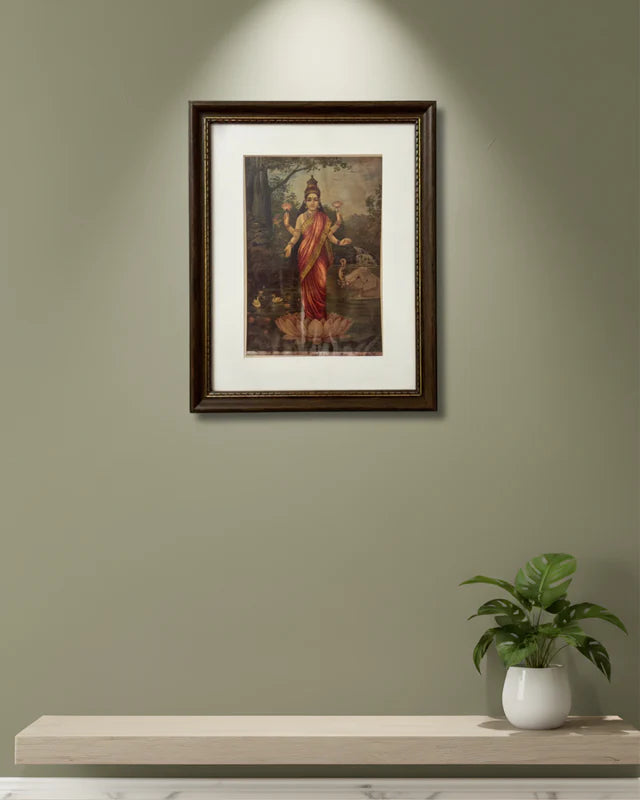
By rendering sacred figures from the Ramayana and Mahabharata in a naturalistic, lifelike European oil style, his prints forever transformed how generations visualize Indian mythology. Masterworks like Ganga Avataran and powerful iconographic representations of Goddess Laxmi and Durga became sacred focal points in Indian households, fundamentally redefining the nation's spiritual and aesthetic fabric.
How to Identify an Original Oleograph
With market demand soaring, identifying a true turn-of-the-century pressing requires looking for specific, non-replicable manufacturing marks. Authentic vintage oleographs exhibit the following physical characteristics:
Frequently Asked Questions (FAQs)
What is an oleograph?
An oleograph is a highly detailed, multi-color chromolithographic print specifically designed to look exactly like an original oil painting. Produced by printing with multiple stone plates using oil-based inks, these prints feature physical canvas textures and deep pigments that give them a striking, lifelike depth.
What is an oleograph painting?
An oleograph painting is a commercial-age art print created using oil-based pigments sequentially layered from Bavarian limestone plates onto thick paper or canvas. To complete the illusion of an original oil painting, the smooth paper is mechanically stamped with iron plates to emboss genuine brushstroke textures and canvas grains onto the print surface.
What does oleograph mean?
The term oleograph literally translates to "oil-drawing" or "oil-writing." It is derived from the Latin word oleum (meaning oil) and the Greek word graph (meaning to draw). It refers to the physical nature of the print, which uses heavy, oil-based inks instead of flat, water-based dyes.
Are oleographs valuable?
Yes, authentic antique early 1900s oleographs are highly valuable and appreciate over time as rare cultural collectibles. Since the original lithographic stones were destroyed or worn smooth over a century ago, the global supply is permanently fixed. Their value is determined by their structural preservation, original margins, and the rarity of the subject.
How can you identify an original oleograph?
An original vintage oleograph can be identified by checking for three key features: the complete absence of digital halftone printer dots under a 10x magnifying loupe, the presence of genuine paper aging (such as natural foxing or brown spots), and a distinct physical canvas grain or brushstroke texture stamped directly into the heavy backing paper.
Who made famous oleographs in India?
The legendary master painter Raja Ravi Varma made the most famous oleographs in India. In 1894, he set up the historic Ravi Varma Fine Art Lithographic Press near Mumbai to bring high-quality prints of his iconic oil paintings of Hindu deities and epic mythological stories directly into ordinary Indian households.
What is the difference between an oleograph and a lithograph?
The primary difference lies in their intent, ink materials, and surface finish. A lithograph is a broad category that includes any simple ink print pulled from a stone plate, such as black-and-white sketches or posters. An oleograph is a premium color lithograph that exclusively uses heavy, multi-layered oil inks combined with a mechanically embossed canvas texture to accurately mirror a painting.
What is an Oleograph painting, and are they valuable?
An oleograph (also called a chromolithograph) is a unique 19th-century printmaking process that replicates the texture and rich colors of an oil painting. Authentic vintage oleographs, especially those from the famous 'Ravi Varma Press', are highly collectible, rare, and hold significant historical and antique value. At Aavyaan.com, we ensuring 100% authenticity for your art investment.
Oleograph vs. Oil Painting: How to identify a genuine vintage print?
Unlike flat modern digital prints, a genuine vintage oleograph features a distinct oil-like glossy texture and fine mesh grain under close inspection. They are printed on thick, aged antique paper from the late 1800s or early 1900s. To guarantee you are purchasing a piece of history and not a modern replica, Aavyaan offers fully authenticated pieces


![[Product Title] - Avyaan](http://aavyaan.com/cdn/shop/files/Grace_of_Beginnings_Ganesha_in_Tanjore_Gold_800x800_5057dc37-751a-4085-b2c1-a1a947001f54.webp?v=1784792848&width={width})
![[Product Title] - Avyaan](http://aavyaan.com/cdn/shop/files/Mockup_Ganga_Avataran_1.png?v=1784793858&width={width})
![[Product Title] - Avyaan](http://aavyaan.com/cdn/shop/files/26.png?v=1784792915&width={width})
![[Product Title] - Avyaan](http://aavyaan.com/cdn/shop/files/Tanjore-radhakrishna-png_1.webp?v=1784792858&width={width})
![[Product Title] - Avyaan](http://aavyaan.com/cdn/shop/files/Mockup_3.2_1-1.png?v=1784794004&width={width})
![[Product Title] - Avyaan](http://aavyaan.com/cdn/shop/files/Radiance_of_Prosperity_Gaja_Lakshmi_in_Tanjore_Splendor_2.webp?v=1784792826&width={width})
![[Product Title] - Avyaan](http://aavyaan.com/cdn/shop/files/29.png?v=1784792820&width={width})