By Avyaan | Home Décor & Craft | 7 min read
There is a particular moment that stops people in their tracks. You are browsing a home, a heritage store, or a carefully styled shelf — and there, on a ceramic surface, is Shrinathji. Surrounded by lotus blooms, gopis, and sacred cows rendered in the same intricate, devotional hand that once graced temple hangings in Nathdwara. The idea that Pichwai art — a tradition centuries old, rooted in cloth paintings made specifically for the shrine of Shrinathji — could migrate onto ceramic plates, preserving its detail and devotional character across an entirely different medium, stops many people mid-step. It is that surprise, that sense of encountering something ancient in an unexpected form, that has made Pichwai plates one of the most talked-about objects in Indian decorative arts today.
Avyaan's Pichwai plates now regularly sell out in pre-Diwali collections, reflecting a deep and growing appetite among collectors, interior stylists, and gifting curators who want something genuinely rooted in Indian craft heritage rather than aesthetically inspired by it.
What Makes a Pichwai Plate Different From Any Other Decorative Plate
The term "decorative plate" covers an enormous range of quality — from mass-produced printed ceramics to genuine hand-painted artworks on ceramic. Pichwai plates sit firmly at the latter end of this spectrum, and the distinction matters enormously.
Nathdwara Provenance and Artisan Craft
Authentic Pichwai art originates in Nathdwara, a temple town in Rajasthan's Rajsamand district that has been the living centre of this tradition since the 17th century, when the Shrinathji deity was installed there. The iconographic language, the palette, the compositional grammar — all of it was developed by generations of artisan families in Nathdwara, many of whom continue this work today. Avyaan sources its Pichwai plates from these workshops, where painters trained in the Nathdwara tradition apply the same hand to ceramic that their predecessors applied to cloth.
It is worth noting that Pichwai painting holds a Geographical Indication (GI) tag, recognising it as a craft of specific regional and cultural origin. When you purchase a Pichwai plate from Avyaan, you are not buying a Pichwai-inspired decorative object — you are buying work rooted in a GI-recognised tradition, made by artisans who carry that lineage.
The Craft Itself
An authentic Pichwai plate begins with a ceramic base — usually white or off-white — prepared to receive fine paintwork. The same iconographic language used in cloth Pichwai painting is then applied entirely by hand: Shrinathji as the central motif, surrounded by cows, lotuses, gopis, and the seasonal imagery that gives each Pichwai its particular character. Gold detailing — applied as real gold lustre in the finest examples — creates the same warm gleam that traditional cloth Pichwais carry.
The challenge, and the artistry, lies in adapting a flat painting tradition to a curved, three-dimensional surface. Lines that would be straight on cloth must curve on a plate. Compositions must work in the round. The best Pichwai plate painters have developed an intuitive sense for how perspective shifts on a curved ceramic surface — a skill that is learned over years, not replicated by print.
Sizes and How to Use Them
Small Plates (6–8 inches)
Small Pichwai plates work beautifully as individual decorative objects on shelves, mantlepieces, or as part of a curated tabletop arrangement. They make excellent gifts — manageable in size, easy to pack and transport, substantial enough to display with care and intention.
Medium Plates (10–12 inches)
The most versatile size in the range. Medium plates can be displayed individually or in pairs, hung on walls using plate hangers, or arranged on plate stands on dining tables and sideboards. This size gives the artist enough surface to develop a complete Pichwai composition without crowding the motifs — the full devotional scene breathes at this scale.
Large Plates (14 inches and above)
Large Pichwai plates function as wall art in their own right. A single large plate, well-lit and given space, has the presence of a painting. Some collectors display large plates in place of traditional framed art, particularly in spaces where the combination of two-dimensional painting and three-dimensional ceramic object creates something neither canvas nor cloth can quite achieve.
Displaying Pichwai Plates: Four Approaches That Work
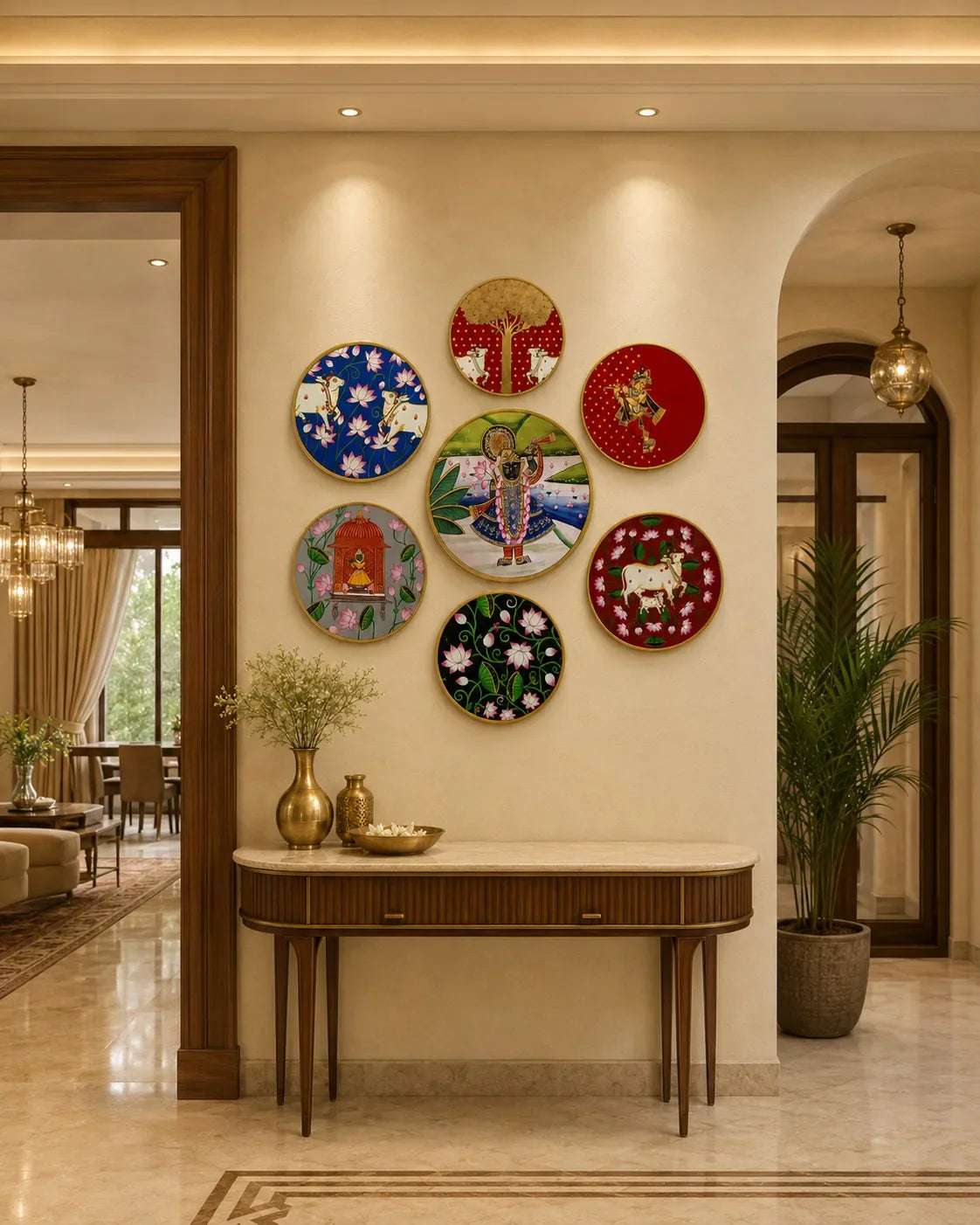
The Salon Wall Grouping
Three to five plates in graduating sizes, hung in a loose cluster on a single wall. Mix slightly different Pichwai themes — a monsoon plate alongside a lotus plate alongside a cow procession — for visual variety while maintaining thematic coherence.
The Shelf Arrangement
Plates displayed upright on a floating shelf, perhaps alongside small bronze figurines or other Indian craft objects. The guiding principle here is restraint — leave space around each plate so the painting can be read properly. A crowded shelf diminishes the work.
The Single Statement
One large plate, hung on an otherwise bare wall with a directional spotlight. The simplest approach, and often the most effective. This is how you let a single piece of craft hold a room.
The Tablescape
Medium or small Pichwai plates used as part of a table arrangement — not for eating from, but as centrepieces or decorative elements alongside candles, flowers, and other objects. Particularly effective for formal dining rooms or festive occasions like Diwali and Navratri, when the devotional imagery carries an additional resonance.
Gifting Pichwai Plates
The question people ask most often about Pichwai plates is whether they work as gifts. They do — and they work exceptionally well for occasions that call for something genuinely considered: housewarmings, milestone birthdays, weddings, Diwali, the arrival of a new home or a new chapter. For casual or obligatory gifting they may feel too weighted with meaning. But for the occasions where meaning is precisely the point, a Pichwai plate is among the most thoughtful objects you can give — handmade, culturally rooted, lasting, and unlike anything most people already own.
Bring Home a Piece of Nathdwara
That moment of surprise — the one that stops people mid-step when they first encounter Shrinathji rendered in gold and mineral pigment on ceramic — does not fade with familiarity. Collectors who have owned Pichwai plates for years still find themselves pausing in front of them. There is something in the combination of the devotional subject, the hand of the artisan, and the unexpected intimacy of a curved ceramic surface that keeps giving. It is the same feeling that draws people to Nathdwara itself: the sense of a living tradition, still being made by human hands, still carrying the weight of its origins.
Avyaan's collection of Pichwai plates — sourced from Nathdwara workshops, rooted in GI-recognised craft heritage — is available to browse now. Whether you are looking for a statement piece for your home, a meaningful gift for someone who deserves something real, or simply the pleasure of owning something made with this much care, there is a plate in this collection that will stop you in the same way.


![[Product Title] - Avyaan](http://aavyaan.com/cdn/shop/files/Grace_of_Beginnings_Ganesha_in_Tanjore_Gold_800x800_5057dc37-751a-4085-b2c1-a1a947001f54.webp?v=1784792848&width={width})
![[Product Title] - Avyaan](http://aavyaan.com/cdn/shop/files/Mockup_Ganga_Avataran_1.png?v=1784793858&width={width})
![[Product Title] - Avyaan](http://aavyaan.com/cdn/shop/files/26.png?v=1784792915&width={width})
![[Product Title] - Avyaan](http://aavyaan.com/cdn/shop/files/Tanjore-radhakrishna-png_1.webp?v=1784792858&width={width})
![[Product Title] - Avyaan](http://aavyaan.com/cdn/shop/files/Mockup_3.2_1-1.png?v=1784794004&width={width})
![[Product Title] - Avyaan](http://aavyaan.com/cdn/shop/files/Radiance_of_Prosperity_Gaja_Lakshmi_in_Tanjore_Splendor_2.webp?v=1784792826&width={width})
![[Product Title] - Avyaan](http://aavyaan.com/cdn/shop/files/29.png?v=1784792820&width={width})