index
Standing as a monumental testament to India's architectural brilliance, the tanjavur brihadeshwara temple is a wonder sculpted entirely out of granite. Built over a thousand years ago, this UNESCO World Heritage Site—locally revered as the *Thanjai Periya Kovil* (Big Temple)—remains the cultural heart of Tamil Nadu. It is not only a spiritual sanctuary but also the exact artistic soil from which the legendary Tanjore painting tradition originally emerged.

For collectors and art enthusiasts, understanding the history of this grand structure is essential to appreciating the depth of South Indian heritage. In this guide, we explore the incredible history, engineering marvels, and artistic legacy of the Brihadeeswarar Temple.

"The Brihadeeswarar Temple is a living symphony in stone. Its majestic Vimana and intricate baseline sculptures laid the iconographic foundation that inspired generations of Tanjore artists."

🏛️ The Chola Legacy: History of Thanjai Periya Kovil

Commissioned by the visionary Emperor Raja Raja Chola I between 1003 and 1010 AD, the temple was built to celebrate the absolute zenith of the Chola Empire. The structure is dedicated to Lord Shiva in the form of a massive, sacred Lingam:

  • A Millennium of Glory: Having stood for over 1,000 years, the temple reflects the profound stability and engineering foresight of Dravidian architects.
  • An Architectural Centerpiece: Raja Raja Chola I envisioned the temple not just as a place of worship, but as a thriving cultural hub that sustained hundreds of musicians, dancers, sculptors, and traditional scholars.

📐 Engineering Marvels of Chola Architecture

The temple is completely constructed out of premium granite, a stone not naturally available within a 60-kilometer radius of Thanjavur, hinting at an unbelievable ancient transport logistical feat:

  • The Interlocking System: The massive structure was assembled without using any binding mortar; instead, the granite blocks were seamlessly joined together using a highly sophisticated puzzle-like interlocking mechanism.
  • The Sky-Piercing Vimana: The temple tower (Vimana) rises to a towering height of 216 feet, making it one of the tallest architectural marvels of the medieval world.
  • The Kumbam Top Stone: At the very apex of the tower sits a single, monolithic granite block (Kumbam) weighing a staggering 80 tons. Legends suggest an engineered 6-kilometer-long earthen ramp was built just to roll this stone to the top.

🎨 The Cradle of Tanjore Art Heritage

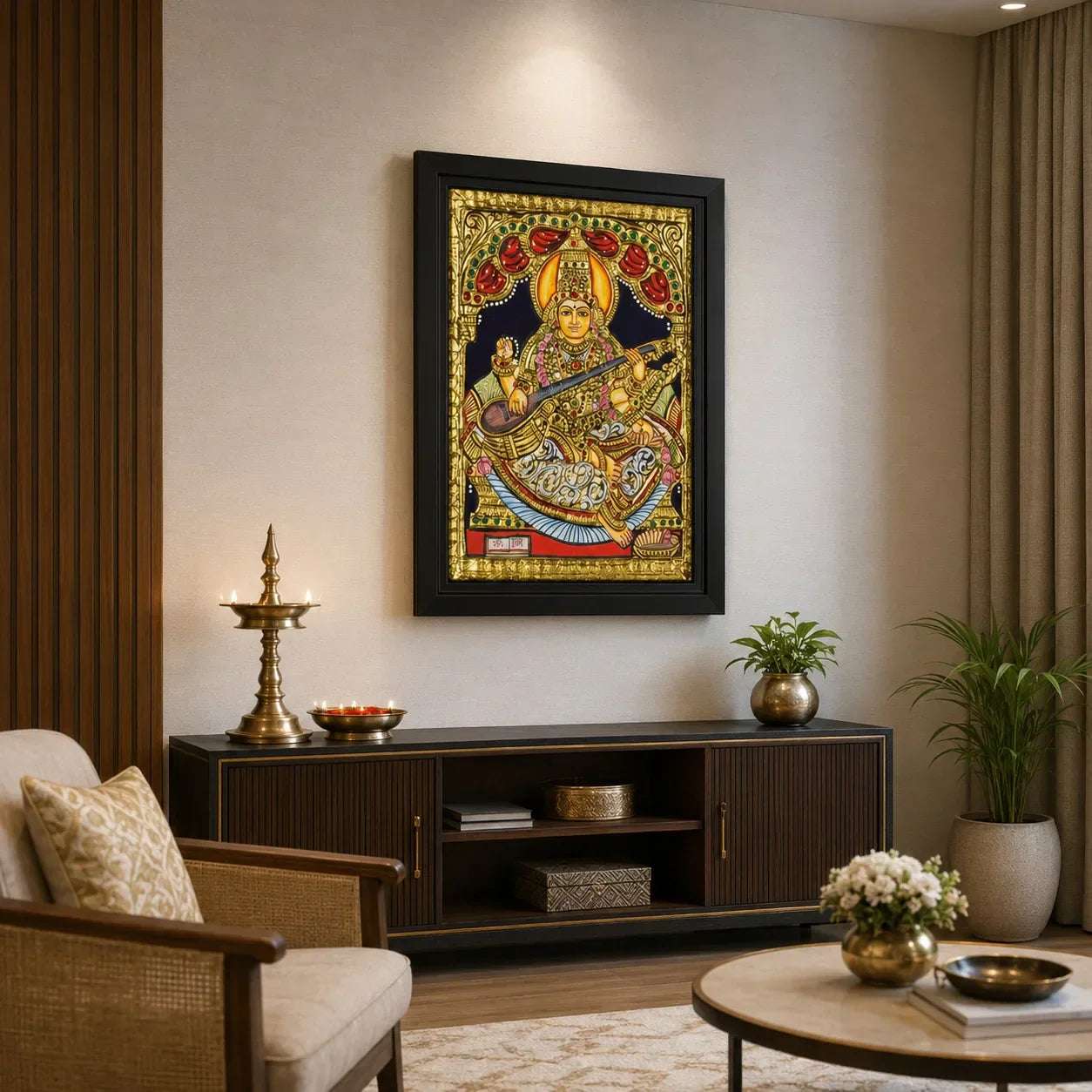
The tanjavur brihadeshwara temple is directly responsible for birthing the iconic Tanjore painting style. The dark interior corridors surrounding the main sanctum are adorned with vibrant 11th-century Chola frescoes and wall paintings. These historic temple murals established the exact facial proportions, dynamic body postures, and traditional color choices that Raju and Naidu artists later shrunk down onto fabric-wrapped wooden panels using pure 22k gold work.

Frequently Asked Questions

Q1: How old is the Brihadeeswarar Temple in Thanjavur?
Completed in 1010 AD by Raja Raja Chola I, the Brihadeeswarar Temple is over 1,016 years old, standing as a stellar example of enduring Dravidian engineering.
Q2: Why is the shadow of the temple top stone said to never fall on the ground?
This is a popular architectural marvel. Because the interlocking layers of the Vimana tower widen towards the base, at noon during certain parts of the year, the shadow of the 80-ton top stone falls upon the structure itself rather than stretching outwards on the ground.
Q3: How does this temple connect to modern Tanjore paintings?
The temple's inner wall murals are the stylistic precursors to Tanjore art. The proportions, deity guidelines, and visual motifs found in today's gold-leaf paintings were inspired directly by these ancient Chola wall frescoes.

Leave a comment

Your email address will not be published. Required fields are marked *

Please note, comments must be approved before they are published

Chat with Avyaan on WhatsApp