index
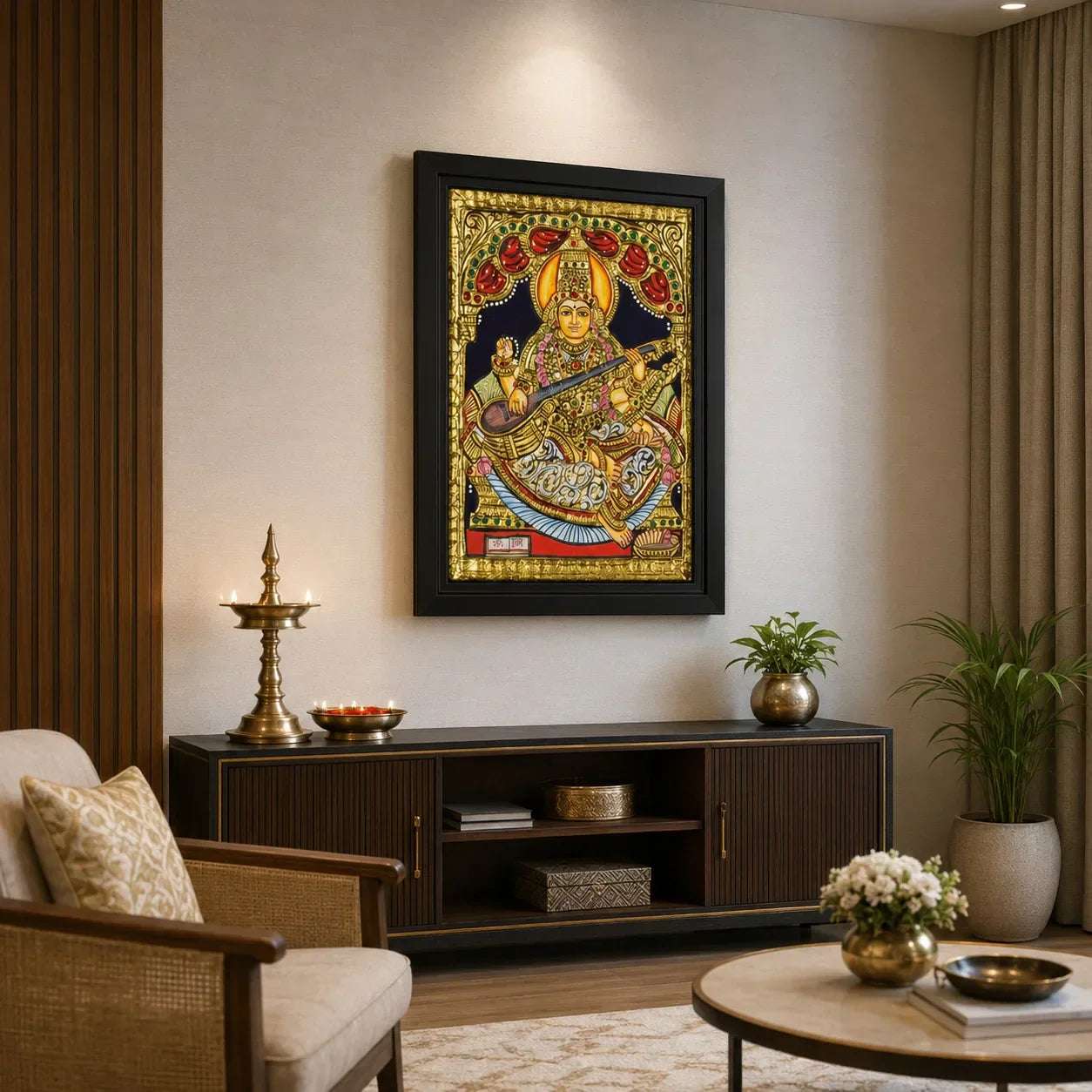
When searching for authentic gold-leaf art panels online, it is highly common to come across two different spellings used interchangeably: Tanjore vs Thanjavur painting. This variation often leaves art collectors and devotees confused, causing them to wonder if these terms represent two distinct traditional art forms, different geographic schools, or varying qualities of craftsmanship.

If you are trying to understand the nuances of the classic Tanjore style, the short answer is simple: Yes, they are exactly the same. However, the history behind how one city acquired two distinct global names is highly fascinating and deeply rooted in India's colonial past.

"Tanjore is the anglicized colonial sound, while Thanjavur is the centuries-old traditional Tamil name. No matter which spelling you use, the sacred 22k gold relief heritage remains identical."

📜 The Historical and Linguistic Breakdown

To clear up any underlying confusion regarding the naming conventions of this royal South Indian art form, we must analyze the linguistic transition across eras:

  • The Traditional Tamil Etymology (Thanjavur): Historically, the city is named *Thanjavur*. In the local Tamil language, it is believed to be derived from 'Thanjam-avoor', which beautifully translates to 'the city of refuge'—a sanctuary where refugees were granted protection by the ancient Chola kings.
  • The British Anglicization (Tanjore): During the British colonial era in India, European officers struggled to accurately pronounce the soft syllables of traditional Tamil words. Just as Tiruchirappalli was shortened to Trichy, *Thanjavur* was anglicized to *Tanjore* for ease of documentation.

🎭 Do the Two Spellings Represent Different Art Qualities?

In modern e-commerce and art galleries, some vendors accidentally create a false distinction, leading buyers to believe that 'Thanjavur art' refers to raw museum-grade antiques while 'Tanjore art' represents commercial variants. This is entirely incorrect.

Whether an artwork is marketed as a Tanjore panel or a Thanjavur masterpiece, its authenticity is evaluated by material metrics rather than the title spelling:

  • Both must utilize authentic, un-oxidizable **22-karat pure gold leaf foil**.
  • Both rely on a robust, handmade French chalk and tree-gum gesso relief paste foundation**.
  • Both strictly adhere to the iconographic geometry defined in the ancient Shilpa Shastras.

🎯 Smart SEO Tip for Fine Art Collectors

When searching for these masterpieces online, keep in mind that search engines like Google are smart enough to understand that both spellings refer to the exact same cultural art tradition. However, if you are looking for heavily researched history or academic papers, searching for "Thanjavur painting" will often yield deeper cultural essays, whereas "Tanjore painting" is the most popular search term used by global buyers looking to acquire these stunning artworks for their personal collections.

Frequently Asked Questions

Q1: Is there any stylistic difference between Tanjore vs Thanjavur painting?
No, there is absolutely no stylistic difference. Both terms represent the exact same classical art form from Tamil Nadu featuring 22k gold leaf, gesso relief work, and devotional themes.
Q2: Why do galleries use both names interchangeably?
Galleries use both names to cater to different audiences. International collectors often search using the anglicized term 'Tanjore', while historians and regional connoisseurs prefer the traditional name 'Thanjavur'.
Q3: Does the spelling on the certificate of authenticity matter?
No, the spelling does not matter. The certificate is valid as long as it verifies that the artwork is handmade on a real wood panel using genuine 22-karat gold leaf foil and semi-precious stones.

Leave a comment

Your email address will not be published. Required fields are marked *

Please note, comments must be approved before they are published

Chat with Avyaan on WhatsApp