index
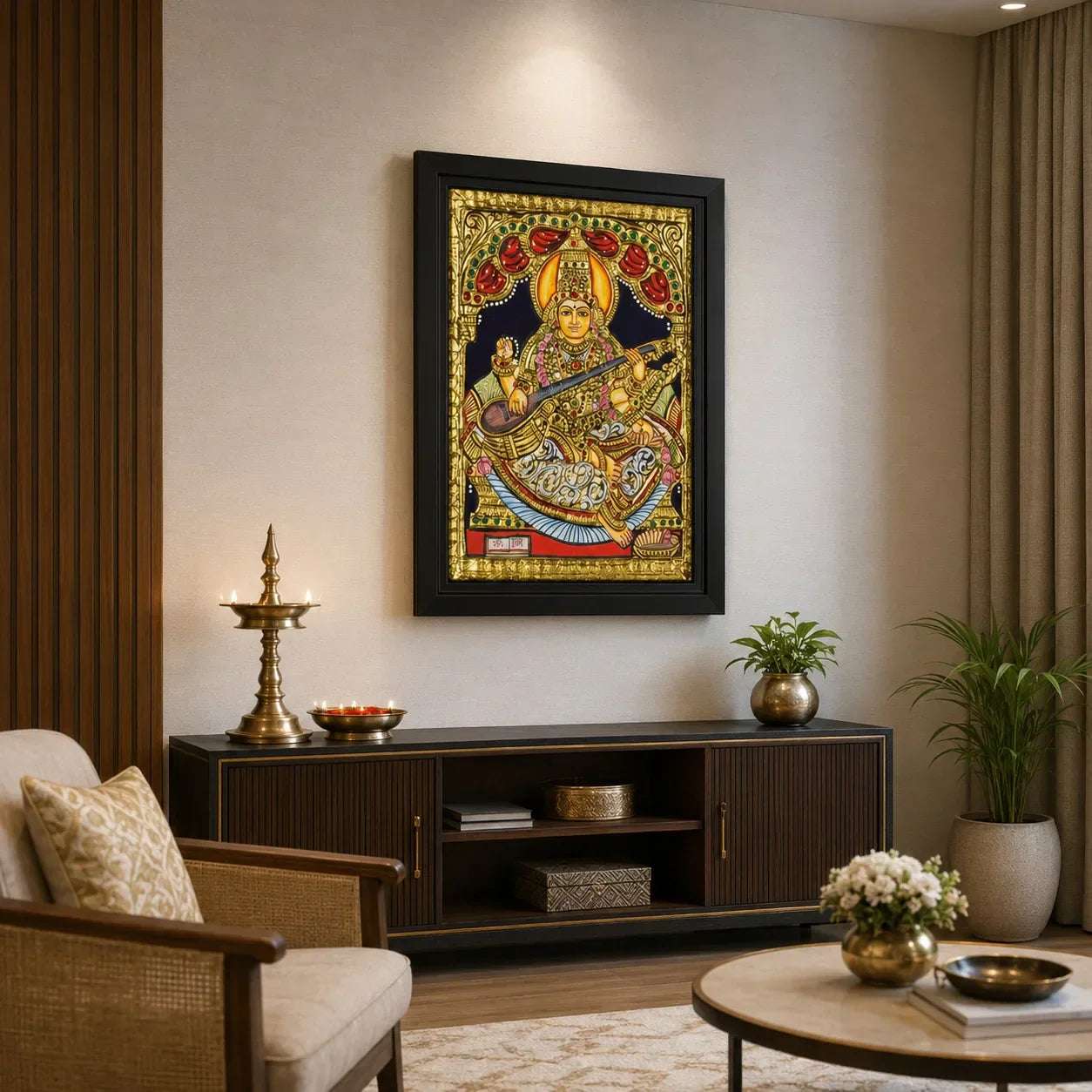
To truly understand the soulful glow of a gold-leaf layered masterpiece, one must trace its roots back to its geographic and historical birthplace. The story of classic tanjore paintings in thanjavur is intertwined with the rise and fall of great empires, classical temple architecture, and royal validation. Thanjavur (anglicized as Tanjore), located in the fertile delta of the Cauvery River in Tamil Nadu, served as the ultimate canvas for this royal evolution.

When searching for authentic tanjore paintings in tanjore, collectors are often looking for that specific classical rigor inherited from centuries of generational families. In this guide, we dive deep into the cultural timeline, royal lineages, and ancient temple lineages that birthed this immortal South Indian art style.

"Thanjavur art did not evolve in a studio; it was born on the dark stone walls of Chola temples, sculpted by Nayaka court draftsmen, and encrusted with pure gold by Maratha kings."

🏛️ The Chola Genesis: Temple Murals as Precursors

The aesthetic foundation of tanjore paintings in thanjavur was laid during the rule of the mighty Chola Dynasty (9th–13th century). The Cholas were monumental builders, and their crowning achievement—the Brihadeeswarar Temple—became the epicenter of regional art.

  • Sacred Wall Murals: The inner sanctum walls of the Thanjavur big temple were covered in extensive fresco paintings depicting Lord Shiva, cosmic dancers, and royal patrons. These murals established the proportions, rounded body lines, and almond-shaped eyes that define the art form today.
  • Transition to Wood: As dynasties shifted, artists moved from massive static temple walls to portable wooden panels (Palagai Padam), allowing deities to be safely enshrined inside personal home altars.

⚔️ The Nayaka and Maratha Confluence

The panel painting format we see today matured heavily between the 16th and 18th centuries, thanks to a beautiful confluence of multi-regional cultures in the court of Thanjavur.

  • The Vijayanagara & Nayaka Influence: Following the Cholas, the Nayaka governors under the Vijayanagara Empire ruled Thanjavur. They brought highly skilled Telugu-speaking artists (known as the Raju community) who introduced highly structured iconographical detailing and divine temple motifs.
  • The Maratha Golden Era: In the late 17th century, the Marathas captured Thanjavur. Rulers like King Serfoji II were great patrons of the arts. The Marathas integrated their love for absolute opulence into the craft, introducing the encrustation of real gemstones, heavy limestone relief work, and pure 22k gold foil overlays.

📜 Preserving the Authentic Raju and Trichy Lineages

Historically, the craft of making genuine tanjore paintings in tanjore was preserved by two prominent traditional communities: the Raju community of Thanjavur and the Naidu community of Tiruchirappalli. These families followed strict scriptural protocols called the Shilpa Shastras, ensuring that every deity's skin tone, seating posture, and divine weapon aligned perfectly with cosmic geometry. Today, choosing a certified piece ensures these ancient lineages continue to thrive.

Frequently Asked Questions

Q1: Why is the city of Thanjavur so important to this art form?
Thanjavur was the imperial capital of the Cholas and Marathas. The royal patronage, alongside the spiritual energy of the Brihadeeswarar temple, provided the perfect cultural ecosystem for this gold-leaf art form to evolve.
Q2: What is the connection between Chola murals and modern Tanjore art?
The Chola wall murals defined the initial iconographic styles, facial proportions, and emotional expressions of the deities, which were later adapted onto wooden panels using gold work.
Q3: Are Tanjore paintings in Tanjore and Trichy identical?
While both share the core 22k gold relief style, the traditional Thanjavur Raju school focused heavily on heavy structural gesso work, whereas the Tiruchirappalli (Trichy) school featured slightly flatter relief detailing.

Leave a comment

Your email address will not be published. Required fields are marked *

Please note, comments must be approved before they are published

Chat with Avyaan on WhatsApp