What is Tanjore Painting? Understanding the Rich History and Craft of Tanjore Art
Published by Avyaan Heritage Journal | Exploring India's Living Crafts
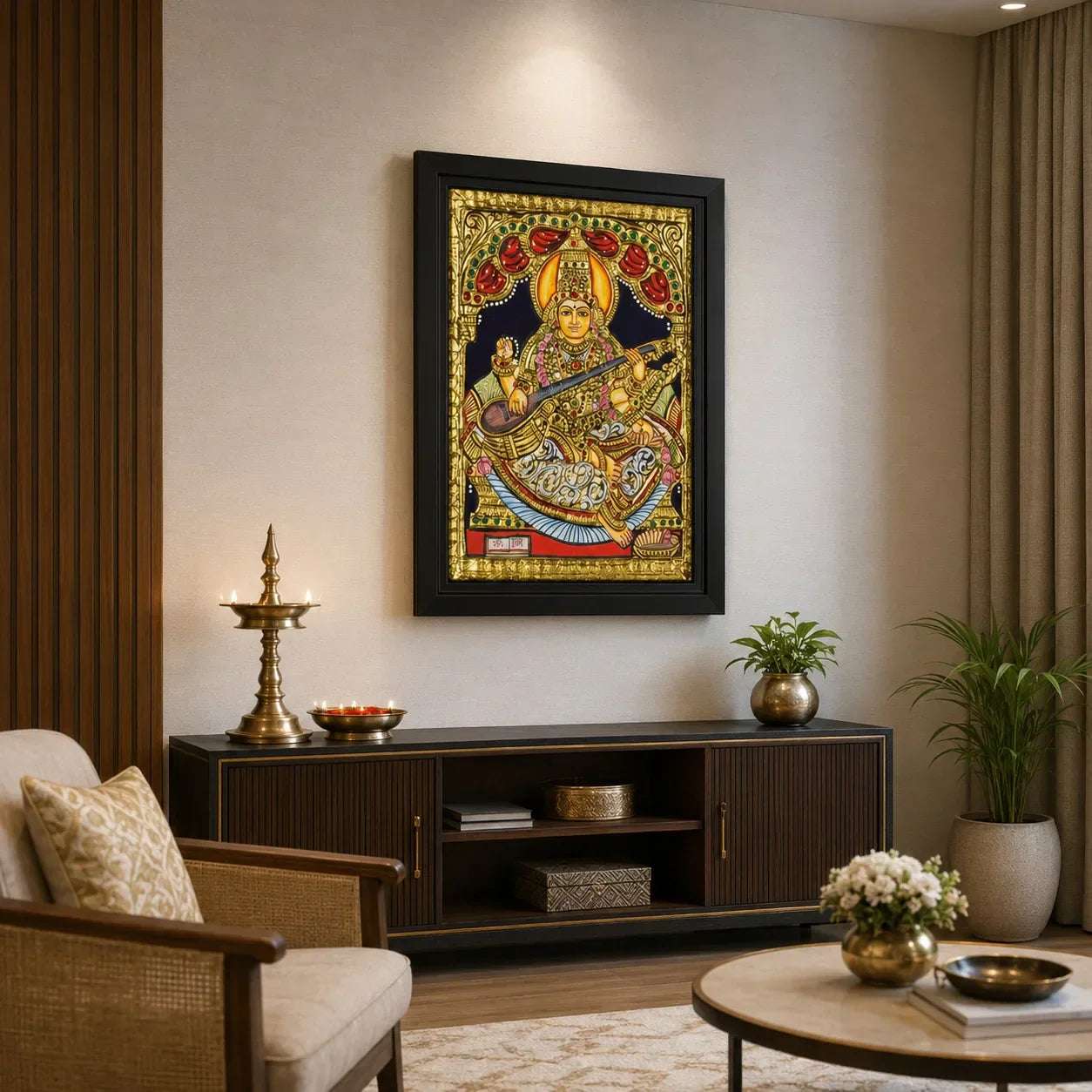
When you step into a room adorned with a traditional Tanjore painting, your eyes are instantly drawn to its radiant glow. The shimmering 22-karat gold foil, the iconic three-dimensional relief work, and the deeply devotional themes give this art form an unmatched presence. Rooted in the rich cultural soil of Southern India, Tanjore art (or Thanjavur painting) is not just a painting style; it is a sacred, labor-intensive legacy that has survived for centuries.
But what exactly makes Tanjore art so special, and how did it evolve into one of India’s most treasured GI-tagged heritages? Let’s dive deep into its history, characteristics, and intricate creation process.
The Origins: A Royal Convergence of Cultures
Tanjore art originated in the historic town of Thanjavur (anglicized as Tanjore) in Tamil Nadu. The art form reached its zenith between the 16th and 18th centuries. While it initially bloomed under the patronage of the Chola Empire, it evolved dramatically under the Thanjavur Nayakas and later the Maratha rulers.
This cross-cultural patronage is exactly why Tanjore art possesses such a unique visual language. It seamlessly blends the grandeur of Dravidian temple architecture with the delicate sensibilities of Maratha, Deccani, and even European artistic influences. Originally used to decorate the dark sanctum sanctorums of palaces and temples, the paintings were intentionally embedded with gold and glittering stones so they would catch and reflect the flickering light of oil lamps.
"Unlike standard flat paintings, traditional Tanjore art is a beautiful marriage of painting and relief sculpture, designed to endure as an heirloom across multiple generations."
Defining Features of Authentic Tanjore Art
You can easily spot a genuine, traditional Tanjore painting by looking for these defining characteristics:
-
Embossed Gesso Work: The signature characteristic of Tanjore art is its raised, three-dimensional relief pattern (known as gesso work), which creates deep texture on the ornaments, clothing, and architectural arches.
-
Pure Gold Foil Leafing: Genuine 22-karat gold leaf foil is meticulously pressed over the relief work. The gold does not fade, ensuring that the painting retains its brilliant metallic luster forever.
-
Precious and Semi-Precious Stones: To mimic royal jewelry, master artisans embed glittering stones, glass beads, or Jaipur gemstones into the gesso work.
-
Devotional Iconography: The themes are almost exclusively religious, capturing Hindu deities in regal, static, and serene poses. Figures like Baby Krishna (Navaneetha Krishna), Lord Ganesha, Goddess Lakshmi, and the majestic Ram Darbar are historical favorites.
The Meticulous 6-Step Creation Process
True Tanjore paintings are entirely handmade using slow, intentional crafting techniques. A single piece can take anywhere from a few weeks to several months to complete through these rigorous phases:
-
Preparing the Board: The artisan stretches a piece of unbleached cotton cloth over a solid wooden base—typically jackfruit or teak wood—using natural gum to create a smooth canvas.
-
Sketching the Motif: A precise freehand sketch of the deity is drawn onto the canvas, keeping strict proportions in mind.
-
Applying the Gesso (Relief Work): A paste made from chalk powder and natural glue is carefully layered onto the board using brushes and tools to create the raised, three-dimensional surfaces for jewels, crowns, and pillars.
-
Stone Setting: While the paste is partially wet, semi-precious gems and stones are carefully embedded into the designated patterns.
-
Gold Foil Leafing: Thin, genuine 22-karat gold foil leaves are carefully laid over the relief patterns and rubbed down gently. The excess gold is then trimmed away to reveal the sparkling stone boundaries beneath.
-
Painting and Finishing: Finally, the artisan uses vibrant paints to bring the faces and background to life. Traditionally, natural mineral and organic dyes were used, though modern masters sometimes use high-quality acrylics to achieve brilliant, lasting colors.
Premium Framing & Seamless Delivery Included
At Avyaan, our Tanjore paintings are shipped with a heavy, top-tier authentic Teakwood Frame as standard. These custom frames not only honor the historical aesthetic of the art but provide rock-solid structural longevity.
🕒 Shipping Timeline: Handpacked with museum-grade protection, you will receive your heritage masterpiece safely at your doorstep within 10 to 15 days.
How to Care for Your Tanjore Painting at Home
Because genuine Tanjore paintings are made with 22k gold foil leafing and natural gesso layers, they are exceptionally durable. However, following a few simple home-care guidelines will preserve their divine glow for generations to come:
-
Dusting and Cleaning: Use only a clean, dry, and ultra-soft microfiber cloth or a feather duster to gently wipe down the teakwood frame and the glass cover. Never use a wet cloth or chemical liquid sprays on the painting surface.
-
Avoid Direct Sunlight: Hang your painting in a well-ventilated, well-lit indoor area. Avoid walls that receive direct, intense sunlight throughout the day, as continuous UV rays can fade the fine paint colors over time.
-
Moisture Control: Do not hang your painting on damp walls or directly facing high-moisture zones like humidifiers or bathroom doors. Stable room temperatures protect the natural wood and cloth canvas from expanding or contracting.
-
Do Not Alter the Backing: The framing is professionally sealed with archival protective sheets on the back to lock out moisture, dust, and pests. Leave the rear seals completely intact to ensure the interior climate stays preserved.
Why Tanjore Paintings Are Considered Investments
In a world saturated with mass-produced digital prints, owning a traditional Tanjore painting means preserving a dying human skill. Because every brushstroke, stone placement, and gold sheet is handled by a human hand, no two pieces are ever identical.
Furthermore, because they are constructed using real gold, sturdy hardwood, and heavy gesso layers, these paintings resist decay, fading, and pests. They do not merely sit on a wall as decoration; they act as living, spiritual heirlooms meant to be safely passed down from parents to children as a magnificent piece of Indian history.
Preserving the Living Heritage
Today, authentic Tanjore art is protected under India's Geographical Indication (GI) registry to safeguard it against cheap, plastic imitations. When you bring an authentic piece into your home, you aren't just adding to your decor—you are directly supporting master artisan families who have quietly guarded this sacred technique for generations.
© 2026 Avyaan. Sourced Directly from India's Master Artisans. All Rights Reserved.


![[Product Title] - Avyaan](http://aavyaan.com/cdn/shop/files/Grace_of_Beginnings_Ganesha_in_Tanjore_Gold_800x800_5057dc37-751a-4085-b2c1-a1a947001f54.webp?v=1784792848&width={width})
![[Product Title] - Avyaan](http://aavyaan.com/cdn/shop/files/Mockup_Ganga_Avataran_1.png?v=1784793858&width={width})
![[Product Title] - Avyaan](http://aavyaan.com/cdn/shop/files/26.png?v=1784792915&width={width})
![[Product Title] - Avyaan](http://aavyaan.com/cdn/shop/files/Tanjore-radhakrishna-png_1.webp?v=1784792858&width={width})
![[Product Title] - Avyaan](http://aavyaan.com/cdn/shop/files/Mockup_3.2_1-1.png?v=1784794004&width={width})
![[Product Title] - Avyaan](http://aavyaan.com/cdn/shop/files/Radiance_of_Prosperity_Gaja_Lakshmi_in_Tanjore_Splendor_2.webp?v=1784792826&width={width})
![[Product Title] - Avyaan](http://aavyaan.com/cdn/shop/files/29.png?v=1784792820&width={width})