Cart
0
You may also like





By Avyaan | Buying Guide | 6 min read

The blue pottery market in Jaipur — and in the online Indian craft marketplace more generally — contains a wide range of quality, from genuine handmade pieces produced by trained artisans using traditional quartz-body technique, to machine-made imitations on clay bodies with printed blue-and-white patterns.
These are fundamentally different objects. The authentic piece is a craft tradition; the imitation is a manufactured product. Knowing how to tell them apart protects your money and your integrity as a buyer who intends to support traditional craft.
Authentic blue pottery has a quartz body — not clay. The result is a piece that is distinctly lighter than a clay ceramic of the same size and visibly more translucent. Hold an authentic blue pottery plate up to strong light: you will see the light penetrate the body slightly, creating a characteristic glow.
Clay imitations — even good ones with similar blue-and-white decoration — are denser, heavier, and completely opaque when held to light. This is the most reliable single test.
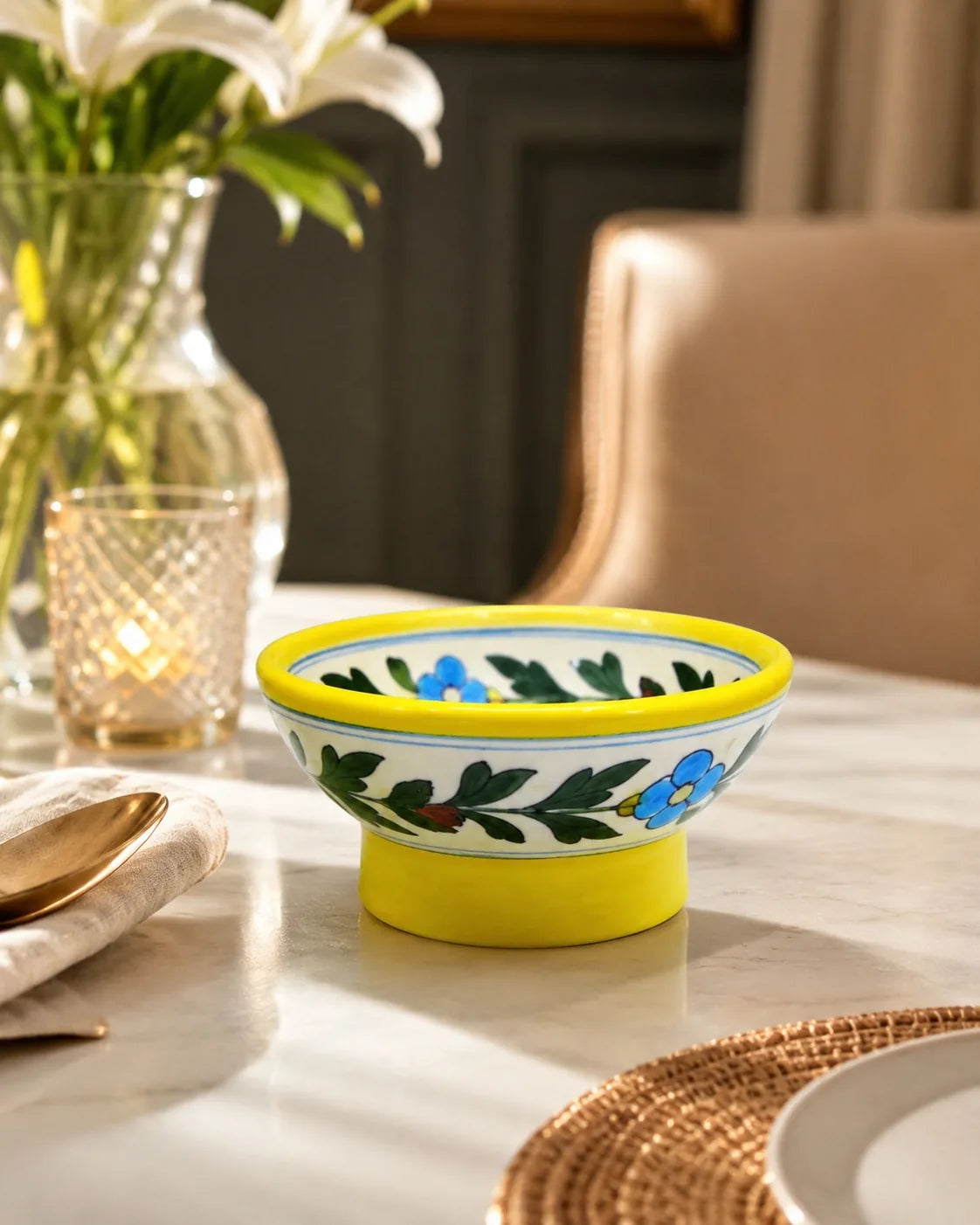
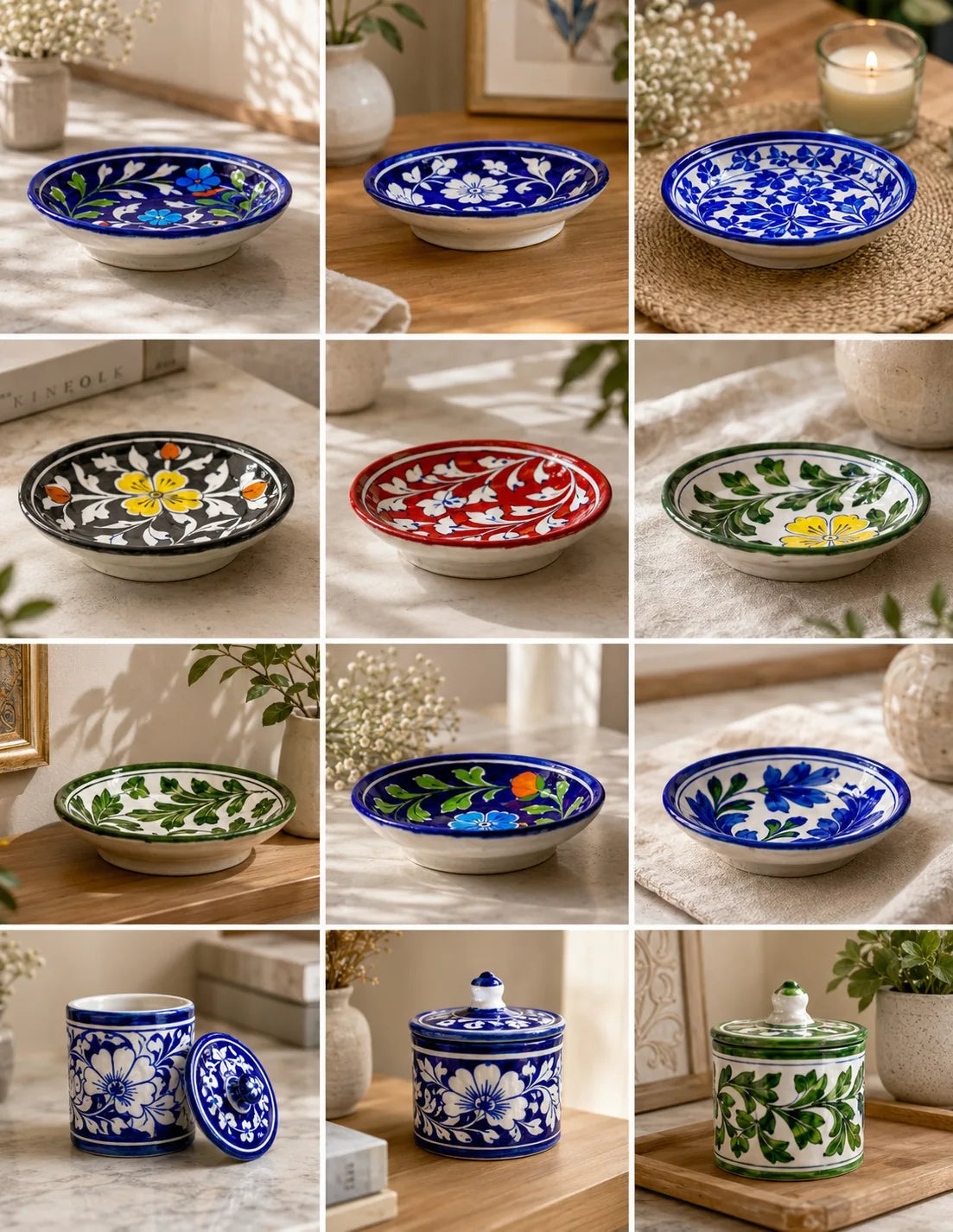
In authentic blue pottery, every decorative element is hand-painted. The flowers, birds, geometric patterns, and borders are applied with a brush by a trained painter. This means:
Lines are not perfectly uniform — they have the slight variation of a hand-drawn stroke
No two pieces are identical — a set of six plates will have six slightly different flowers
You can see the deliberate placement of individual elements — each petal is distinct

Authentic blue pottery has a smooth, glassy surface with a characteristic slight irregularity — because the quartz body shrinks slightly during firing, and the hand-forming process leaves the surface not perfectly uniform. This irregularity is not a defect; it is the mark of handmade work.
Machine-made imitations typically have a more perfectly uniform surface — smoother, rounder, with no variation in thickness.
Traditional Jaipur blue pottery motifs include:
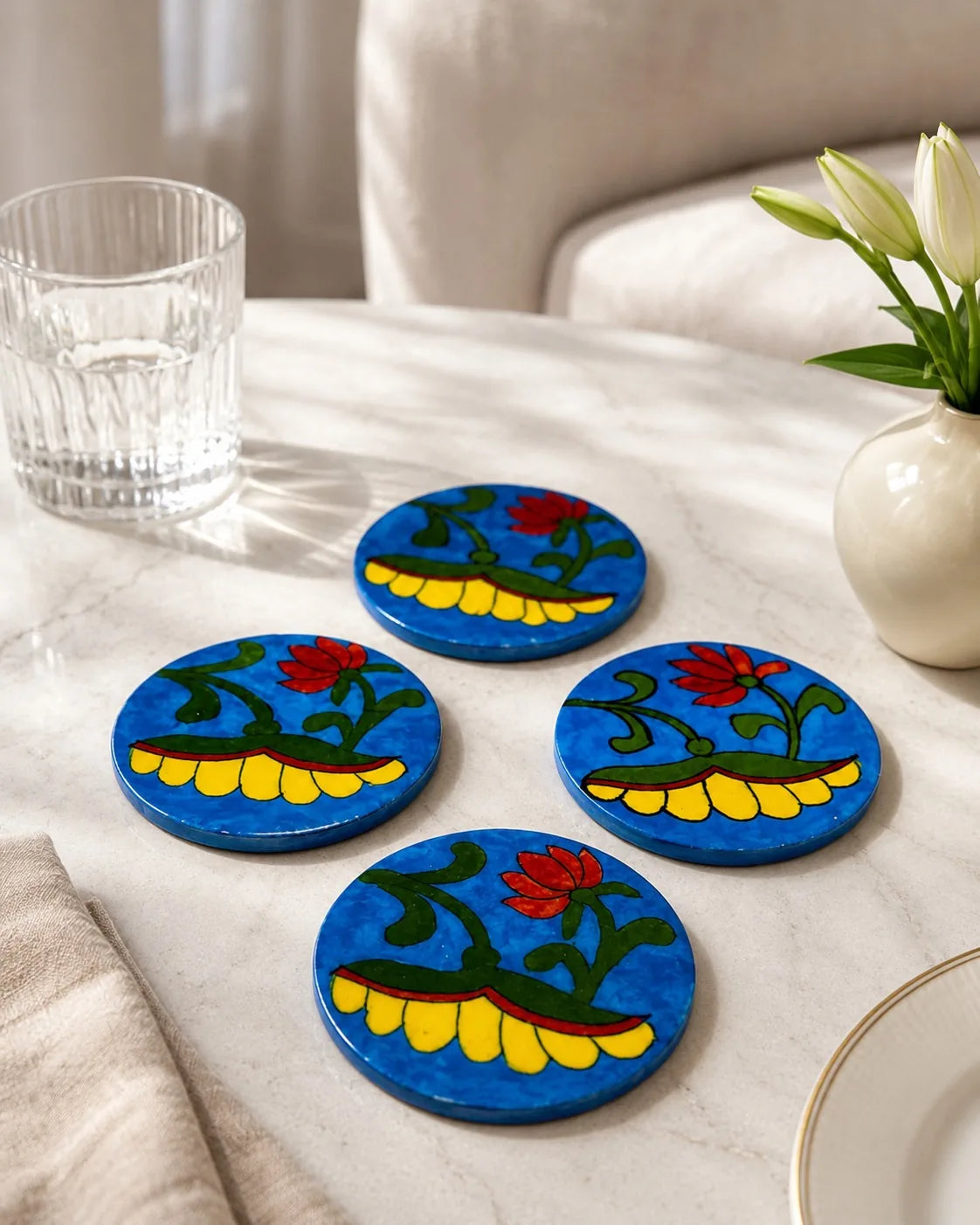
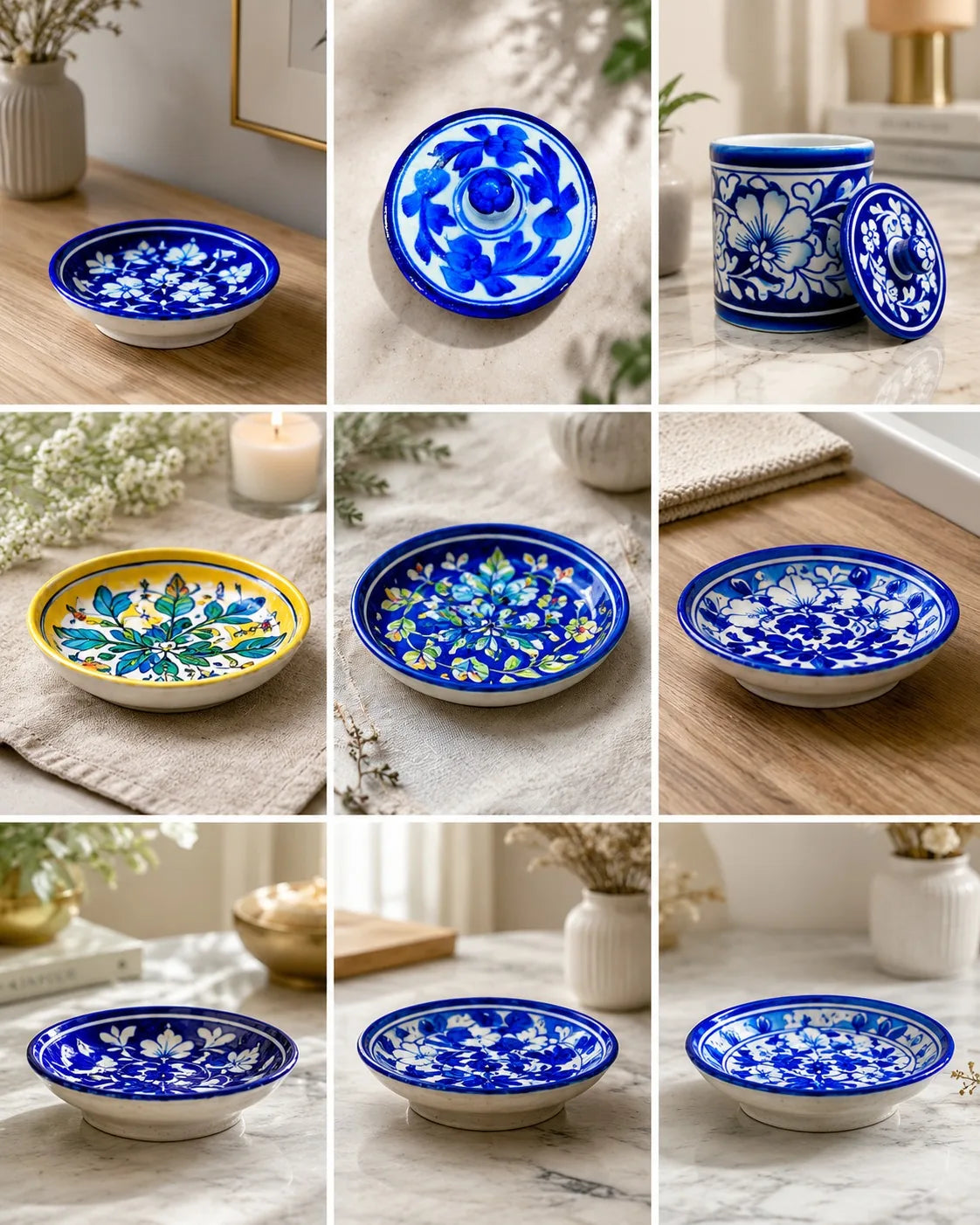
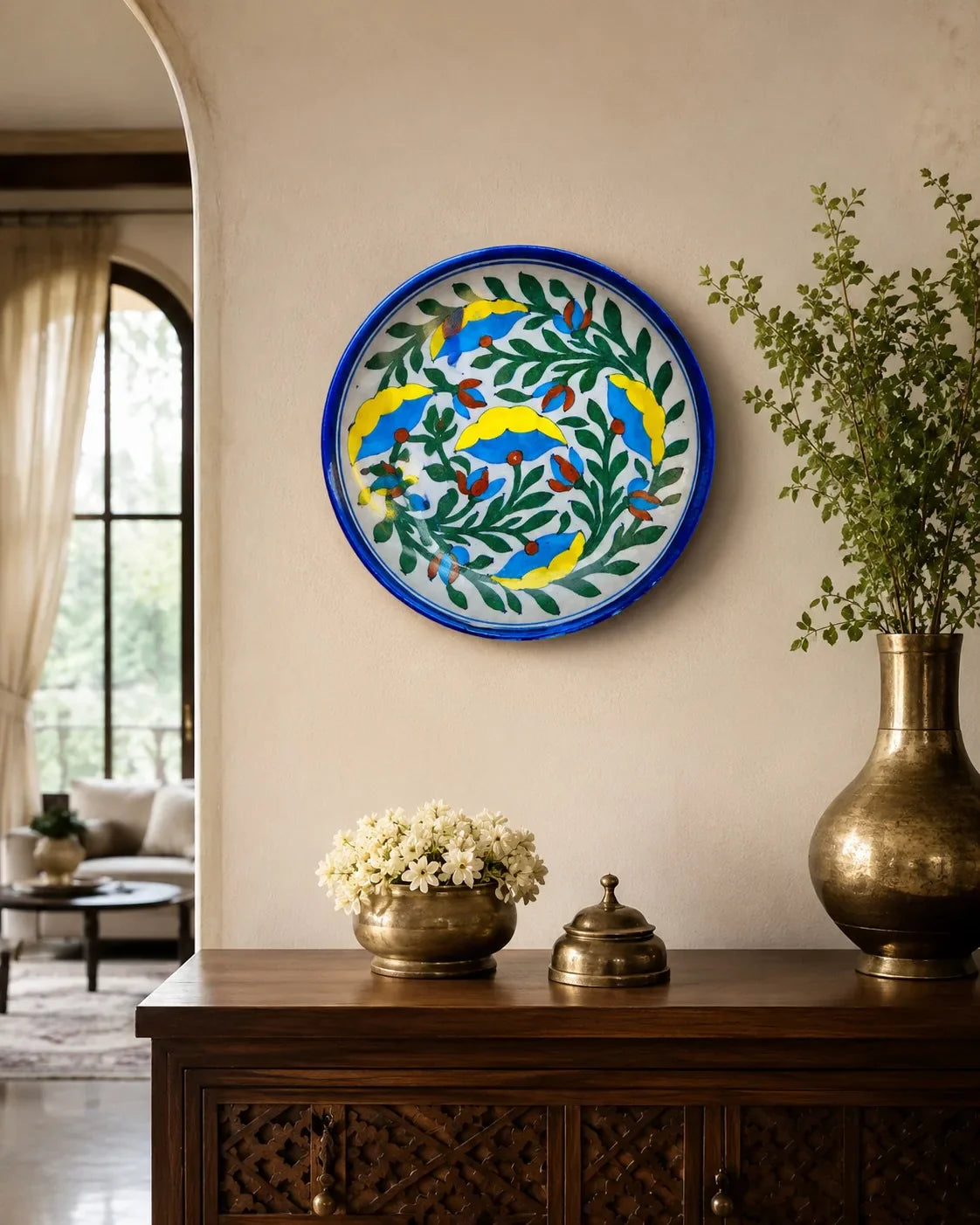
Floral patterns: Lotus, marigold, rose — stylised and repeating
Peacocks: The bird of Rajasthan, shown in profile or display
Fish: A common good-luck symbol in Indian decorative traditions
Geometric borders: Repeating diamond, chevron, and interlocking patterns derived from Islamic geometric tradition
Contemporary blue pottery may also feature animals, miniature painting-inspired scenes, or abstract patterns. The key is that all of these are hand-painted in authentic work.
Authentic hand-made blue pottery has a price floor below which it cannot be produced without sacrificing quality or craftsperson income. A medium-sized plate (10-12 inches) in genuine quartz-body with hand-painted decoration should cost at minimum ₹600-1,000. Vases and more complex forms are more expensive. If you're being offered "blue pottery" at ₹150-200, it is a clay-body machine-made piece.
Authentic Jaipur blue pottery with full craft documentation at https://aavyaan.com/
Loading Mark360 Popup...

