Cart
0
You may also like





By Avyaan | Craft & Materials | 7 min read

The name "pottery" is something of a misnomer. Jaipur blue pottery — one of Rajasthan's most iconic crafts and one of India's most recognised decorative art forms worldwide — contains no clay. The word "pottery" creates an expectation of fired clay that the material itself completely subverts.
This distinction is more than a technical curiosity. It explains the distinctive look of the finished piece — that translucent, glassy quality that sets blue pottery apart from any other ceramic tradition — and it explains why, despite centuries of production, blue pottery remains a craft that requires highly specialised knowledge to execute well.
Jaipur blue pottery is made from a mixture of:
Quartz stone powder (finely ground): The primary structural component, providing the white translucent body
Powdered glass (katira gum): Acts as a binder in combination with other materials
Fuller's earth (multani mitti): Provides plasticity, allowing the mixture to be shaped
Borax: A fluxing agent that helps the body vitrify (become glass-like) during firing
Gum (typically acacia/babool gum): Additional binder for workability
This mixture — when properly proportioned and kneaded — produces a material that behaves somewhat like clay in the hands (it can be shaped, rolled, and pressed into moulds) but fires very differently. The finished product is much denser and more glass-like than clay ceramics, with that characteristic translucency.

Because the quartz-based body lacks the plasticity of clay, it cannot be thrown on a potter's wheel. There is no spinning, no raising of walls, no traditional wheel-based forming in Jaipur blue pottery.
Instead, pieces are formed by one of two methods: moulding (pressing the paste into plaster moulds that give the piece its shape) or slab construction (rolling the paste flat and cutting, joining, and shaping it by hand). Both methods require skill and experience — the material is less forgiving than clay, and cracks or separations in the formed body are difficult to repair.
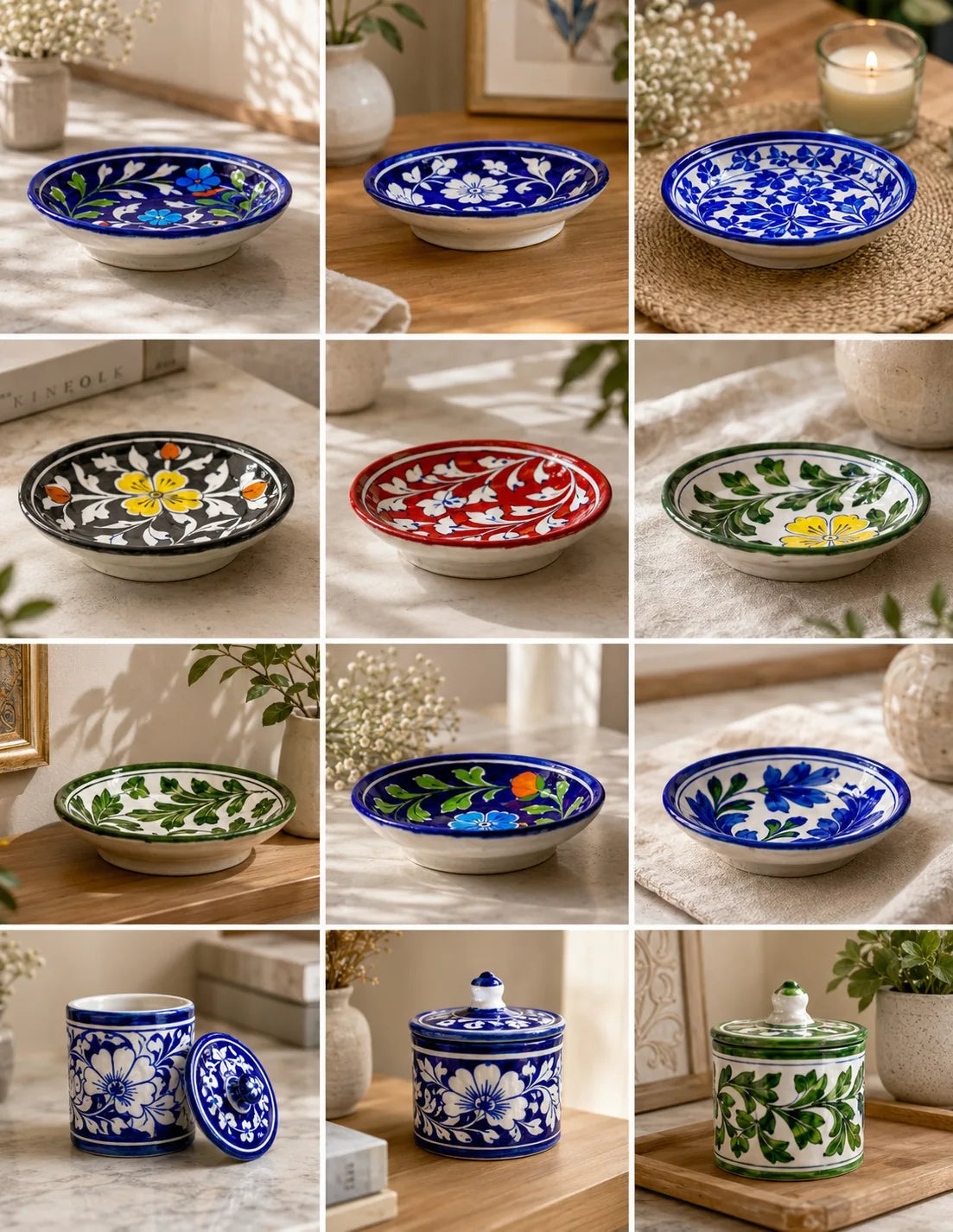
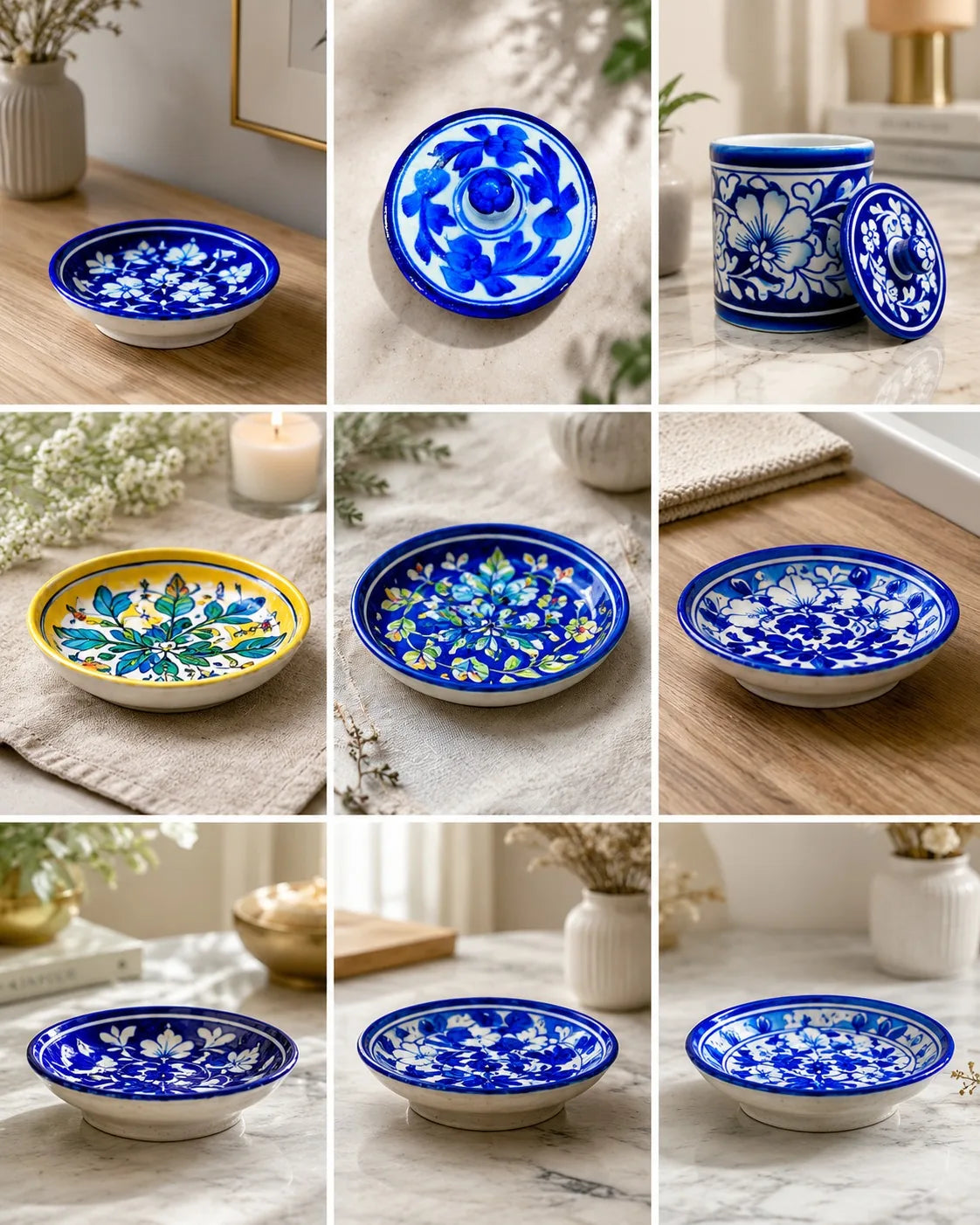
The characteristic blue of Jaipur blue pottery comes from cobalt oxide — the same compound that has been used to create blue in ceramics and glass across the world for thousands of years, from Chinese blue-and-white porcelain to Delftware to Persian tilework. Cobalt oxide is mixed with water and applied to the bisque-fired body as an underglaze (before the final transparent glaze is applied).
The white background is not a separate white paint or slip — it is the natural colour of the quartz body itself, revealed through the transparent glaze. The combination of the glassy, slightly translucent white body and the cobalt blue decoration is what gives blue pottery its distinctive and recognisable appearance.

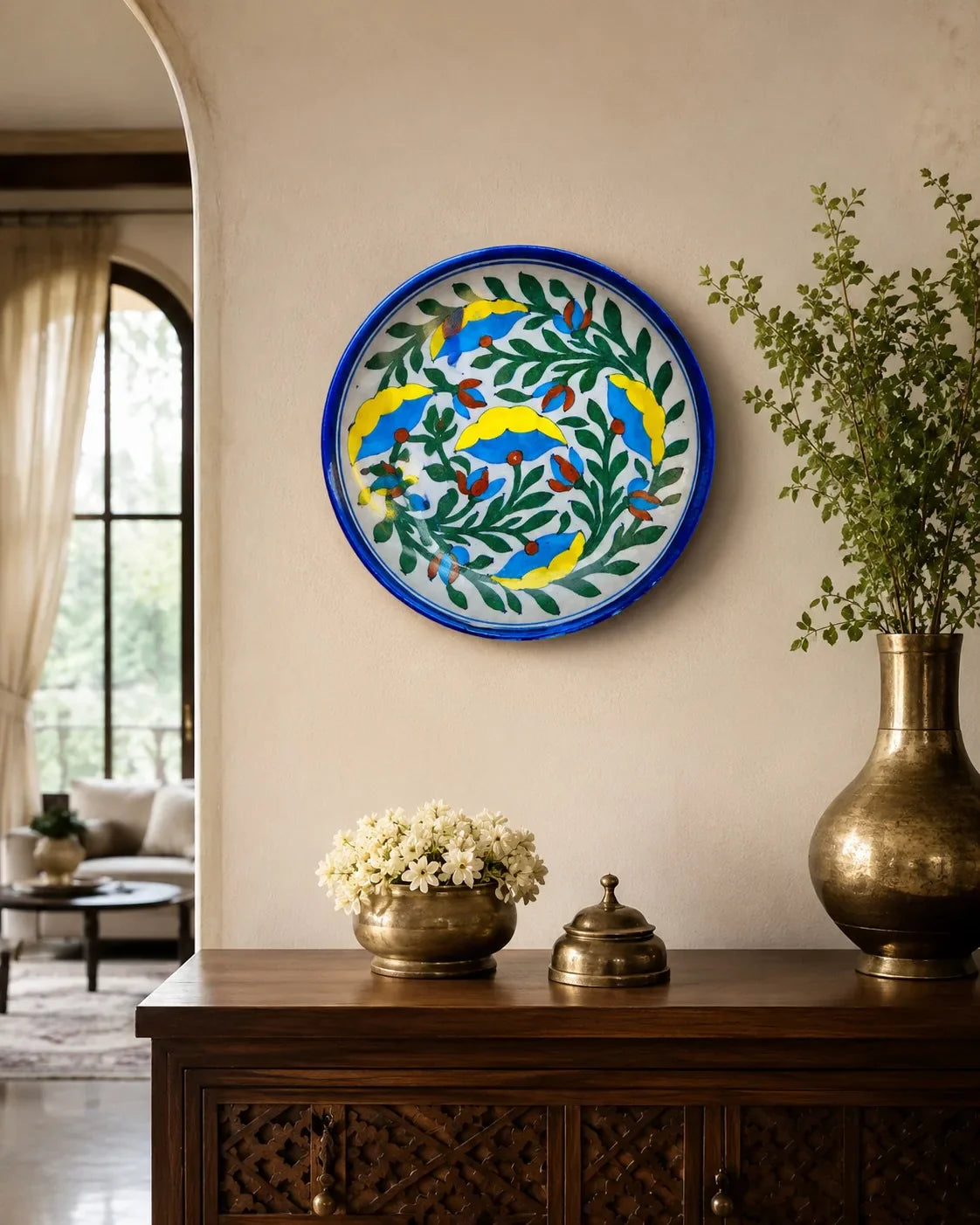
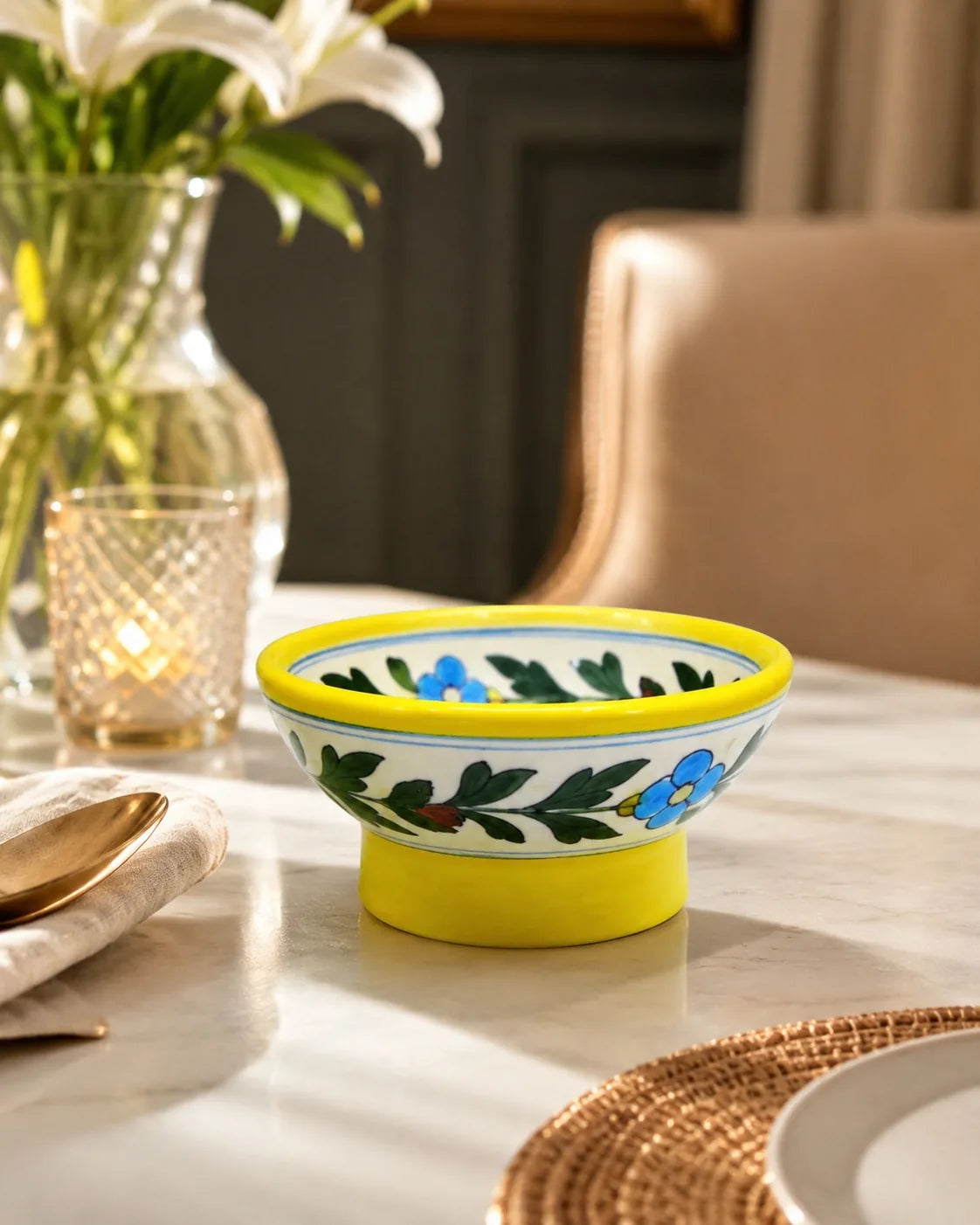
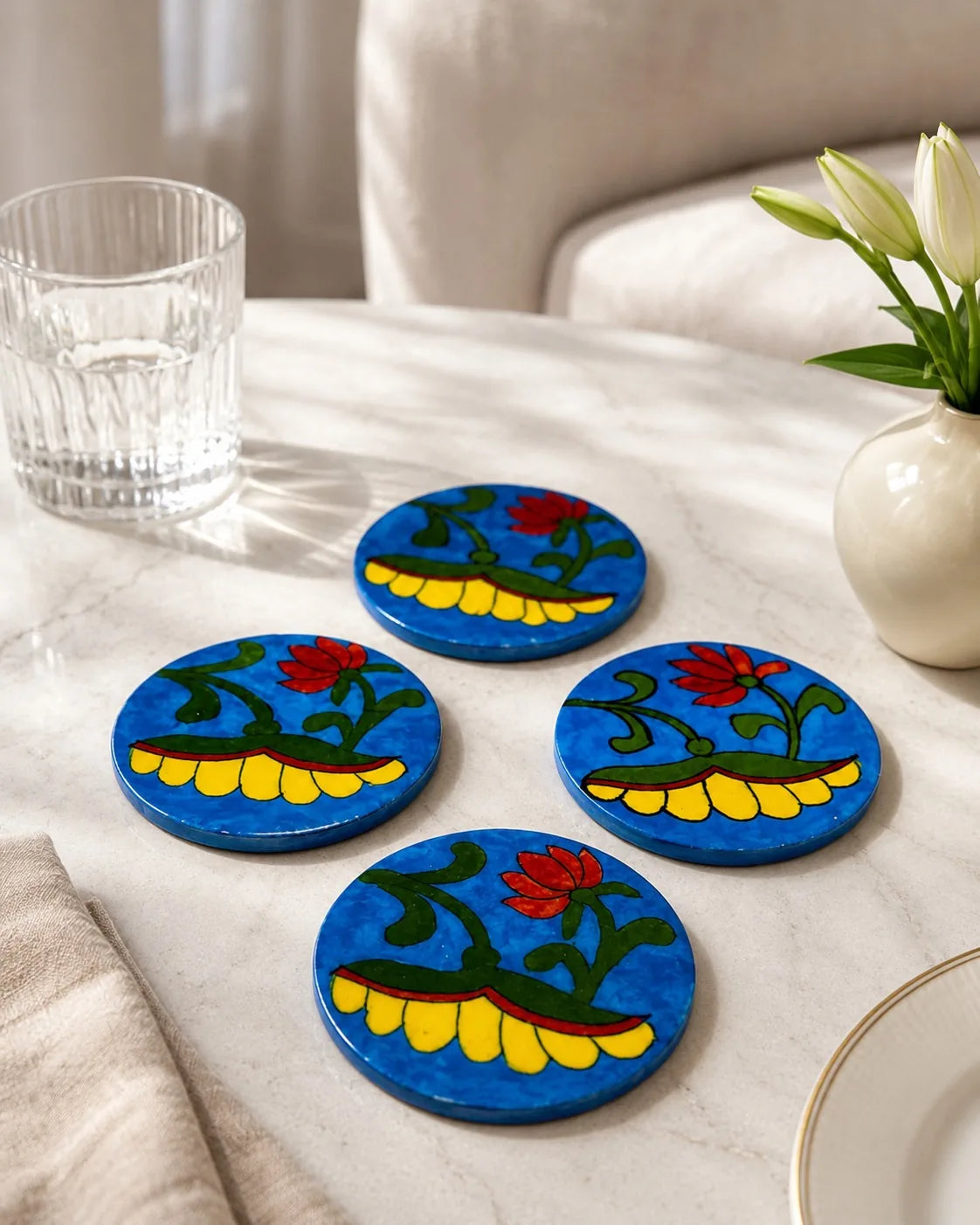
While "blue pottery" is the defining name, the craft actually employs a range of colours. In addition to cobalt blue, green (from copper oxide), yellow (from iron oxide), and brown or black (from manganese) are commonly used. Contemporary blue pottery sometimes incorporates a wider palette, with pink (from chrome tin), turquoise, and soft grey in addition to the classic blue.
The name "blue pottery" refers to the dominant tradition and the most historically significant colour, not to a restriction on the palette.
The technique — quartz body, cobalt glaze, blue-and-white decoration — arrived in Jaipur via Persia and Central Asia, brought to India by Persian craftsmen who came with Mughal rulers in the 16th and 17th centuries. The Mughal emperor Humayun, who spent years in exile in Persia, brought Persians with him when he returned to India.
The technique settled in Jaipur because the Jaipur kings were particularly interested in it — they patronised the craft and helped it develop a distinctly local character, incorporating Rajasthani motifs (floral patterns, birds, elephants) into the Persian decorative language.
Explore authentic Jaipur blue pottery at https://aavyaan.com/
Loading Mark360 Popup...

