Cart
0
You may also like






By Avyaan | Home Décor | 6 min read

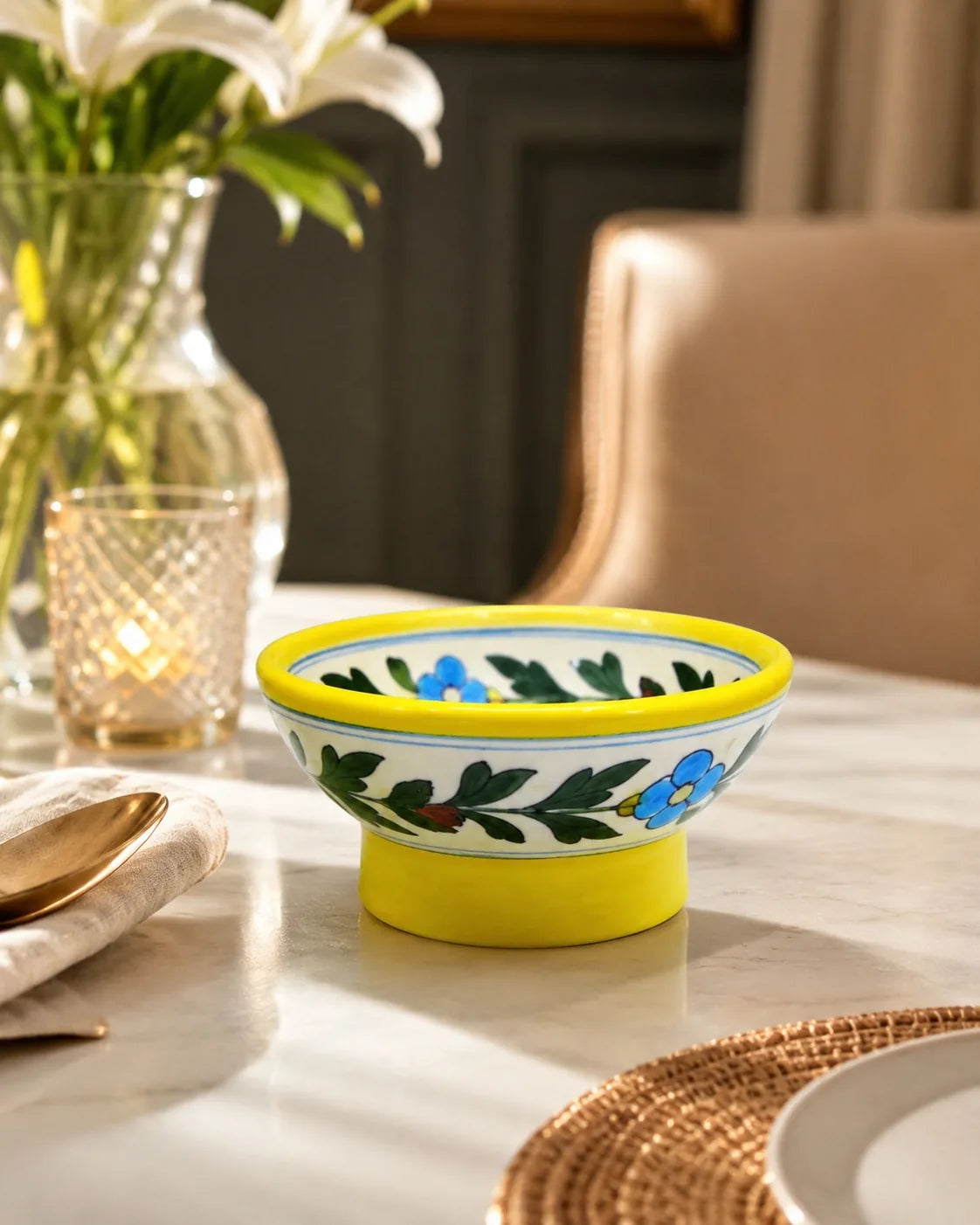
Jaipur blue pottery has one quality that most other craft traditions lack: it is genuinely functional. While Pichwai paintings and Phad scrolls are primarily display objects, blue pottery is made in forms that can be used — plates, bowls, vases, tiles, trays, cups, doorknobs. This functional versatility, combined with the craft's strong visual identity, makes it one of the most adaptable of all Indian decorative arts.
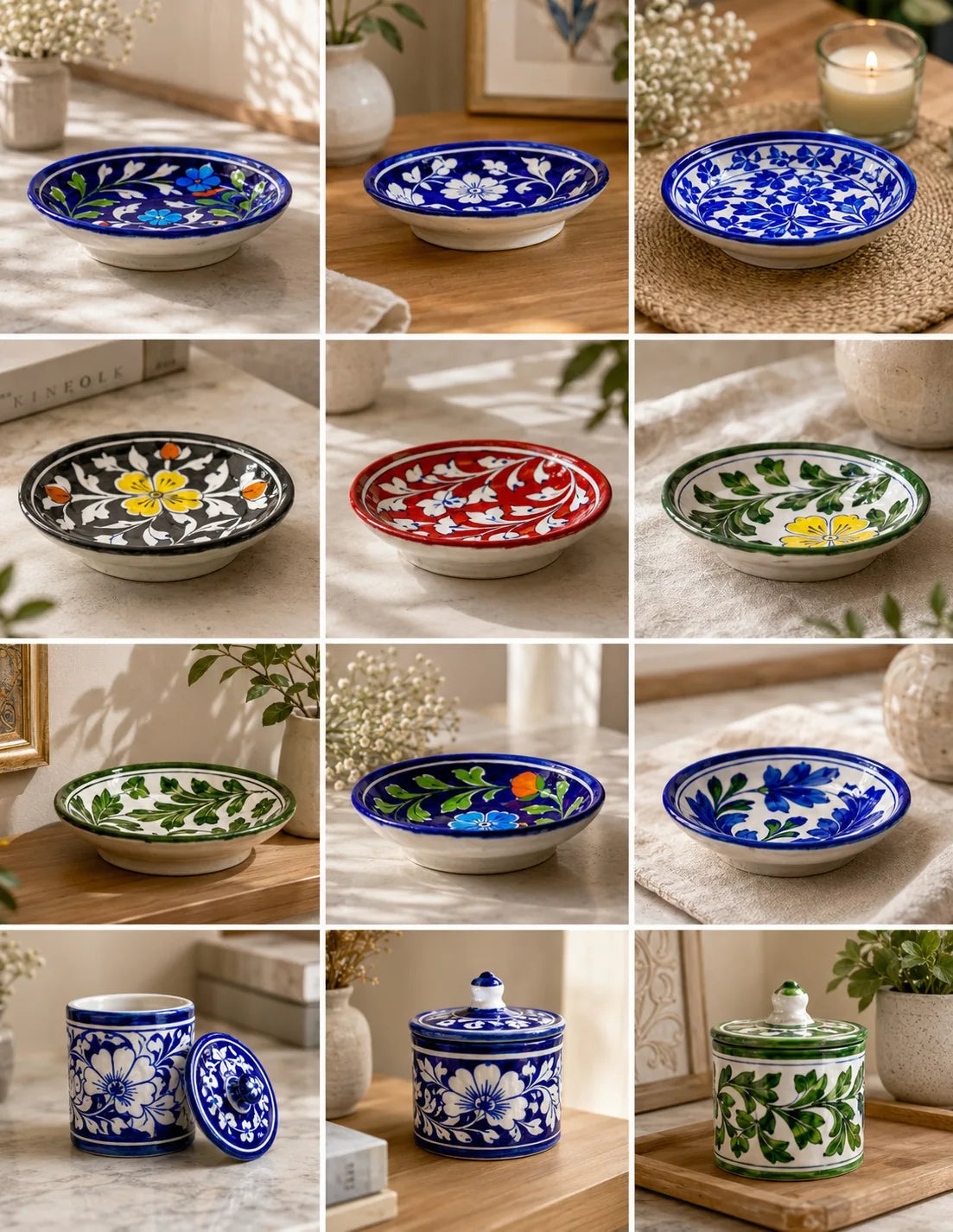
Blue pottery on kitchen shelves is one of the most effective and accessible ways to introduce traditional Indian craft into a contemporary interior. The blue-and-white colour scheme is neutral enough to work with almost any kitchen palette, and the mix of functional objects (bowls, plates, mugs) with purely decorative ones (small vases, tiles) creates a layered, collected quality.
Important: many blue pottery pieces are not dishwasher-safe (the lead-based glazes used in traditional production are not food-safe by modern standards; lead-free alternatives exist but should be confirmed with the seller). For pieces used in food preparation or serving, always confirm food safety with the seller.

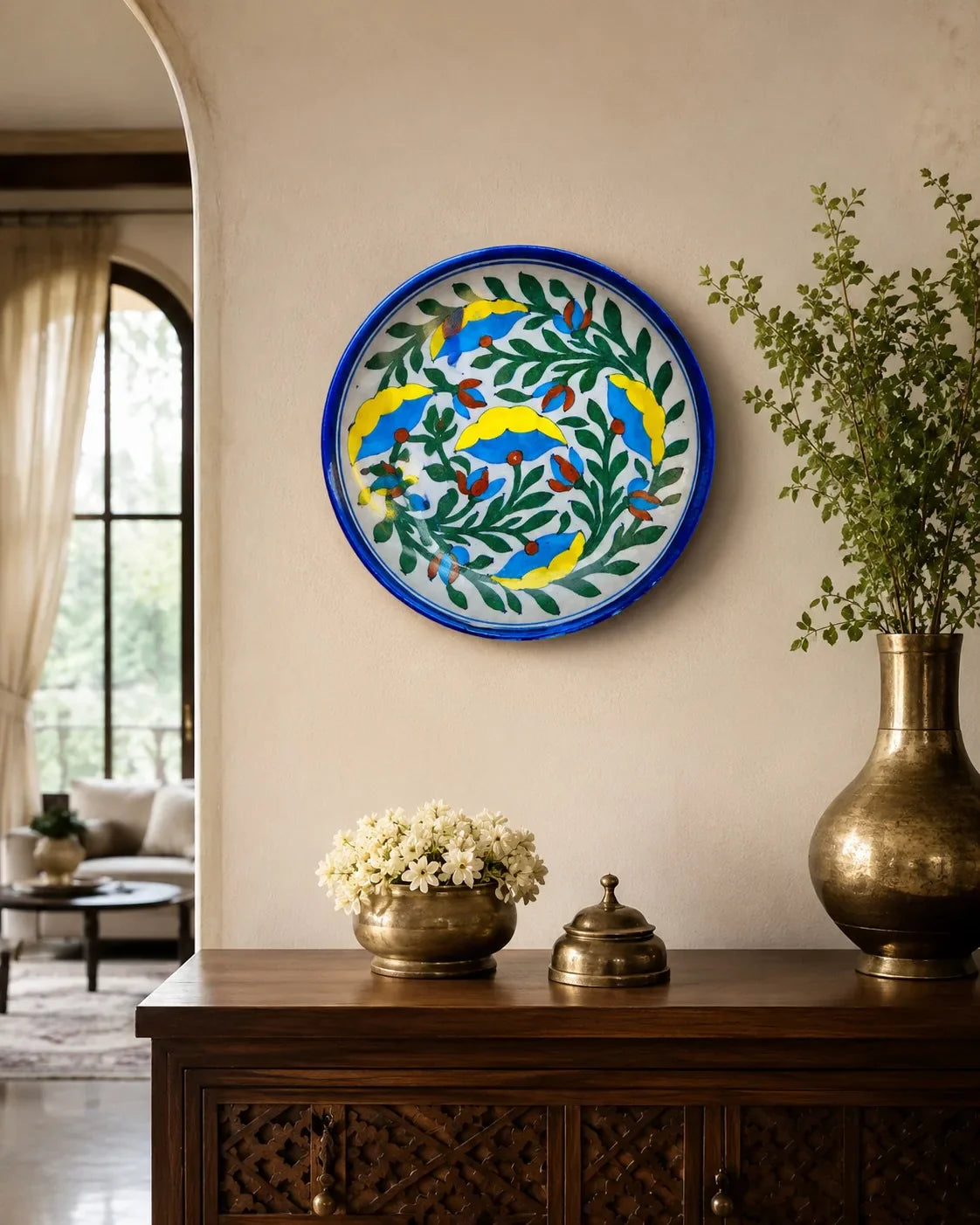
Larger blue pottery pieces — significant vases, decorative platters, lamp bases — work as statement objects in living rooms. A pair of tall blue pottery vases flanking a fireplace or framing a doorway creates a strong visual effect. A large decorative platter mounted on a wall functions as art.
Blue pottery in living rooms works best when it is not overused. Two or three significant pieces, well-placed, are more effective than a dozen smaller pieces scattered around the room.
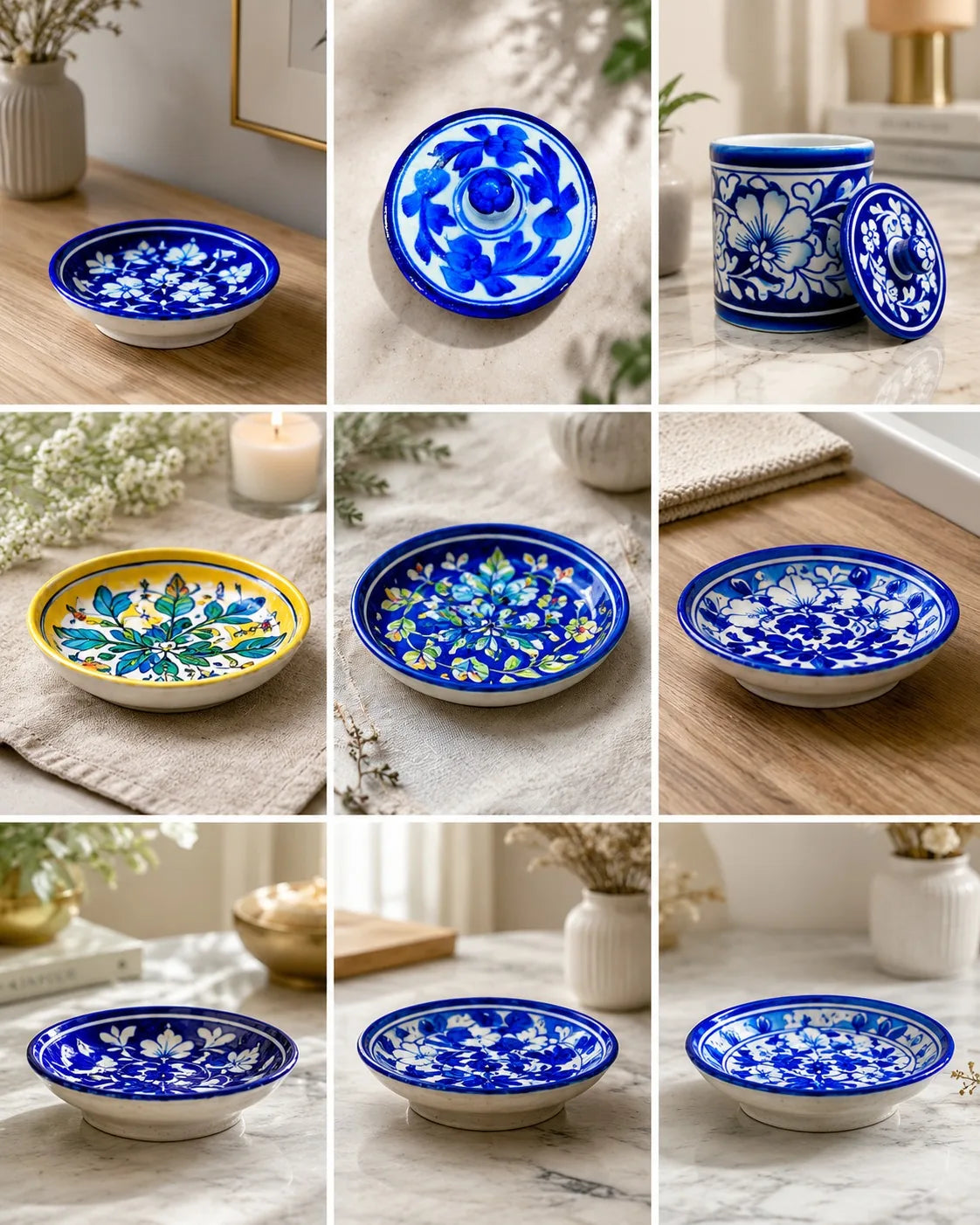
Blue pottery is perhaps most naturally at home in the bathroom, where the blue-and-white colour scheme, the glassy surface, and the moisture resistance of the glazed ceramic all work in its favour. Soap dishes, small bowls for bath salts or cotton balls, a small vase with a single flower — blue pottery in a bathroom creates an immediate sense of considered, layered décor.
Blue pottery tiles and larger decorative pieces work surprisingly well in garden and outdoor settings. A blue pottery plaque or decorative panel set into a garden wall adds colour and craft to the outdoor environment. Blue pottery plant pots — if the piece is designed for outdoor use and the glaze is appropriate — bring the distinctive blue-and-white aesthetic to the garden.
Note: not all blue pottery is suitable for outdoor use. The quartz body can absorb moisture through any unglazed areas, and freeze-thaw cycles in cold climates can cause cracking. Confirm suitability for outdoor use with the seller.
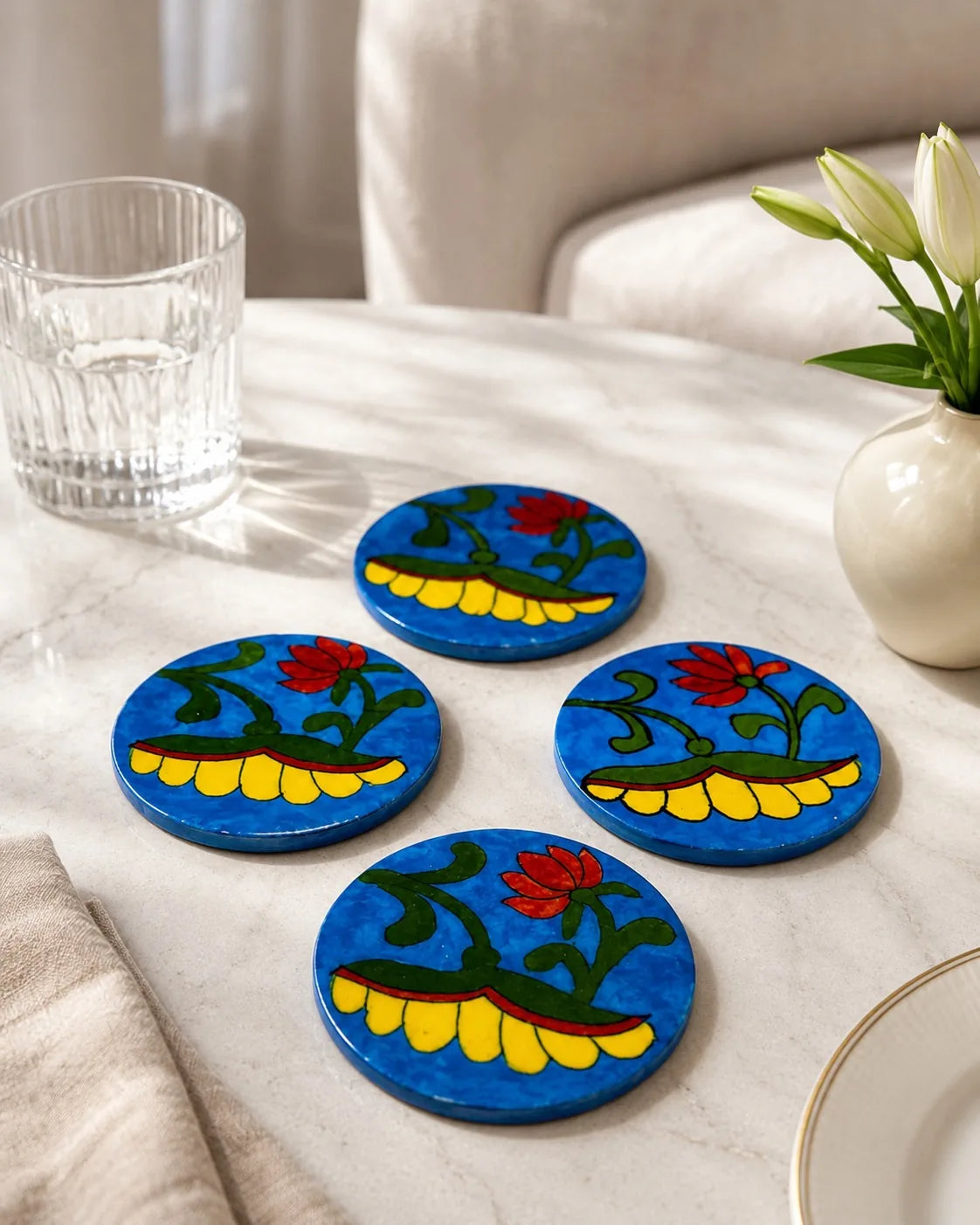
Blue pottery tiles are among the most striking architectural applications of the craft. A panel of blue pottery tiles in a kitchen backsplash, a bathroom wall, or as an architectural accent in a courtyard creates an immediate visual impact.
Tiles can be installed individually (with normal tile adhesive and grout) or in panels. Because blue pottery tiles are not perfectly uniform in thickness, installation requires some care — an experienced tiler familiar with handmade tiles is recommended.
Explore blue pottery in all forms and sizes at https://aavyaan.com/
Loading Mark360 Popup...
