Cart
0
You may also like





By Avyaan | Art Buying Guide | 6 min read

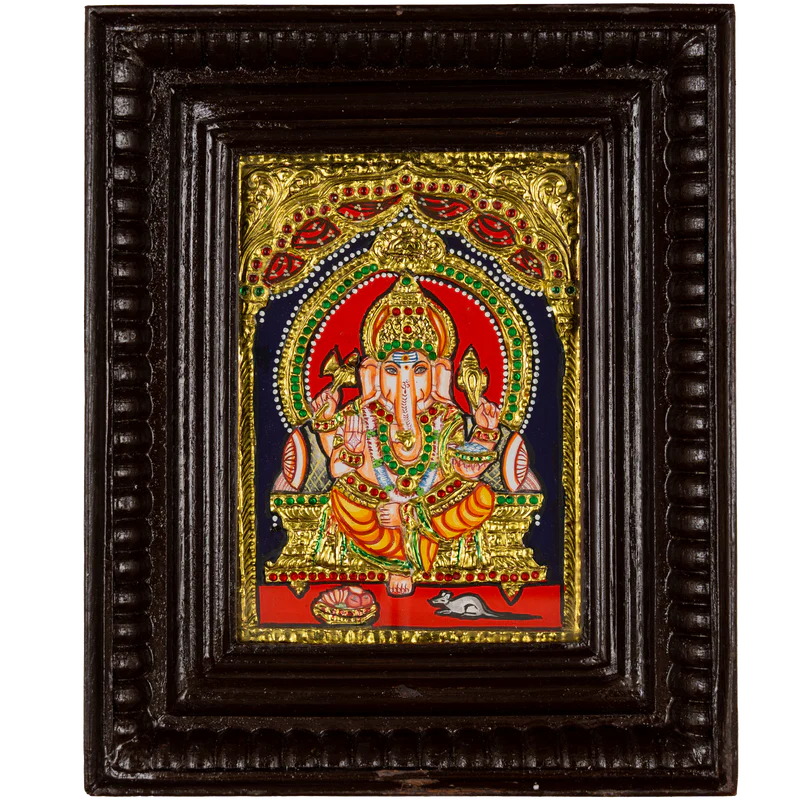
The Tanjore painting market has a well-documented problem with reproductions. High-quality digital prints on board, sometimes with embossed textures to simulate the relief work of the original, are sold at prices ranging from ₹3,000 to ₹25,000 — not as reproductions, but as "hand-painted" works. The markup on a good fake is enormous. Knowing how to tell them apart protects your investment and your integrity as a collector.
Pick up the painting — or, if you're buying online and cannot touch it, ask the seller to send you a video with raking (side-angle) light across the surface. What you are looking for is texture.
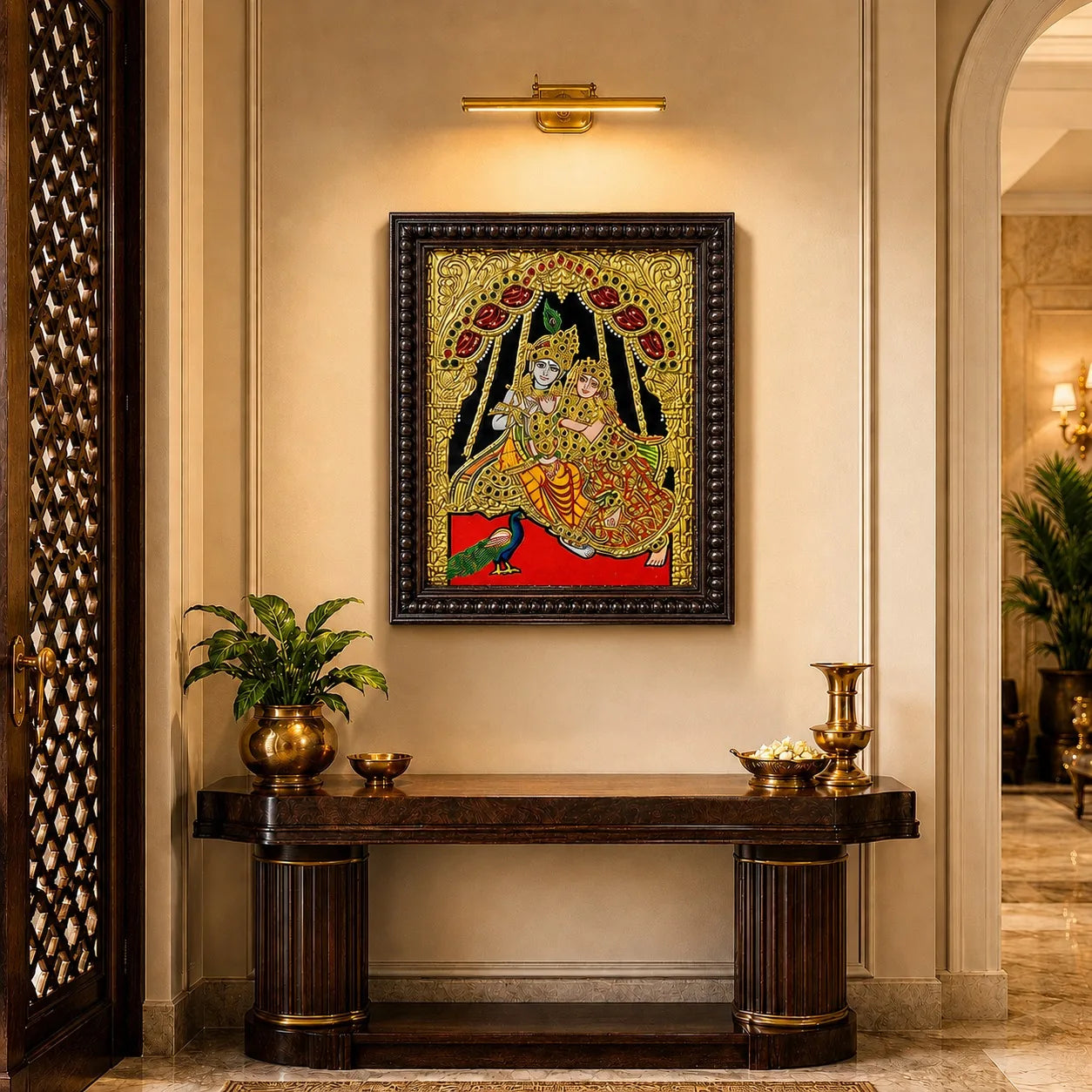
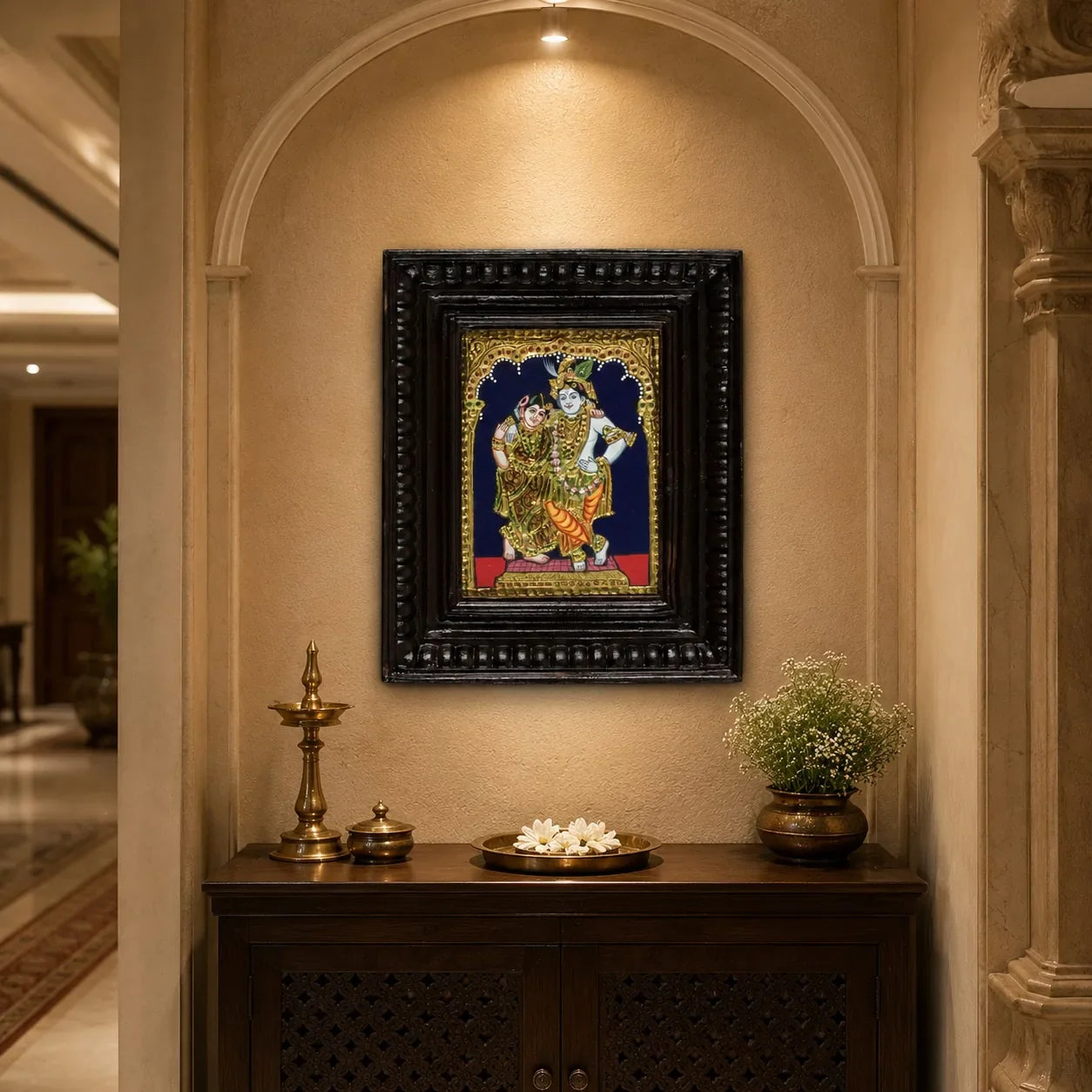
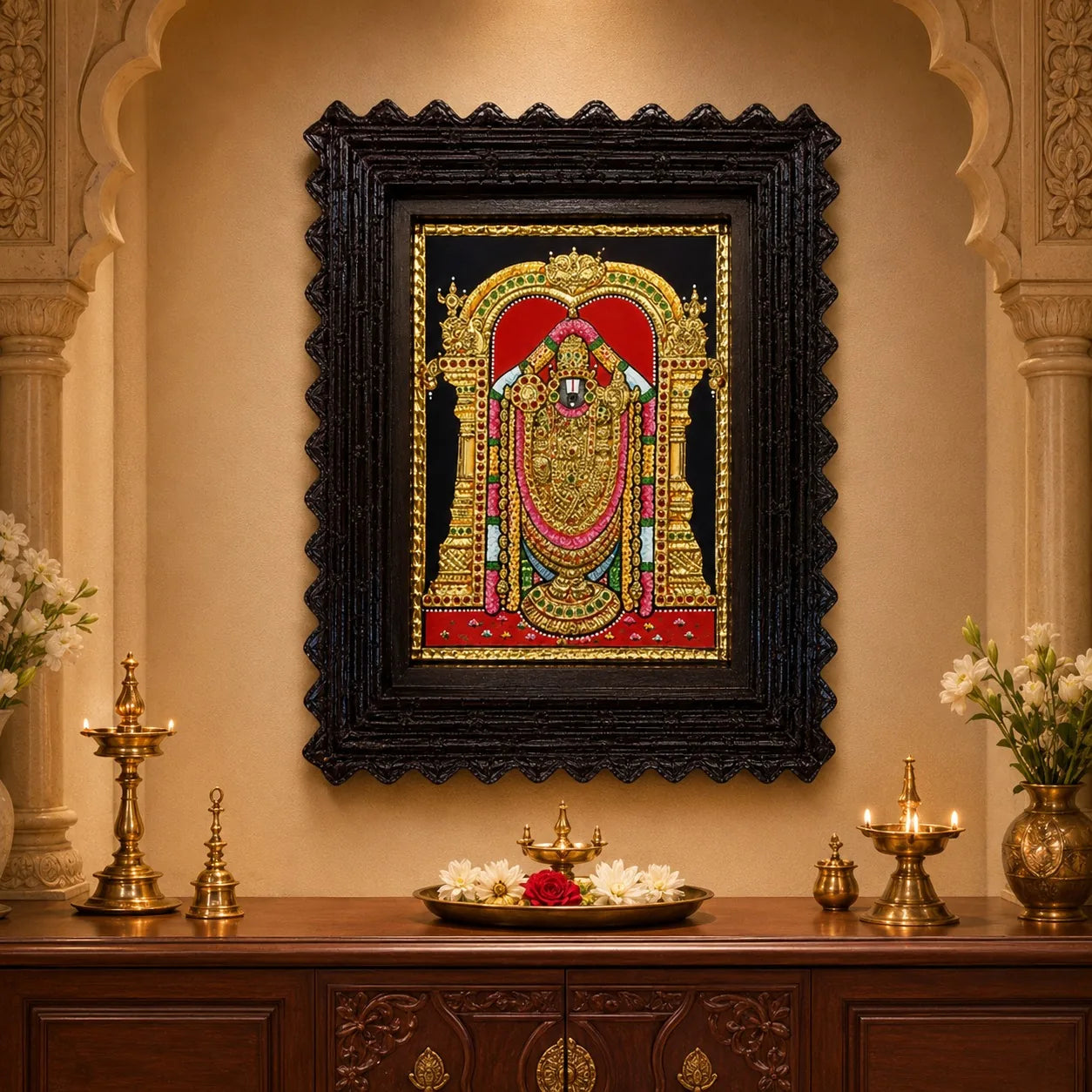
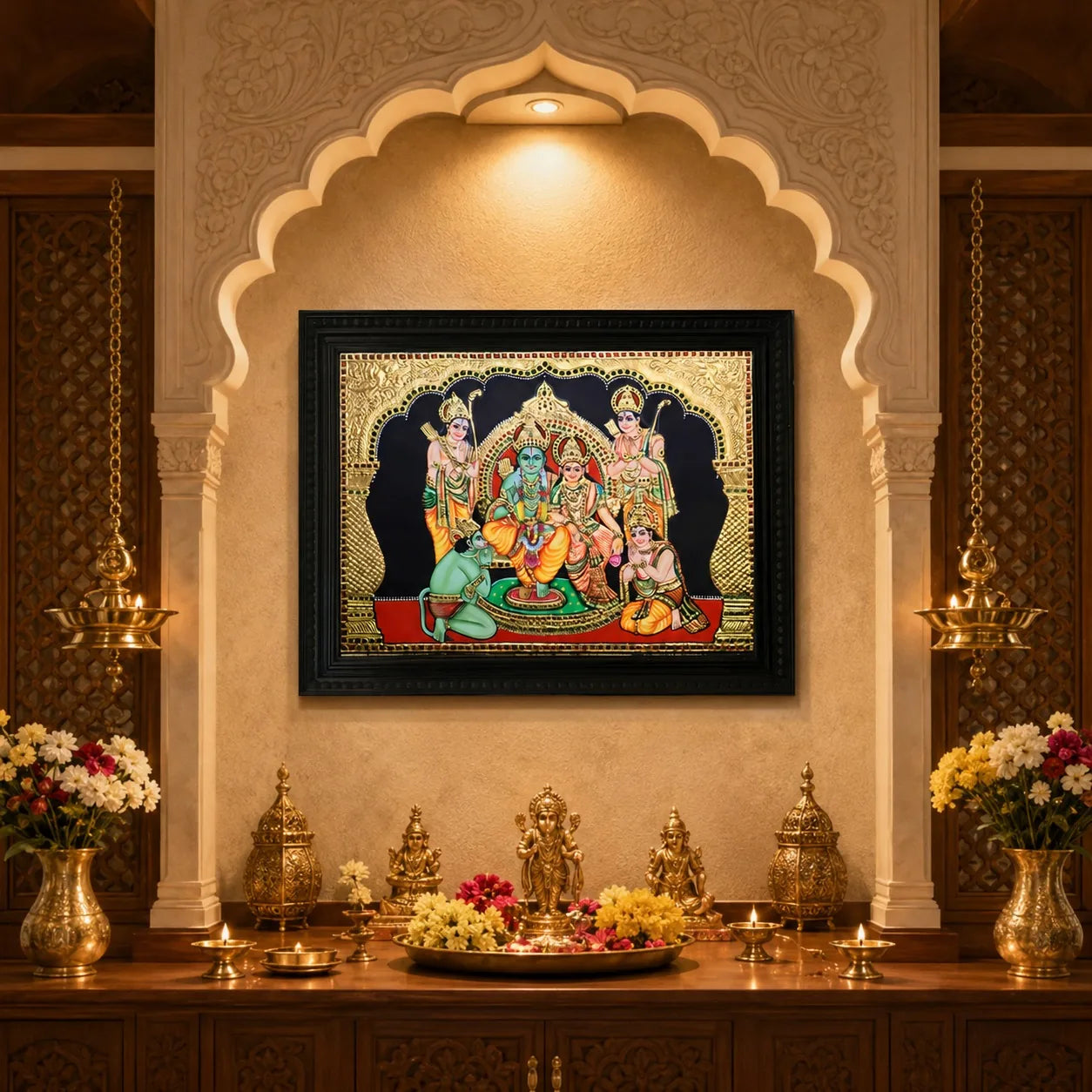
In an authentic Tanjore, the gesso relief work is genuinely three-dimensional. Jewellery, crowns, and decorative borders are raised above the background surface. Run your fingertip across them and you feel the contours. Under raking light, you see shadows in the valleys and highlights on the peaks.
In a print — even a very good one with embossed texture — the raised areas feel uniform and mechanical. The texture was created by a machine pressing a pattern into the surface. It lacks the organic irregularity of hand-applied gesso.
Authentic Tanjore uses real gold leaf, which has specific visual properties: a warm, slightly variable colour, depth and luminosity, and a tendency to develop a very subtle patina over decades. It catches light at different angles and produces a genuine glow.
Reproductions and lower-quality paintings use gold-coloured foil or metallic paint. The tell-tale signs:
Foil looks uniformly shiny — almost mirror-like — without the depth of real gold
Metallic paint has visible brush marks (if applied by hand) or a printed regularity (if applied mechanically)
Neither foil nor metallic paint develops the same patina as real gold over time

High-quality Tanjore paintings incorporate actual stones — set by hand into gesso sockets. If you run your fingertip over the jewellery area of an authentic painting, you feel the hardness and irregularity of real stones. Each stone may be slightly differently shaped; the setting around each stone is unique.
In reproductions, stones are either absent entirely (the area is just printed to look like jewels) or are uniform plastic or glass pieces set mechanically. The tell: printed stones are perfectly flat; plastic stones have uniform shape and setting.
In any representational art form, the quality of the face — and specifically the eyes — is where the skill (or lack of it) is most visible. In authentic Tanjore painting, the eyes are rendered with extraordinary care: large, almond-shaped, with a white highlight (pupil dot) that gives them life. Look closely and you can see individual brushwork — the slightly imperfect line that is the hallmark of a human hand.
In prints, eyes are reproduced photographically — perfect and uniform, with crisp edges and no brushwork evidence. In poor-quality hand-painted copies, eyes are simplified and lack the luminosity of the originals.
A genuine Tanjore painting of modest size (12 x 18 inches) with competent gold work and stone-setting takes an experienced painter 4-6 weeks. The cost of materials alone — gold leaf, semi-precious stones, quality cloth and board — runs to several thousand rupees. A genuine piece cannot be sold at ₹5,000.
Quality Tanjore paintings start at around ₹8,000-12,000 for small, simpler compositions and can easily run to ₹2,00,000 or more for large, complex, highly embellished works. If you are being offered something in the middle of this range for ₹3,000, you are not buying a Tanjore painting.
Any reputable seller of authentic Tanjore can tell you who made it. Many Tanjore painters sign their work on the reverse. Sellers who can name the artist, describe their training, and ideally provide a photograph of the artist's studio are far more trustworthy than those who cannot say anything about the painting's origins.
All Tanjore paintings at Avyaan come with artist information and authenticity documentation: https://aavyaan.com/
Loading Mark360 Popup...

