Cart
0
You may also like





By Avyaan | Art & Culture | 7 min read

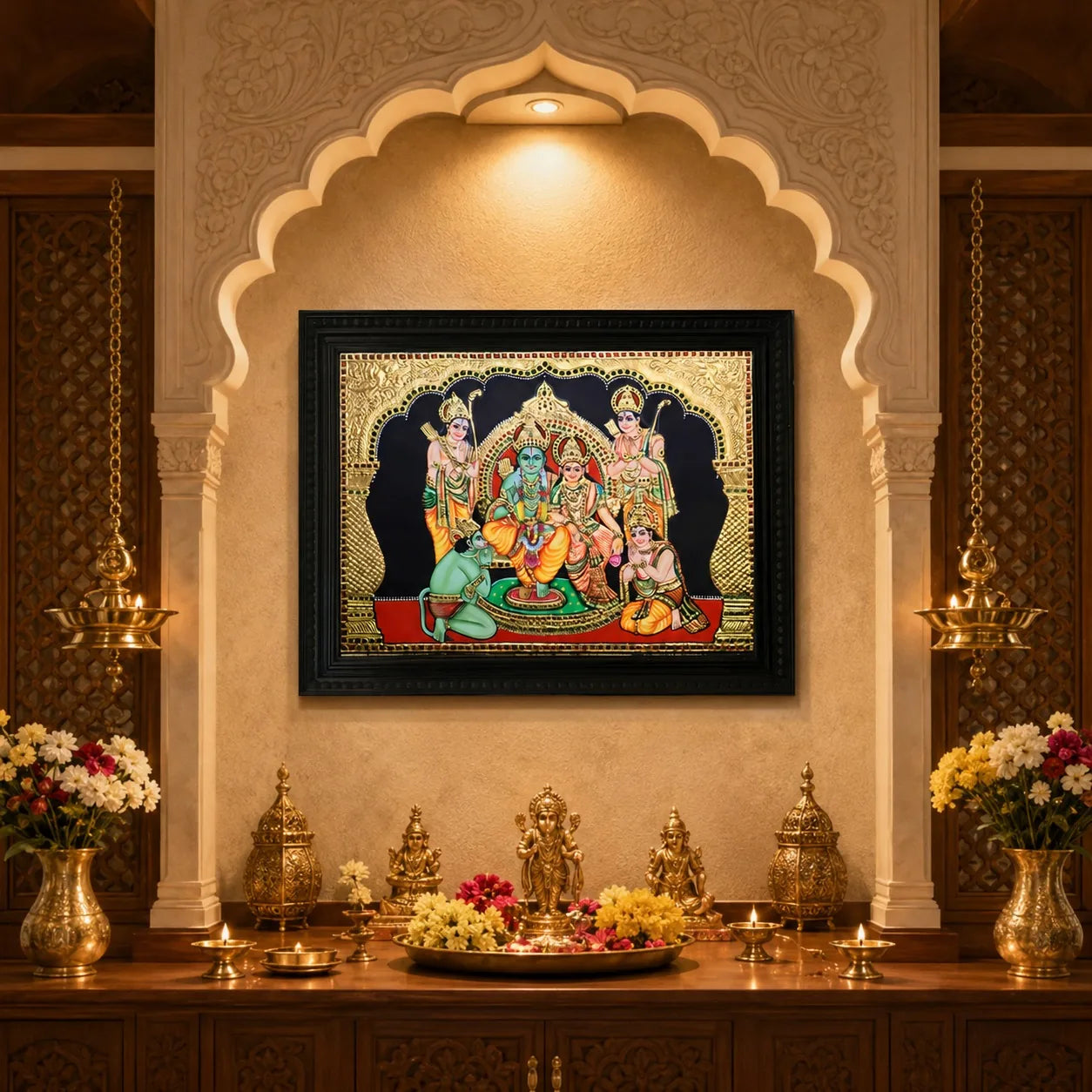
One of the pleasures of understanding Indian devotional art is that each image is a text. The deity depicted, the objects they hold, the vehicle they ride, the colour of their garments — all of these are meaningful choices that convey specific theological and mythological content. For Tanjore painting, this is particularly true.
This guide explains the most common Tanjore subjects and what they mean — both in the Hindu tradition and in the more practical context of which subject works in which room.
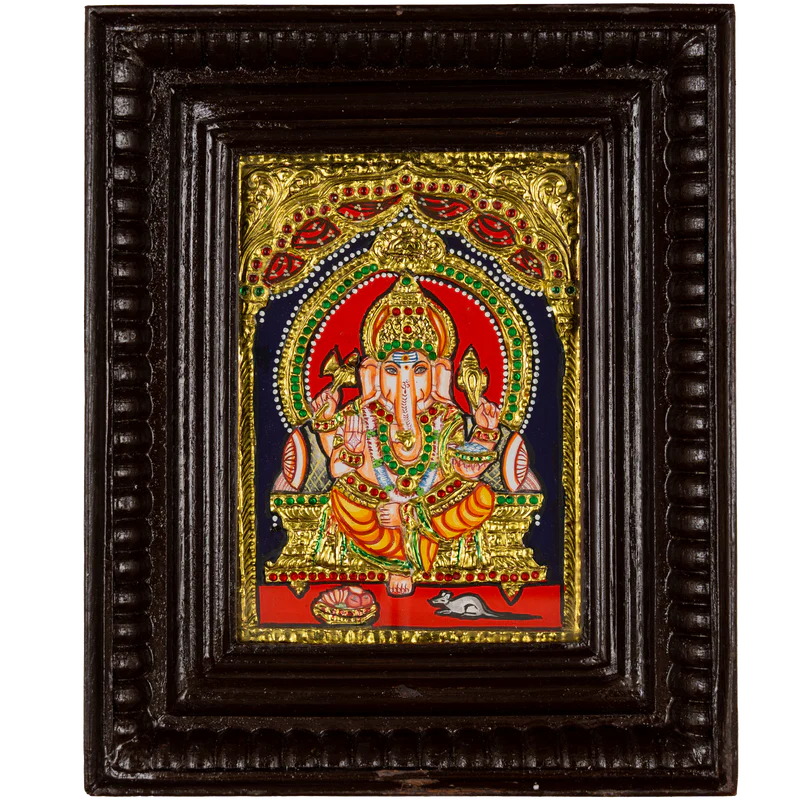
Ganesha is the most commonly depicted deity in Tanjore painting — and the most universally appropriate. As the remover of obstacles and the lord of beginnings, Ganesha is the deity invoked at the start of any new venture: a new home, a new business, a new year. He is always depicted with an elephant head, a large belly, and one broken tusk (which, in one telling, he used to write down the Mahabharata as Vyasa dictated it).
In Tanjore, Ganesha is typically shown in seated position (vajrasana or lalitasana), holding a ladoo (sweet), a trishula or ankusha (goad), and a noose. His vehicle, the mouse (mushaka), is often depicted at his feet.
Best placement: entrance, study, office, or any room associated with new beginnings.

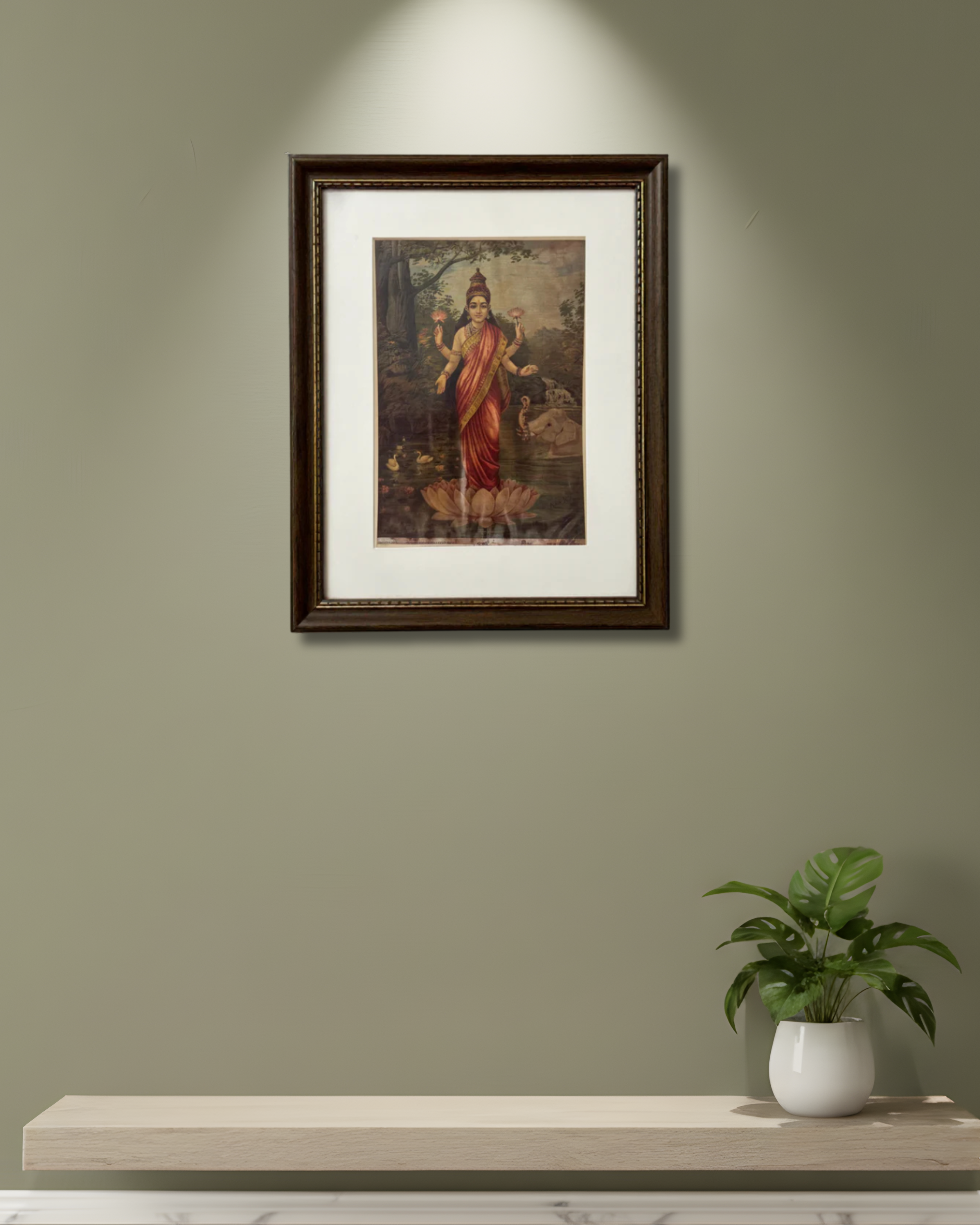
Lakshmi is the goddess of wealth, beauty, and good fortune. She is shown seated or standing on a lotus, typically with four arms, holding lotus flowers and showering gold coins. Her two most important iconographic contexts in Tanjore are:
Vaibhava Lakshmi or Gaja Lakshmi: Flanked by two elephants who pour water over her from their trunks — an image of royal consecration and abundant blessing
Lakshmi-Narayan: Shown seated on the lap of Vishnu, or beside him — the divine couple, representing the complete union of beauty and preservation
Best placement: entrance hall (to bless the home), study or home office (for prosperity associations), living room.
Saraswati is the goddess of knowledge, music, and all the arts. She is depicted in white garments (representing purity), seated on a white lotus or a swan, holding her veena (a stringed instrument). Her four arms hold, variously, the veena, a book (the Vedas), a rosary (for contemplation), and a water pot.
In homes where learning is central — where children study, where books are important, where music or art is practised — Saraswati is a particularly resonant choice.
Best placement: study room, library, children's room, music room.
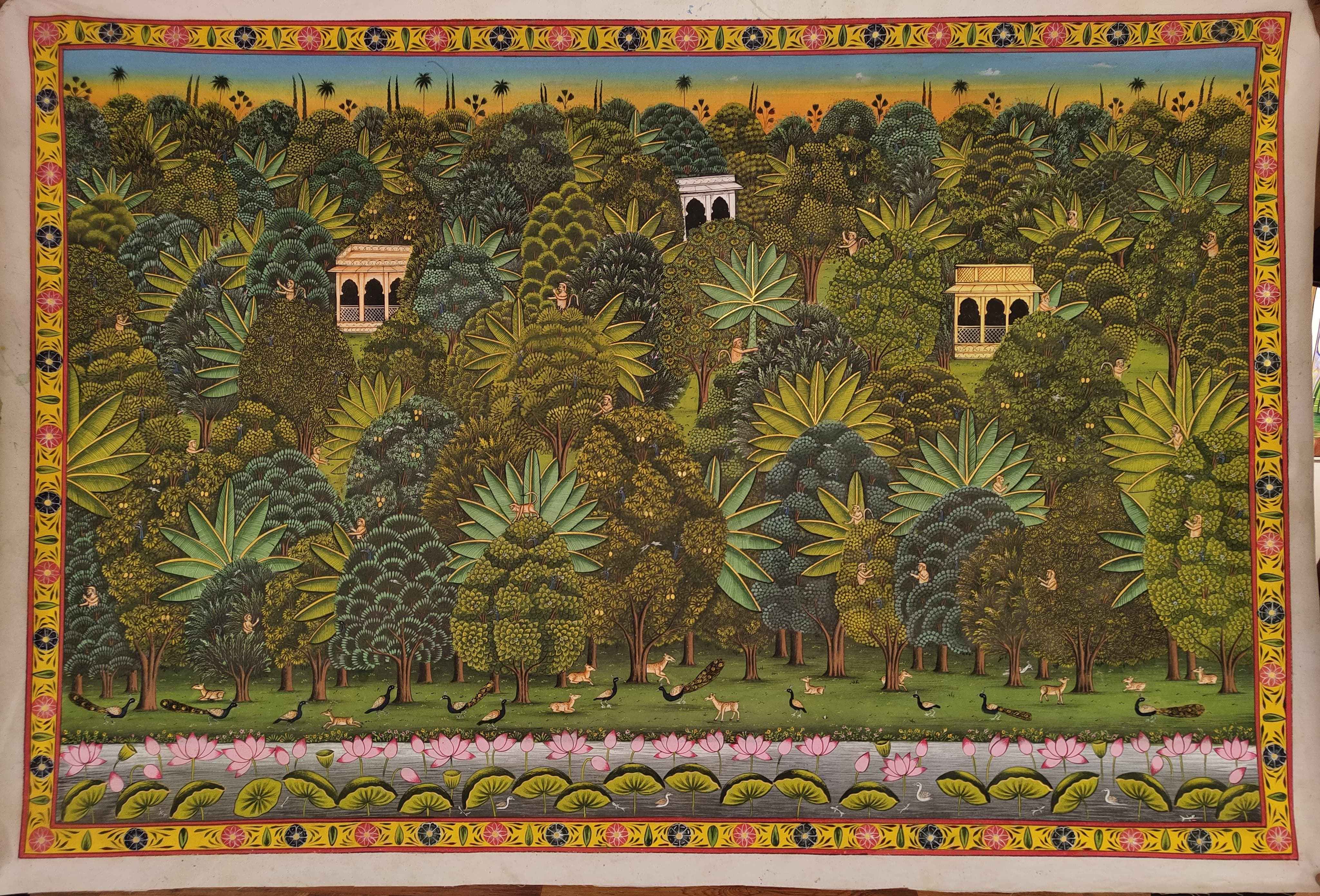
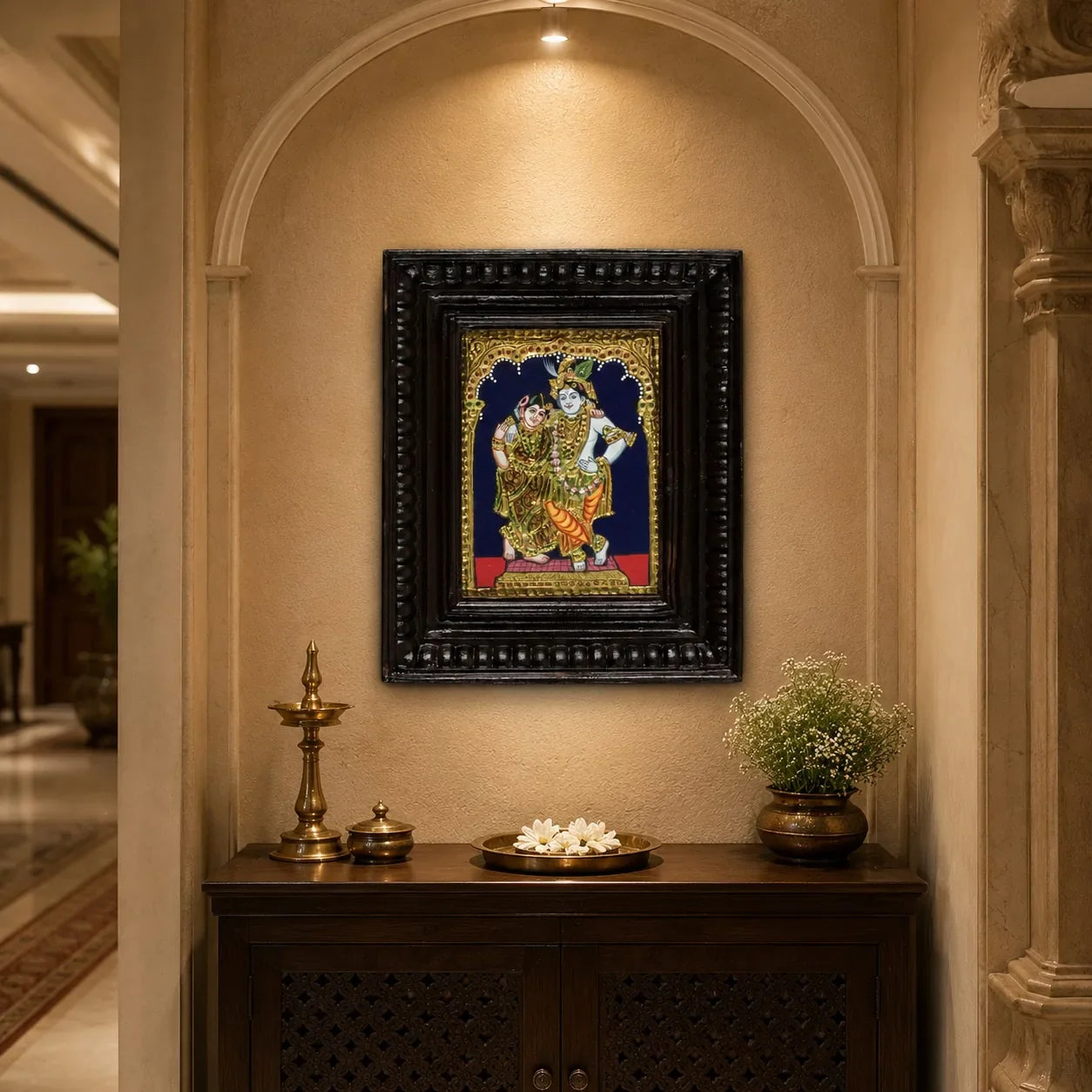
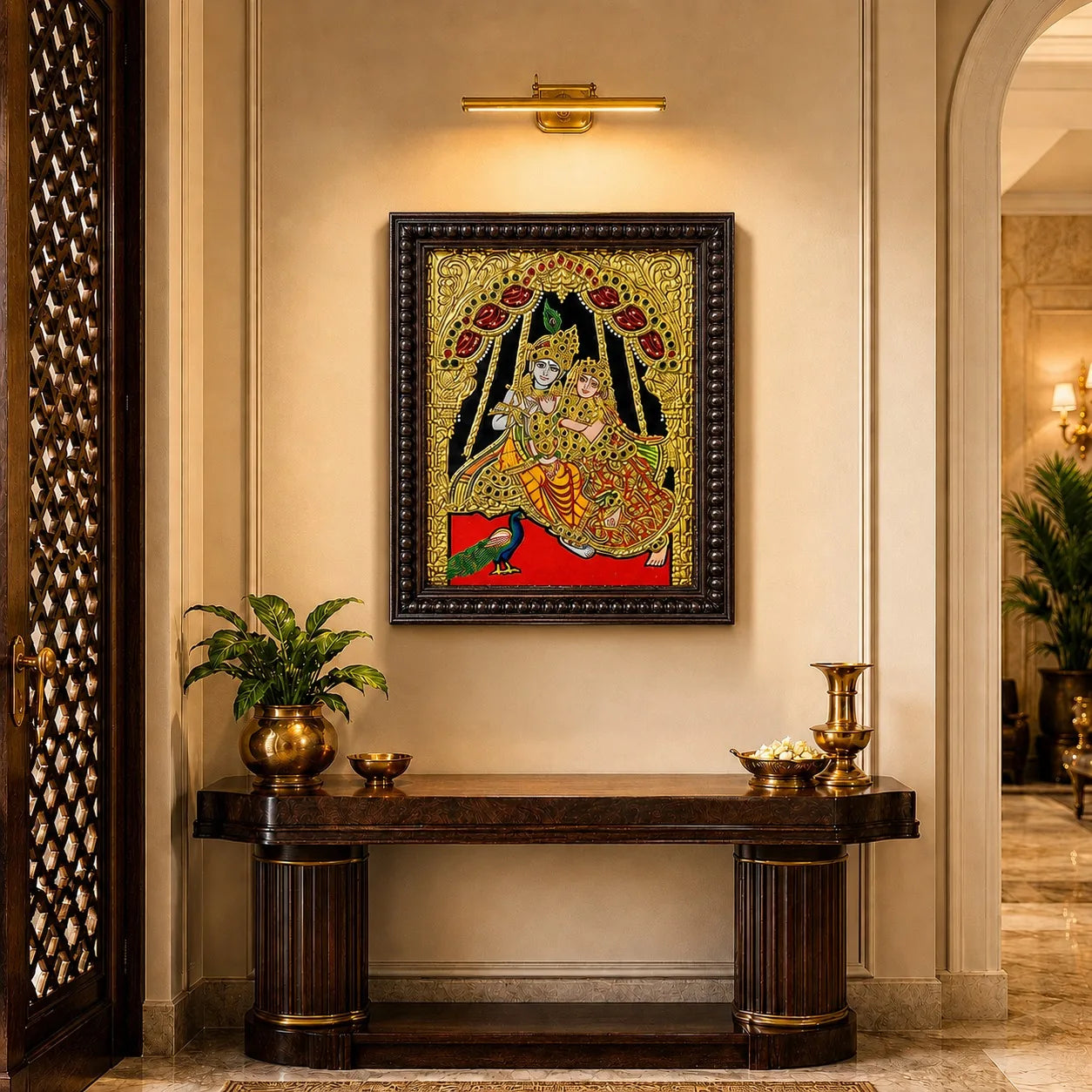
The story of Radha and Krishna — the cowherd god and the milkmaid who loves him with total, self-forgetting devotion — is the great love story of Hindu devotion. In Tanjore painting, Radha-Krishna compositions typically show the couple together in the forest of Vrindavan: standing together, Krishna playing the flute, Radha listening, surrounded by flowering trees and the eternal pastoral landscape of their love.
Radha-Krishna is one of the most popular Tanjore subjects for home display — it brings a quality of love and grace to any room.
Murugan is the son of Shiva and Parvati, the commander of the divine armies, the deity of youth, vitality, and victory. He is extremely popular in South India — particularly in Tamil Nadu — and Tanjore paintings of Murugan are some of the most technically demanding in the tradition.
He is depicted with a vel (spear) in hand, riding his vehicle the peacock, accompanied sometimes by his consorts Devasena and Valli.
More complex Tanjore paintings sometimes depict the ten avatars of Vishnu — Matsya (fish), Kurma (tortoise), Varaha (boar), Narasimha (man-lion), Vamana (dwarf), Parashurama, Rama, Krishna, Balarama (or Buddha), and Kalki. These paintings function as theological summaries of Vaishnavism's understanding of cosmic history — each avatar representing a divine intervention at a specific moment of universal crisis.
Understanding what you are looking at transforms the experience of living with a Tanjore painting. The gold is beautiful regardless. But the painting is far richer once you know its text.
Explore Tanjore paintings by subject at https://aavyaan.com/
Loading Mark360 Popup...
