Cart
0
You may also like
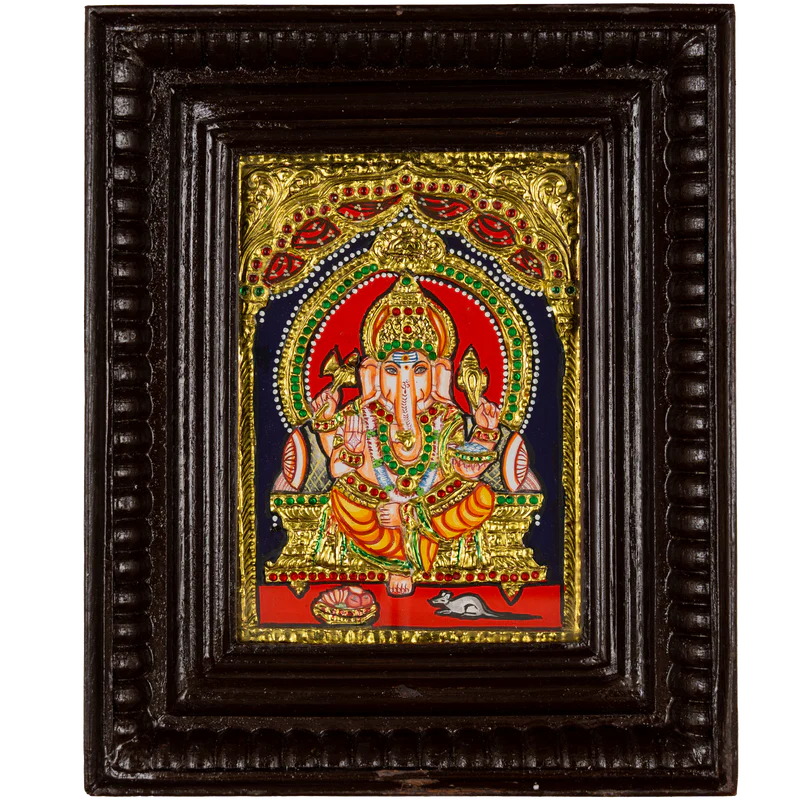





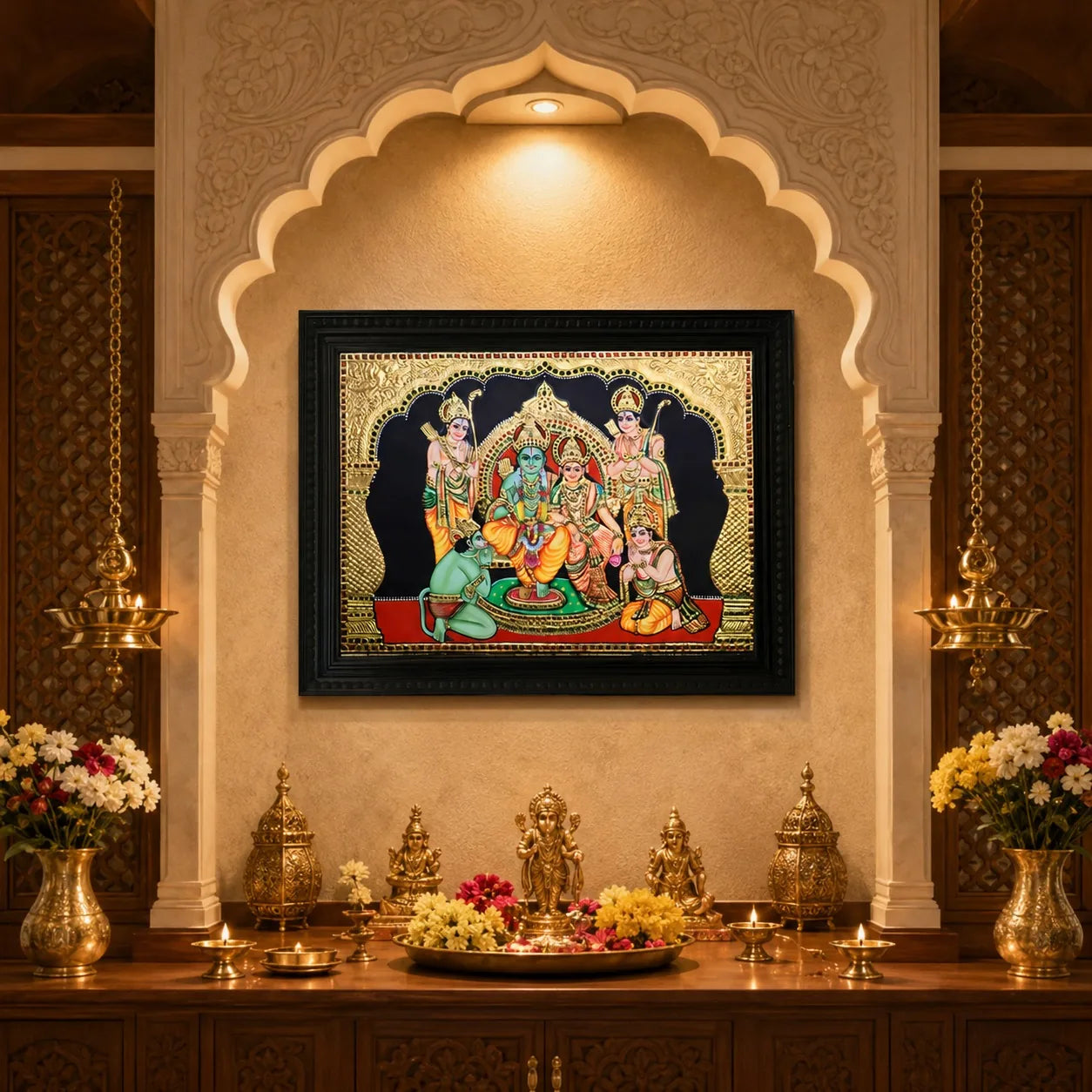
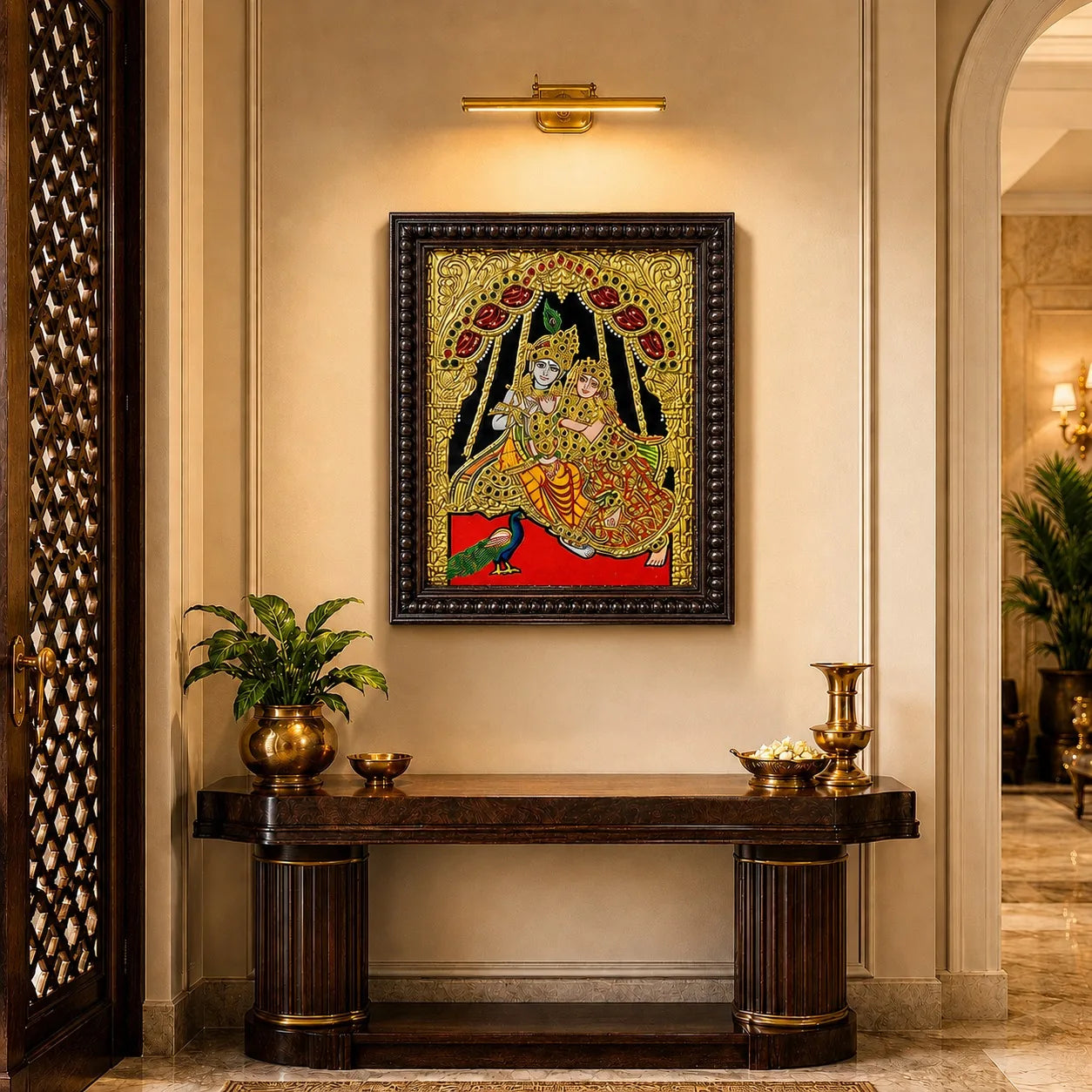
There is a particular kind of light that Tanjore paintings create in a room — not reflected light exactly, more like an emanation. The gold leaf surface catches and redirects light in a way that changes as you move, as the day shifts, as a lamp is brought close or taken away. This quality — this living luminosity — is not accidental. It is the entire point.
Tanjore painting (Thanjavur painting, named for the southern Tamil Nadu city that remains its centre) is one of the few living Indian art traditions that uses real gold leaf as a primary material. The gold is not a detail or an accent — it is, in many paintings, the dominant visual element. And it has been for at least a thousand years.
Tanjore painting emerged in the 16th century under the Nayak rulers of the Thanjavur region. The Nayaks were great temple-builders and patrons of the arts, and the visual language they encouraged — rich colour, devotional subjects, architectural backgrounds with towering gopurams — became the foundation of what we now call Tanjore painting.
The art form reached its fullest development under the Maratha rulers of Thanjavur (1676-1855), who brought with them the artistic traditions of Maharashtra and integrated them with existing South Indian craft practices. The Marathas created a court culture that prized fine craftsmanship, and Tanjore painting flourished in this environment — growing in technical sophistication and developing the distinctive layered gold work that is the tradition's most recognisable feature.

Traditional Tanjore paintings are done on cloth that has been stretched over a wooden board and primed with a mixture of chalk powder and an adhesive (traditionally tamarind seed paste or white lead). This creates a smooth, firm surface that can support the weight of multiple layers of gesso, colour, and gold without warping.
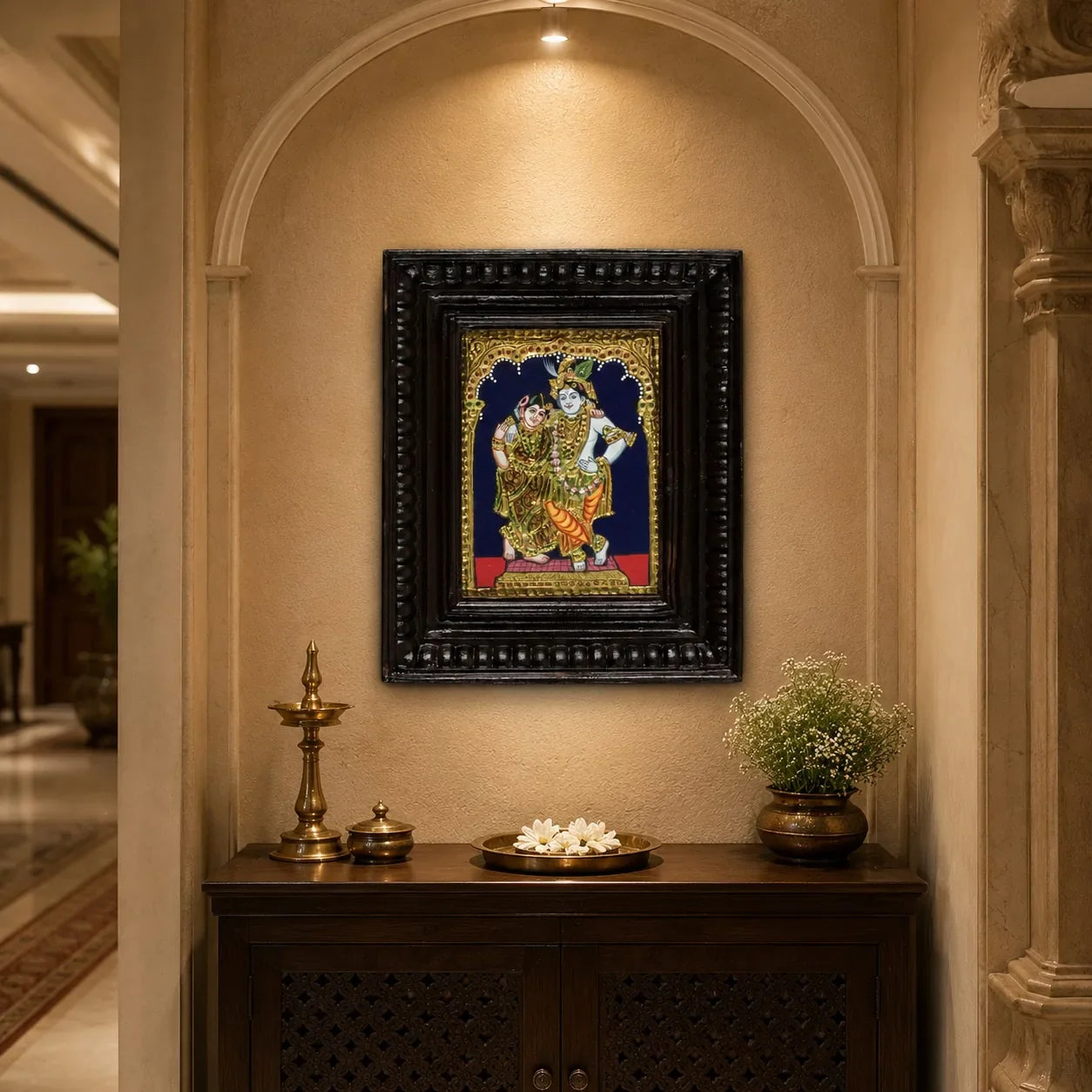
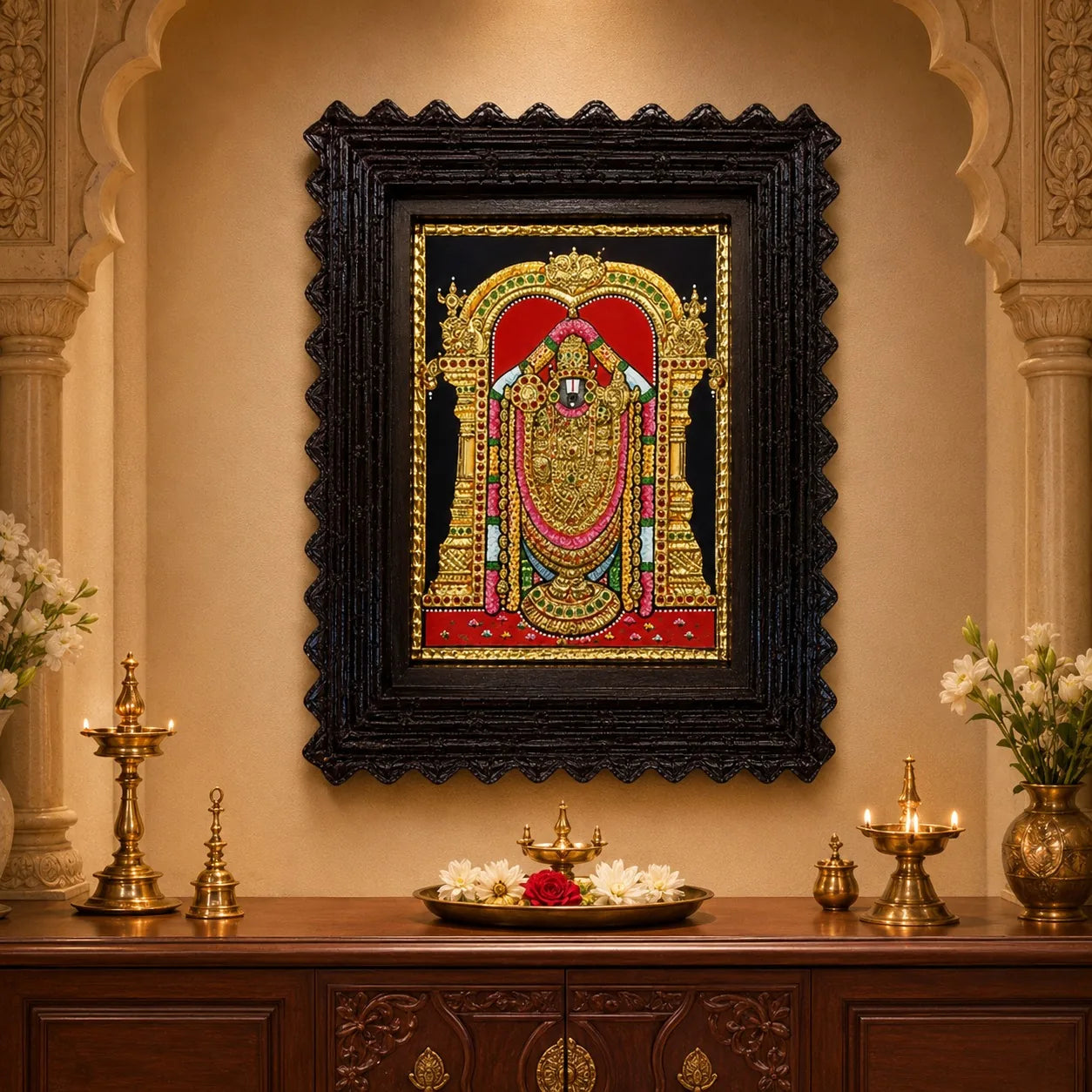
One of the most distinctive features of Tanjore painting is its three-dimensional quality. Jewellery, crowns, architectural elements, and sometimes entire figures are built up in low relief using a gesso-like compound before the painting is done. When the gold leaf is applied over these raised elements, the result is genuinely sculptural — you can feel the texture of the jewels with your fingertip, and the relief creates play of shadow and light that flat painting cannot achieve.
The gold used in traditional Tanjore painting is real gold — 22-carat gold leaf, hammered to translucent thinness and applied in sheets over an adhesive-coated surface. Cheaper versions use gold-coloured foil or metallic paint. The difference is immediately apparent: real gold has depth and warmth; foil or paint is flat and tends to look brassy or tinny.

High-quality Tanjore paintings incorporate semi-precious or glass stones — rubies, emeralds, pearls, diamonds (usually simulated) — set into the gesso relief work to represent the jewellery of the depicted deity. These stones are placed by hand, one by one, each secured in a gesso setting. In the finest examples, this jewelling is extraordinarily refined — the painter has essentially made the deity's ornaments out of real materials, not painted them.
Tanjore painting is primarily a devotional art form. The vast majority of traditional subjects are Hindu deities, and most of these are deities particularly venerated in South India:
Ganesha: The most commonly depicted deity — auspicious, accessible, appropriate for any space
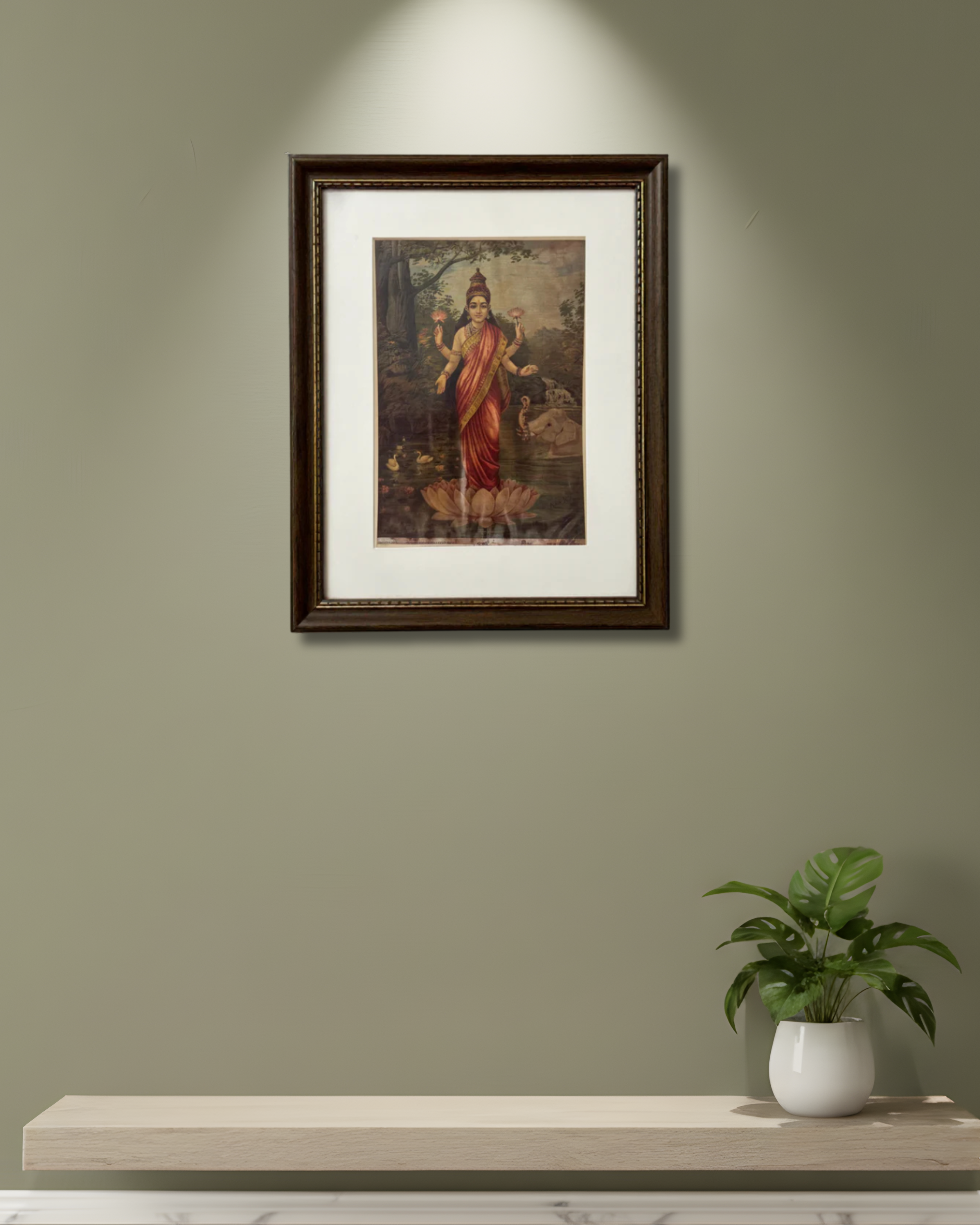
Lakshmi: The goddess of wealth and prosperity, often shown seated on a lotus or flanked by elephants
Saraswati: The goddess of learning and the arts, often shown with her veena
Vishnu with his ten avatars (Dashavatara): A popular subject for larger paintings
Radha-Krishna: The divine couple, particularly popular for homes
Murugan (Kartikeya): Especially popular in Tamil Nadu, where he is the presiding deity of the Thanjavur region
In addition to deities, Tanjore painting has a tradition of portraiture — particularly royal portraits from the Maratha period, which show rulers in the same style and with the same reverence as divine figures.
The Tanjore market is, like the Pichwai market, full of varying quality. Here is what distinguishes a genuine, high-quality work:
The gesso relief work is raised and tactile — you can feel it
The gold is warm, deep, and has slight variation (the characteristic of real gold leaf)
The semi-precious stones (if present) are actual stones, not painted dots
The eyes of the figure are detailed, not simplified or cartoonish
The painting was done on cloth over board, not on paper
Explore authentic Tanjore paintings with full provenance at https://aavyaan.com/
Loading Mark360 Popup...

