index
Imagine walking into an elite art gallery, spotting a breathtaking Raja Ravi Varma masterpiece, and discovering it isn't a traditional hand-painted oil canvas—yet it is worth lakhs of rupees.
Welcome to the fascinating world of Vintage Oleographs.
If you are an art enthusiast browsing sites online, you have probably seen terms like Oleograph, Lithograph, and Oil Painting thrown around. Many sellers take advantage of amateur collectors by selling modern ₹500 digital prints under the guise of "rare heritage art."
Before you spend your hard-earned money, here is the brutal truth and absolute value guide to understanding what you are buying.

1. The Big Misconception: Is it just a print?
The biggest mistake people make is treating an oleograph like a modern poster. It is not.
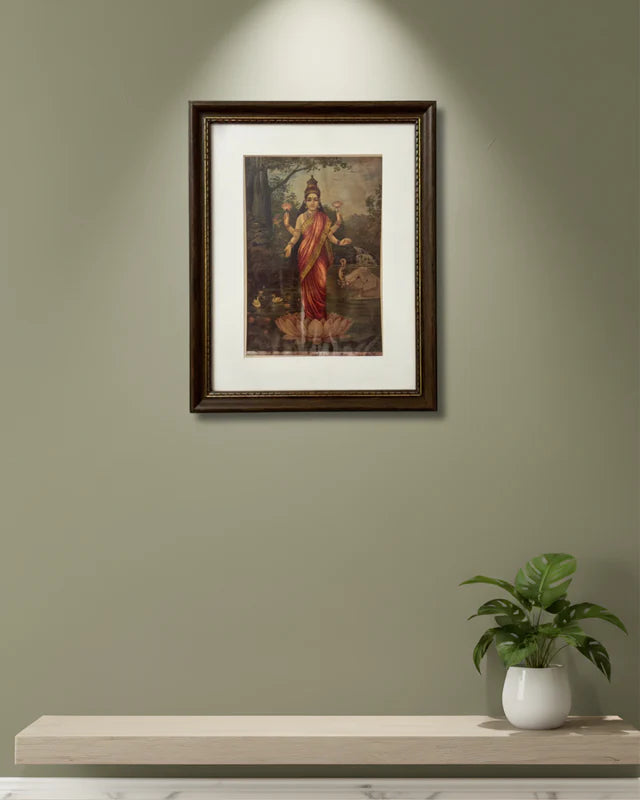
In the late 1890s, Raja Ravi Varma wanted to democratize art. He didn't want his paintings to be locked away in royal palaces. So, he imported heavy, expensive lithographic limestones from Germany and set up the historic Ravi Varma Fine Art Lithographic Press.
  • The Grueling Process: An oleograph (or chromolithograph) is printed by pressing a single piece of paper against multiple limestone plates. Each color requires a separate stone. If a painting has 20 colors, it goes through 20 different stones, aligned manually with millimeter precision.
  • The Master's Touch: To finish it, oil-based inks were textured or embossed to mimic the actual physical brushstrokes of an oil painting.
When you buy a 100-year-old original oleograph, you are not buying a photocopy. You are buying a piece of industrial art history supervised by the master painter himself.

2. The Quick Comparison: Oleograph vs Oil Painting vs Lithograph
To make sure you never get confused again, here is a master checklist:
The Ultimate Art Checklist Oleograph (Chromolithograph) Original Oil Painting Standard Lithograph
How is it made? Multi-colored chemical stone-printing using oil inks. Pigments applied manually with brushes on canvas. Traditional press print, usually monochrome or dual-toned.
Rarity Factor Highly limited survival from the early 1900s. One-of-a-kind, unique piece in the world. Mass-printed document style on flat limestone.
The Surface Feel Simulated canvas grain with a vintage, aged oily patina. Thick, raised, uneven layers of physical paint. Smooth, flat ink on paper with absolutely no paint texture.

3. The Art Market Secrets: How to Spot a Fake in 10 Seconds
If a seller claims they have an original vintage Gopi Vastraharan or Ganga Avataran oleograph, do these three tests immediately:
  • The Magnifying Glass Test (The "Dots" Secret): Look closely at the artwork under a magnifying glass. If you see tiny, symmetrical rows of cyan, magenta, yellow, and black dots—it is a modern digital fake. Original stone-pressed oleographs have a continuous, smooth, erratic flow of ink layers, not digital dots.
  • The Paper Backing: Original 100-year-old paper has a natural, deep cream or brownish tint on the backside caused by oxidation over a century. If the back of the paper looks bright white or chemically bleached, run away.
  • The Press Stamp: Look at the margins. Authentic Ravi Varma press prints usually carry tiny printed inscriptions at the bottom, such as "Registered No..." or "Ravi Varma Press, Karla-Lonavla".

4. Why This is Better Than Buying Gold (The Investment Factor)
Original oil paintings by legendary Indian masters can fetch crores at international auctions. But original vintage oleographs are the sweet spot for smart collectors.
The original German limestones used to print these artworks were destroyed or lost decades ago. No more original oleographs can ever be created. As time goes on, the number of surviving prints drops significantly due to wear and tear.
Owning a verified piece like Avyaan’s original Raja Ravi Varma collection is not just an aesthetic upgrade for your living room—it is a financial asset that appreciates in value every single year.

Bring Royal Heritage into Your Living Room
At Avyaan, we spend months tracking down, authenticating, and preserving genuine vintage Indian art pieces. Don’t settle for cheap digital prints when you can own an authentic piece of history.