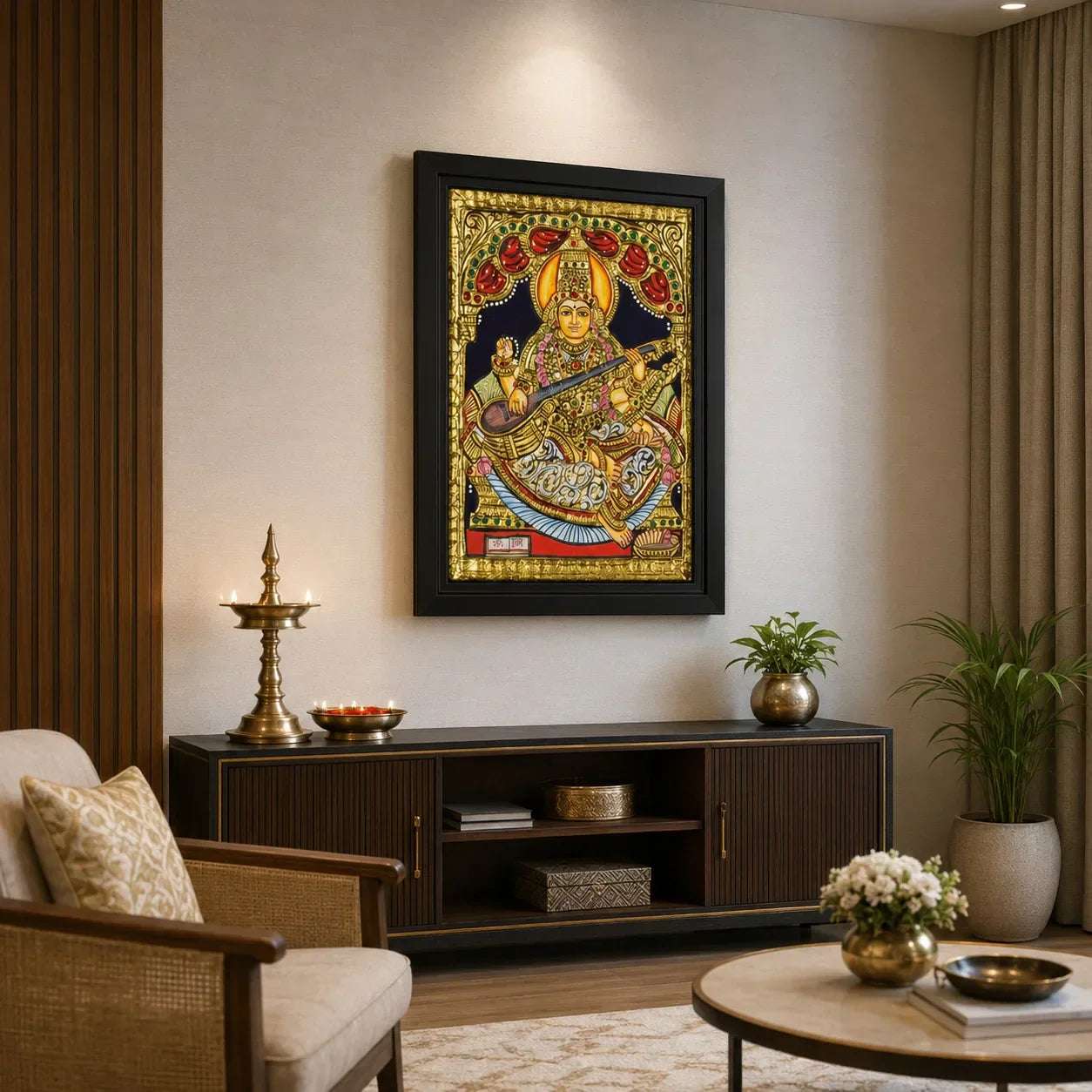
To truly appreciate the value of an authentic masterpiece, one must look beyond the colors and understand the complex chemistry of the base layers. In this expert guide, we break down the three foundational pillars of Tanjore gold work: the traditional chalk gesso paste, the delicate relief carving, and the meticulous application of 22k gold leaf foil.
"Tanjore gold work is an intricate dance between clay and precious metal. The sculpted gesso foundation gives the painting its soul, while the pure 22-karat gold leaf foil grants it immortality."
🎨 1. The Foundation: Traditional Gesso Paste (Muck Paste)
Before any gold can tarnish-proof a wooden panel, the artist must create the iconic structural foundation using a specialized gesso compound, traditionally referred to in South Indian workshops as Muck paste.
Unlike modern synthetic fillers, traditional Tanjore gesso is made from two raw ingredients:
-
French Chalk Powder (Sudda Mann): A highly refined limestone powder that provides a smooth, non-porous canvas base once dried and rubbed down.
-
Natural Soluble Glue (Unna gum): An organic binder traditionally extracted from tree resins or Arabic gum seeds, ensuring the chalk tightly adheres to the stretched cotton cloth over teak wood planks.
The artist blends these components into a thick, paste-like consistency. Multiple base layers are applied to achieve a flawless white surface, which is then vigorously sanded with polished stones until it achieves a reflective marble texture.
✨ 2. The Dimension: High-Relief Carving Technique
Once the baseline sketching is complete, the artist begins sculpting the architectural ornaments using the same gesso muck paste. This stage introduces the spectacular three-dimensional depth characteristic of Tanjore gold work.
Using makeshift piping bags or fine squeeze brushes, the artisan carefully shapes the relief patterns:
-
Architectural Pillars and Pillars: Temple pavilions, crowns (Kiritams), and surrounding floral borders are layered progressively to sit significantly higher than the flat background canvas.
-
Intricate Jewelry Details: Necklaces, armlets, and waistbands are meticulously piped with pinpoint dots of relief gesso paste to replicate individual strands of pearls and golden beads.
-
Gem Encrustation: While the relief paste remains wet, semi-precious stones or raw glass beads are firmly embedded into the gesso cavities, framing them perfectly before the gilding process begins.
🏆 3. The Brilliance: 22-Karat Pure Gold Leaf Overlay
The defining element of Tanjore gold work is the gilding process. Once the gesso relief lines are thoroughly dry, wafer-thin sheets of authentic 22-karat pure gold leaf foil are laid over the sculpted surfaces.
This process demands absolute precision and extreme breath control:
-
Adhesion and Pressing: The gold sheets are placed over the muck work and pressed meticulously using soft cotton swabs or specialized fine-hair brushes. The artist ensures the gold skin stretches smoothly over every curve of the relief without tearing.
-
Tracing the Outlines: Using a blunt wooden tool or an agate burnisher, the artisan traces the underlying patterns, forcing the gold leaf to settle tightly into the grooves and textures of the gesso base.
-
Exposing the Gemstones: The gold leaf entirely covers the embedded stones during the initial overlay. The artist then carefully scrapes away the thin gold skin covering each stone, revealing the colorful cuts of the gems against the shining gold background.
🛡️ Why Traditional Gold Work Lasts for Generations
The true brilliance of this multi-layered art form is its untarnishable life span. Because pure 22k gold does not oxidize, an authentic painting will preserve its signature golden glow for centuries. While the surrounding organic colors might subtly age, the architectural Tanjore gold work will remain as bright as the day it was finished, making it a timeless cultural asset.
Frequently Asked Questions
Q1: What is the relief paste in Tanjore paintings made of?
The traditional relief paste, also called Muck paste, is a handmade compound of French chalk powder (refined limestone) and natural tree gum binders.
Q2: Can synthetic gold paint replace gold leaf in Tanjore art?
While modern commercial copies use metallic gold paints or plastic foils, they tarnish and turn dull within a few years. Authentic heritage art exclusively relies on pure 22k gold leaf foil for permanence.
Q3: What does 'Muck Work' mean in Thanjavur painting?
'Muck Work' is the regional term used by traditional artisans to describe the hand-piped gesso ornamentation that creates the iconic 3D raised jewelry and architectural arches before gilding.


![[Product Title] - Avyaan](http://aavyaan.com/cdn/shop/files/Grace_of_Beginnings_Ganesha_in_Tanjore_Gold_800x800_5057dc37-751a-4085-b2c1-a1a947001f54.webp?v=1784792848&width={width})
![[Product Title] - Avyaan](http://aavyaan.com/cdn/shop/files/Mockup_Ganga_Avataran_1.png?v=1784793858&width={width})
![[Product Title] - Avyaan](http://aavyaan.com/cdn/shop/files/26.png?v=1784792915&width={width})
![[Product Title] - Avyaan](http://aavyaan.com/cdn/shop/files/Tanjore-radhakrishna-png_1.webp?v=1784792858&width={width})
![[Product Title] - Avyaan](http://aavyaan.com/cdn/shop/files/Mockup_3.2_1-1.png?v=1784794004&width={width})
![[Product Title] - Avyaan](http://aavyaan.com/cdn/shop/files/Radiance_of_Prosperity_Gaja_Lakshmi_in_Tanjore_Splendor_2.webp?v=1784792826&width={width})
![[Product Title] - Avyaan](http://aavyaan.com/cdn/shop/files/29.png?v=1784792820&width={width})