index
When investing in sacred Indian art, understanding the commercial value is crucial. If you are looking for an authentic thanjavur painting price list, you will quickly notice that prices vary drastically across the market. A small panel might cost a few thousand rupees, while a larger masterpiece can run into lakhs.

Why is there such a massive gap? Unlike mass-produced prints, the cost of a genuine Tanjore painting is determined by specific tangible factors, including the purity of the gold foil, the complexity of the gesso work, and the reputation of the master artisan. This guide breaks down the economics of Tanjore art to help you make an informed purchase.

"An authentic Tanjore painting is an investment in precious metals and heritage. Cheap replicas often substitute 22k gold with synthetic foils that turn black within a few years."

📊 Standard Thanjavur Painting Price List (Market Estimations)

While customized or antique pieces command premium pricing, below is an approximate market estimation and thanjavur painting price list based on standard dimensions for brand-new, authentic artworks created with 22k gold leaf:

Standard Size (Inches) Approximate Price Range (INR) Best Suited For
8 x 6 Inches (Small) ₹4,000 – ₹7,500 Small home altars, office desks, corporate gifting
12 x 10 Inches (Medium) ₹9,000 – ₹16,000 Standard home pooja rooms, auspicious gifts
15 x 12 Inches (Standard) ₹13,000 – ₹17,000 Living room focus walls, household deities
24 x 18 Inches (Large) ₹45,000 – ₹85,000 Grand home temples, collectors, main arches
36 x 24 Inches & Above ₹1,20,000+ (Customized) Heritage homes, corporate lobbies, large temples

🔍 Core Factors That Determine the Cost

If you are comparing different artists or galleries, keep these four essential price-driving factors in mind:

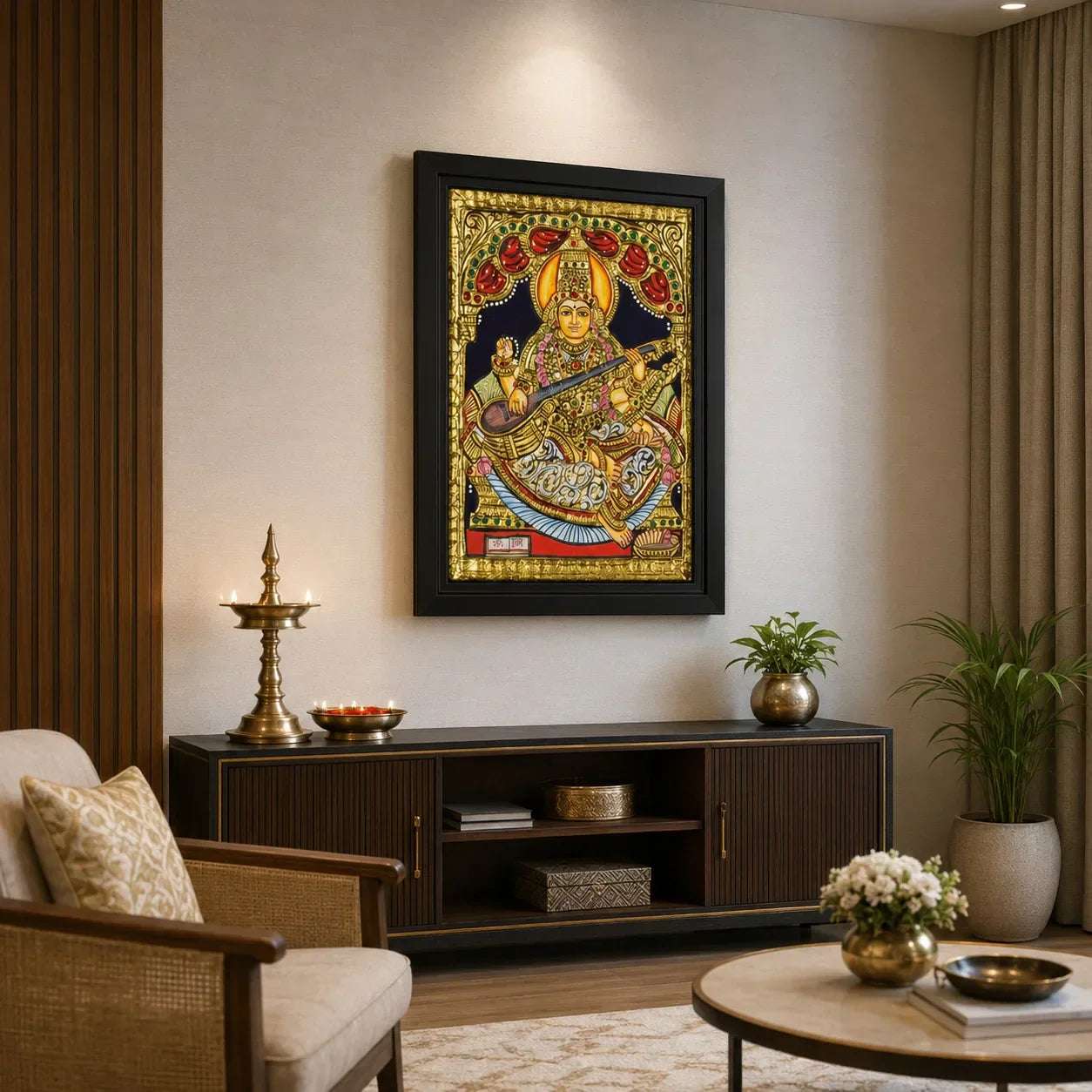
  • 1. The Purity and Quantity of Gold Leaf Work: A major portion of the cost goes into the 22-karat gold sheets overlayed on the gesso work. Intricate designs featuring heavy jewelry, elaborate pillars, and grand temple arches (Prabhavali) require significantly more gold leaf sheets, increasing the final price.
  • 2. Complexity of the Gesso (Muck) Work: The three-dimensional relief work is carved entirely by hand using limestone and natural gum. The more detailed the background figures, secondary deities, and ornamentation, the more hours of craftsmanship it demands.
  • 3. Type of Embellishments used: Traditional masterpieces historically used semi-precious stones from Jaipur or classic glass beads. Artworks embedded with high-grade, unpolished gems cost notably more than those utilizing synthetic substitutes.
  • 4. Quality of Framework: Premium Tanjore art is typically enclosed in seasoned teak wood or heavy, old-style Chettinad frames, which add to both the structural weight and the pricing.

⚠️ Beware of Unusually Cheap Fake Alternatives

If a vendor offers a large 15x12 inch painting for an unbelievably low price (like ₹2,000 or ₹3,000), it is highly likely a counterfeit product. Commercial imitations often use cheap fake foils or silver sheets chemically colored to look like gold. These materials inevitably oxidize, turn greenish-black, and lose their value within 2 to 3 years, whereas authentic 22k gold maintains its royal glow for centuries.

Frequently Asked Questions

Q1: Why are custom Tanjore paintings more expensive?
Custom paintings require specific iconographic sketching, tailored sizing, and a higher consumption of gold foil based on the customer’s design requests, making them highly exclusive.
Q2: Does the frame affect the overall price list significantly?
Yes, opting for premium carved teak wood or authentic antique Chettinad frames can increase the overall cost by 15% to 25%, but it guarantees excellent durability and protection.
Q3: Do Tanjore paintings appreciate in value over time?
Yes, authentic pieces created by recognized master artisans or older heritage pieces appreciate in value significantly due to the increasing cost of gold and the rarity of traditional craftsmanship.

"item": "https://aavyaan.com" }] }

Leave a comment

Your email address will not be published. Required fields are marked *

Please note, comments must be approved before they are published

Chat with Avyaan on WhatsApp