Tanjore Painting: Complete History, Style & Gold Work Guide
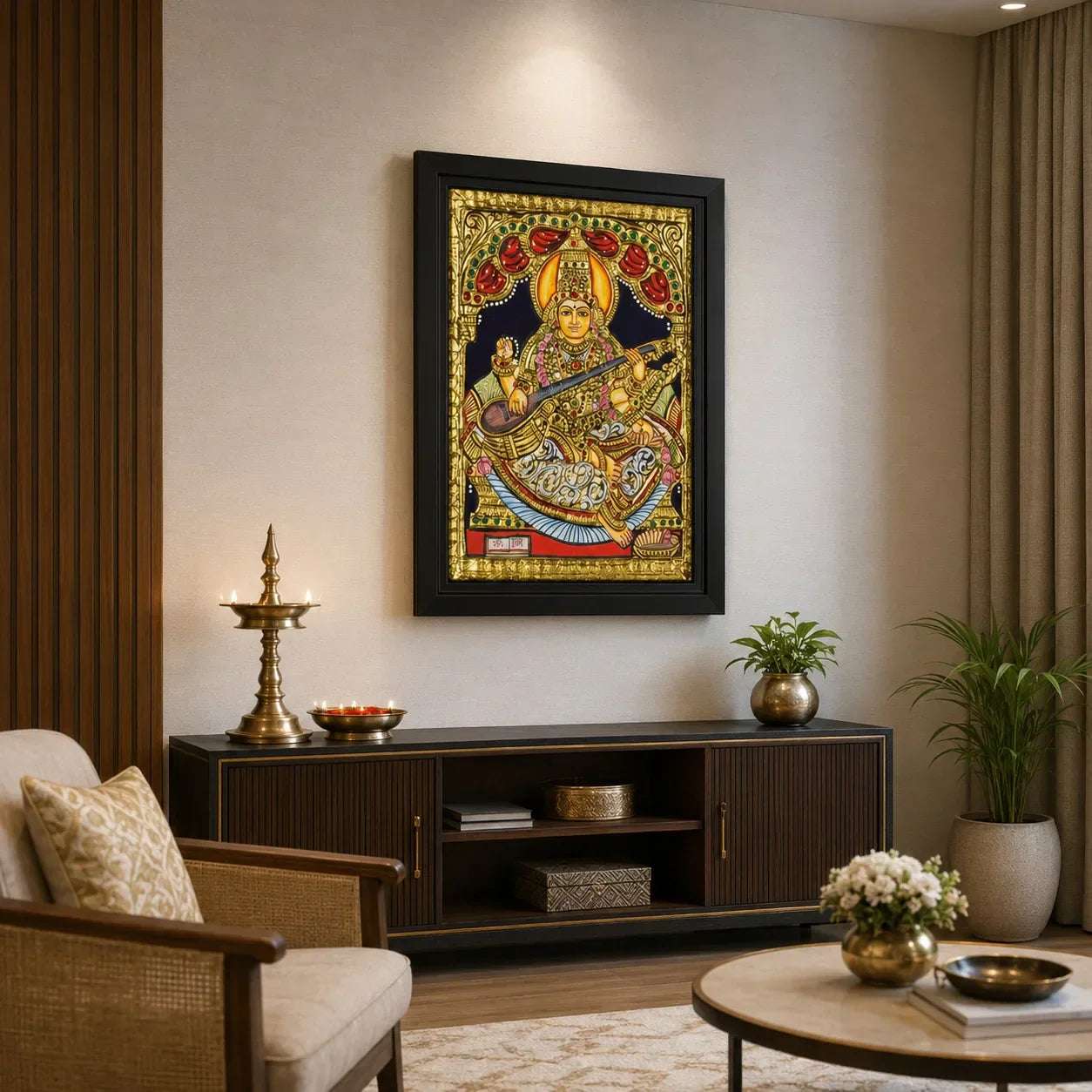
The world of traditional Indian art is vast, but few forms command as much royal presence and spiritual awe as the tanjore style painting. Characterized by its brilliant gold leaf work, iconic semi-precious stone embellishments, and deep devotional themes, a Tanjore painting is not merely a piece of art; it is a sacred heirloom passed down through generations.
In this comprehensive guide, we explore the rich history, distinctive artistic style, and meticulous creation process of Thanjavur painting, showing why it remains one of India’s most celebrated living art traditions.
"Unlike flat canvas arts, a Thanjavur masterpiece is a living three-dimensional relic where divinity is sculpted in limestone and layered with pure, untarnishable 22-karat gold leaf."
🏛️ The Royal History and Origins of Thanjavur Painting
The roots of Thanjavur painting are deeply embedded in the historical and cultural soil of Tamil Nadu, India. The art form flourished under the patronage of several powerful dynasties, each leaving a distinct mark on its evolution:
-
The Chola Foundation (16th Century): The Great Living Chola Temples established Thanjavur as the cultural capital. Early murals on temple walls laid the stylistic foundation for what would later become panel paintings.
-
The Nayaka Patronage: Following the Cholas, the Rayas of Vijayanagara and the Nayakas of Tanjore nurtured the art. They introduced Telugu cultural influences, introducing the soft, rounded features of the deities seen today.
-
The Maratha Golden Age (18th–19th Century): Under Maratha rulers, especially King Serfoji II, Tanjore art reached its absolute zenith. The Marathas introduced the signature use of pure gold leaf overlay and embedded glass beads, transforming these paintings into opulent masterpieces.
✨ The Defining Style and Visual Anatomy
A classic tanjore style painting is instantly recognizable due to its unique structural composition. Unlike conventional flat arts, it is a relief work built strictly upon a robust wooden plank.
-
Devotional Centrality: The central subject is almost always a Hindu deity—most popularly Baby Krishna (Navaneetha Krishna), Lord Ganesha, or Goddess Lakshmi. The main deity is painted significantly larger than the surrounding figures to emphasize spiritual supremacy.
-
The Iconic Arch (Prabhavali): Deities are traditionally framed within an ornate temple archway or pavilion, creating a sacred space within the board itself.
-
Gazing Eyes: The eyes of the deities are large, almond-shaped, and deeply expressive, designed to create an immediate meditative connection with the viewer.
🎨 The Meticulous Creation Process
Authentic Tanjore paintings require weeks, sometimes months, of patient craftsmanship. The traditional process involves several distinct phases:
-
Step 1 Board Preparation (Palagai Padam): The canvas begins with a sturdy wooden plank, traditionally jackfruit or teak wood. A layer of unbleached cotton cloth is stretched and pasted tightly over the board using a natural Arabic gum binder.
-
Step 2 Chalk Board Grounding: A smooth white paste made of French chalk powder (gesso) and glue is applied in multiple coats. Once dry, the surface is rubbed down with polished stones until it achieves a marble-smooth texture.
-
Step 3 Freehand Sketching: The master artist draws the intricate outline of the deity using charcoal or a fine brush. This sketch adheres strictly to the iconographic proportions defined in ancient texts.
-
Step 4 Gesso Relief Work (Muck Work): To create the 3D depth, a paste of limestone powder and gum is carefully piped onto the jewelry, crowns, and arches. This raised relief work gives Tanjore art its famous architectural dimension.
-
Step 5 Precious Stone Encrustation: Before the gold is applied, unpolished semi-precious gems, Jaipur stones, or traditional glass beads are embedded into the wet gesso work.
-
Step 6 Pure Gold Leaf Overlay: This is the most critical step. Wafer-thin sheets of 22-karat pure gold leaf are laid over the relief work. The gold is meticulously pressed around the embedded stones and rubbed with soft cotton so it adheres flawlessly to the raised gesso lines.
-
Step 7 Detailed Painting: Finally, the non-gold areas—such as the body of the deities, clothing draping, and background elements—are painted using vibrant colors to complete the masterpiece.
🛡️ Why Gold and Stones Define Longevity
The most fascinating aspect of a genuine Tanjore style painting is its permanence. Because pure 22k gold leaf does not oxidize or tarnish, these paintings do not lose their luster. A well-crafted Thanjavur painting retains its brilliant golden glow for centuries, even when exposed to air and light, making it a true spiritual investment and a lifetime asset.
💡 The Ultimate Authenticity Checklist for Buyers
As a collector or devotee looking to bring a sacred artwork into your home, you must watch out for cheap replicas that use synthetic gold foil or plastic beads. Always look for:
-
The Glow Test: Genuine 22k gold has a warm, rich metallic glow that does not look harsh or overly shiny like synthetic plastics.
-
Weight of the Plank: Authentic wood panels are heavy and solid, never flimsy or light like cardboard or MDF cardboard templates.
-
Hand-painted Imperfections: Look closely at the linework; minor variations show the touch of a human hand rather than a digital print machine.
Frequently Asked Questions
Q1: Is real gold used in Tanjore paintings?
Yes, authentic Tanjore paintings exclusively use 22-karat pure gold leaf foil, which ensures the artwork remains brilliant and tarnish-free for generations.
Q2: What is the difference between Tanjore and Thanjavur paintings?
There is no difference. Thanjavur is the traditional anglicized and historical name of the city, while Tanjore is its modern variant. Both terms refer to the exact same royal art tradition.
Q3: How do I clean and maintain a Tanjore painting?
Tanjore paintings should only be dusted gently with a clean, dry microfiber cloth. Avoid any moisture, liquid cleaners, or direct sunlight to preserve the wood and gold relief work.


![[Product Title] - Avyaan](http://aavyaan.com/cdn/shop/files/Grace_of_Beginnings_Ganesha_in_Tanjore_Gold_800x800_5057dc37-751a-4085-b2c1-a1a947001f54.webp?v=1784792848&width={width})
![[Product Title] - Avyaan](http://aavyaan.com/cdn/shop/files/Mockup_Ganga_Avataran_1.png?v=1784793858&width={width})
![[Product Title] - Avyaan](http://aavyaan.com/cdn/shop/files/26.png?v=1784792915&width={width})
![[Product Title] - Avyaan](http://aavyaan.com/cdn/shop/files/Tanjore-radhakrishna-png_1.webp?v=1784792858&width={width})
![[Product Title] - Avyaan](http://aavyaan.com/cdn/shop/files/Mockup_3.2_1-1.png?v=1784794004&width={width})
![[Product Title] - Avyaan](http://aavyaan.com/cdn/shop/files/Radiance_of_Prosperity_Gaja_Lakshmi_in_Tanjore_Splendor_2.webp?v=1784792826&width={width})
![[Product Title] - Avyaan](http://aavyaan.com/cdn/shop/files/29.png?v=1784792820&width={width})