Cart
0
You may also like





By Avyaan | Art History & Process | 6 min read

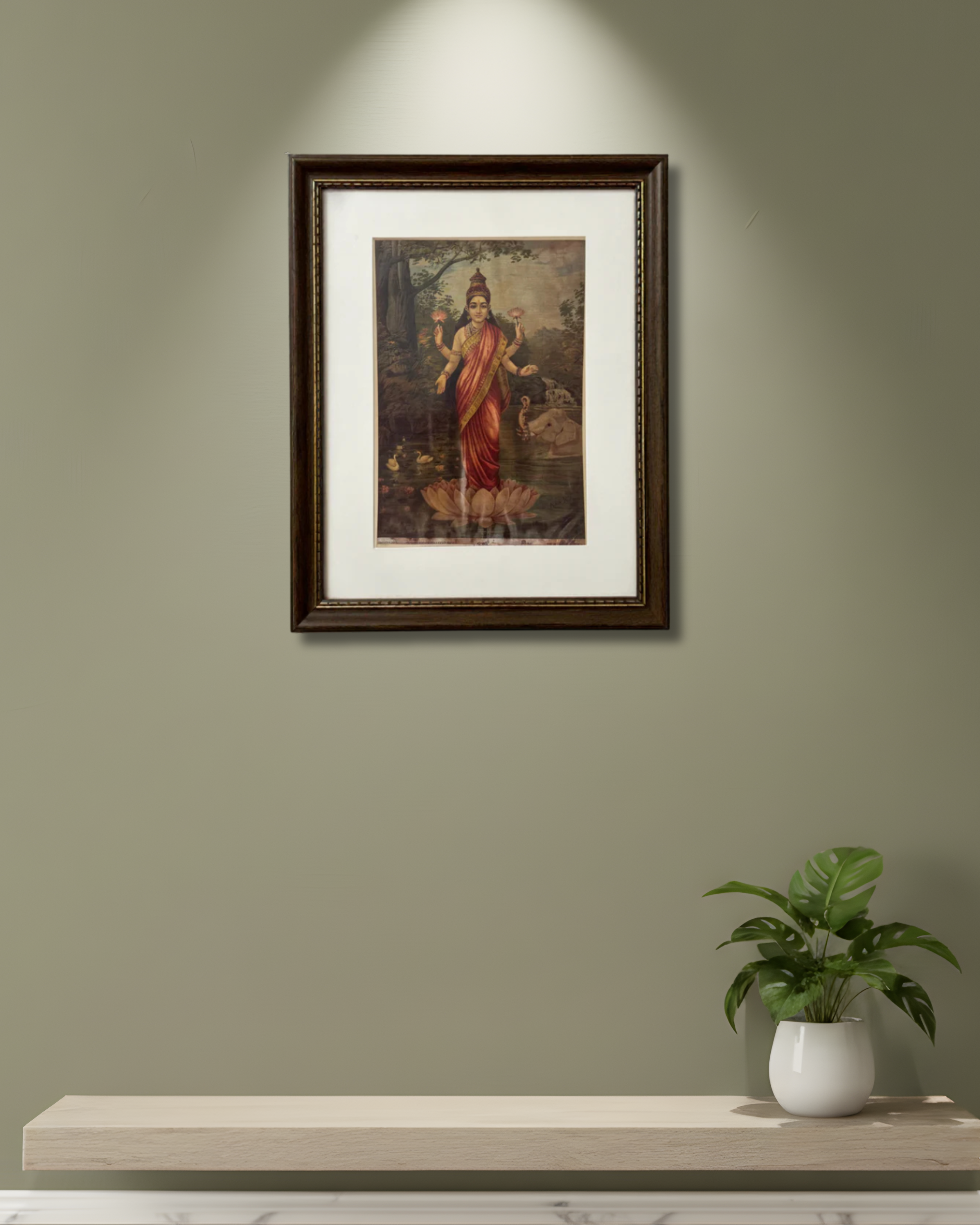
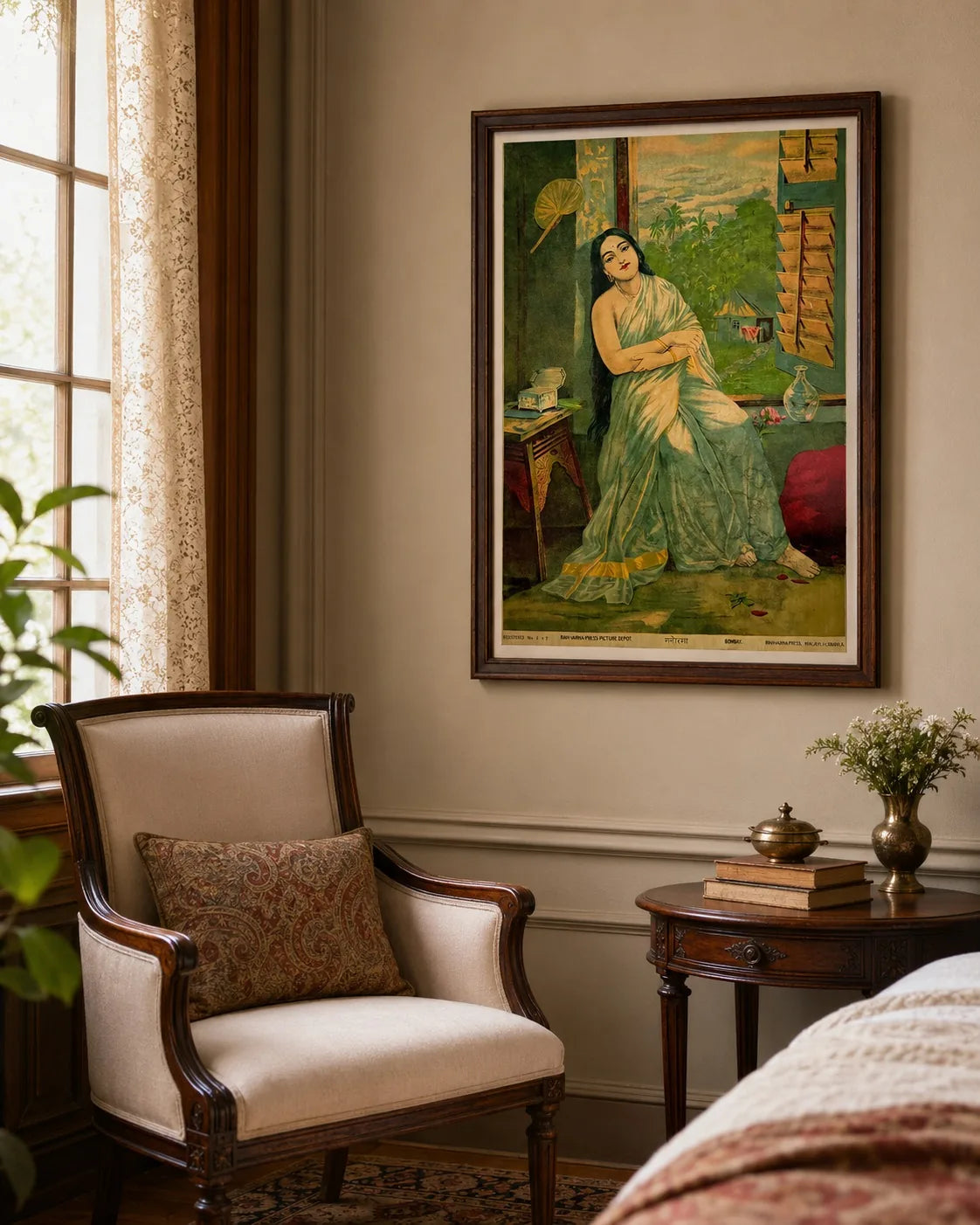
The word "oleograph" appears in the names of many significant Ravi Varma works, but the technique itself is rarely explained. Understanding it — even at a basic level — changes how you look at these prints and helps you appreciate what was technically remarkable about the Ravi Varma Press.
Oleography is a variety of chromolithography — colour printing using the lithographic process. Lithography, invented in 1796 by Alois Senefelder, works on the principle that oil and water do not mix. An image is drawn or painted on a flat stone using an oil-based medium. The stone is then dampened; water adheres to the unmarked areas but is repelled by the oil-based drawing. Oil-based ink is then rolled over the stone — it adheres to the drawn areas (oil on oil) but not to the dampened blank areas. Paper pressed against the inked stone picks up the image.
For color printing (chromolithography), the process is repeated multiple times, with a separate stone for each color. Registration — the precise alignment of each successive printing — is critical. A misaligned color layer shifts the image and produces un sharp, blurry results.

Oleography adds two additional elements to basic chromolithography to make the final print resemble an oil painting:
Textured paper: Rather than smooth printing paper, oleographs are printed on paper with an embossed canvas texture. This texture, visible in raking light, simulates the weave of a painter's canvas.
Varnish: After printing, the oleograph is varnished with a resin varnish that deepens the colors and adds a surface sheen similar to an oil painting's varnish.
These two additions transform the chromolithographic print from an obvious reproduction into something that, at normal viewing distance, can be mistaken for an original painting.
The Ravi Varma Fine Arts Lithographic Press at Ghatkopar was equipped with the most advanced chromolithographic technology available in the 1890s, operated by German technicians under Ravi Varma's supervision. The press produced oleographs that used 12-15 color layers — a level of technical sophistication that was extraordinary for its time.
The quality of the best Ravi Varma oleographs reflects this investment: the skin tones in particular — achieved through careful layering of warm flesh tones, shadows, and highlights — have a depth and subtlety that simpler chromolithography cannot achieve.
Oleography was overtaken by offset printing in the early 20th century. Offset printing is faster, cheaper, and capable of producing equally high-quality colour reproduction — but it does not naturally produce the textured-canvas quality of an oleograph. When modern publishers produce Ravi Varma "reprints" today, they are printing on smooth coated paper using digital or offset processes. The result is technically a different kind of object from the original oleograph.
This is one reason why period oleographs — the actual products of the Ravi Varma Press — have historical and material significance that no modern reprint can fully replicate.
Discover authentic Ravi Varma oleographs at https://aavyaan.com/
Loading Mark360 Popup...

