Cart
0
You may also like





By Avyaan | Art History | 8 min read

In the 1890s, Raja Ravi Varma made a decision that scandalised the Indian art establishment and transformed Indian popular culture. He had established himself as the most celebrated Indian painter of his generation — his work hung in the courts of maharajas, in the homes of wealthy merchants, and in international exhibitions. Then he invested in a printing press.
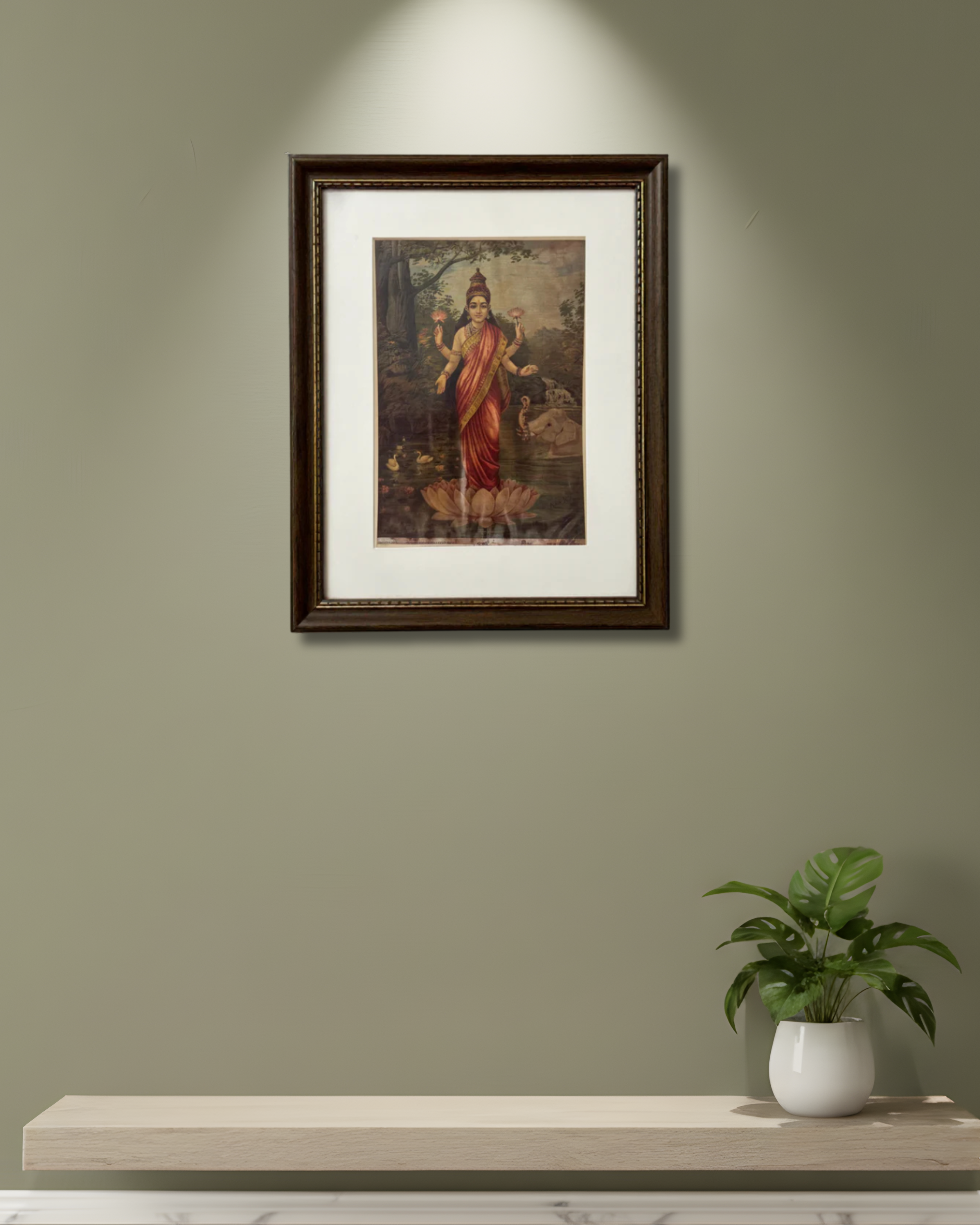
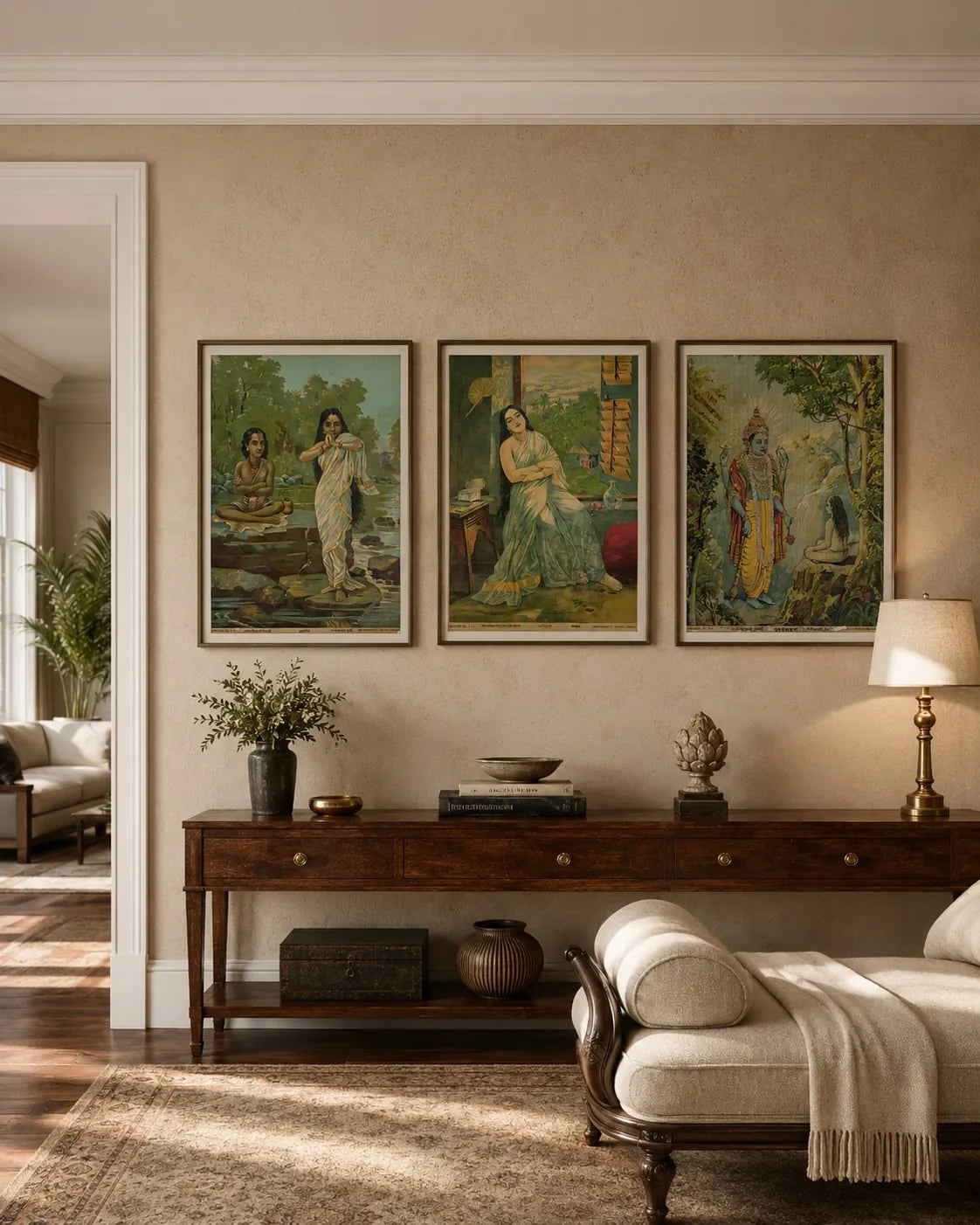
Not a painting press. A lithography press, equipped to produce oleographs — colour reproductions of his oil paintings, printed on textured paper and distributed at a price that virtually anyone in India could afford. For the first time in Indian history, fine art images of Hindu deities, rendered in the naturalistic European academic style that Ravi Varma had perfected, were available to ordinary people.
The oleographs sold in extraordinary quantities. Within years of their first production, they were in homes across India — displayed on walls, used in household shrines, given as gifts at festivals. They changed how Indians pictured their deities, and their influence on Indian visual culture has lasted to this day.
Ravi Varma (1848-1906) was born in Kilimanoor, Kerala, into an aristocratic Nair family with connections to the Travancore royal household. He taught himself to paint — first in traditional Kerala murals style, then in watercolour, then in oil, which he mastered by studying European academic paintings and by working with visiting European artists.
He became extraordinarily skilled at European academic portraiture — the ability to render the human face and form with photographic accuracy, with carefully managed light and shadow, in oil paint on canvas. At the same time, his subjects were drawn primarily from Hindu mythology and from the daily life of South Indian women. This combination — European technical mastery applied to Indian subjects — was his signature and his greatest achievement.

In 1894, Ravi Varma established the Ravi Varma Fine Arts Lithographic Press at Ghatkopar, near Bombay (now Mumbai), in partnership with a German technician named Fritz Schleicher. The press used the oleography technique — chromolithography on textured paper that mimicked the surface of canvas — to reproduce his paintings in colour.
The decision to establish the press was controversial. Critics accused Ravi Varma of commercialising sacred imagery, of producing vulgar mass-market goods under the name of art. Some members of the princely courts that had been his primary patrons were displeased.
Ravi Varma's position was simple: his paintings, which would otherwise be seen only by the wealthy, could now enter every home in India. The democratic impulse behind the press was genuine — and the public agreed with his logic. The oleographs sold in hundreds of thousands.

The Ravi Varma oleographs effectively standardised the visual image of Hindu deities for the 20th century. Before Ravi Varma, the appearance of Lakshmi or Saraswati in popular imagery was highly varied — regional, traditional, stylised. After Ravi Varma, the image of these deities was, for millions of Indians, specifically his image: the realistic face, the South Indian jewelry, the carefully rendered silk garments.
This influence extends in unexpected directions. The format of the devotional calendar — the Hindu calendar with a deity image at the top — is directly descended from the Ravi Varma oleograph tradition. The "art print" sold in markets across India today — the laminated poster of Lakshmi or Ganesha — is a degraded descendant of the oleograph.
And Ravi Varma himself is now recognised as one of the key figures in the creation of Indian modernity — an artist who stood at the crossing point of European technique and Indian subject matter, and who made that crossing productive in ways that have lasted more than a century.
Explore authentic Ravi Varma oleographs at https://aavyaan.com/
Loading Mark360 Popup...

