Cart
0
You may also like





By Avyaan | Collector's Guide | 7 min read

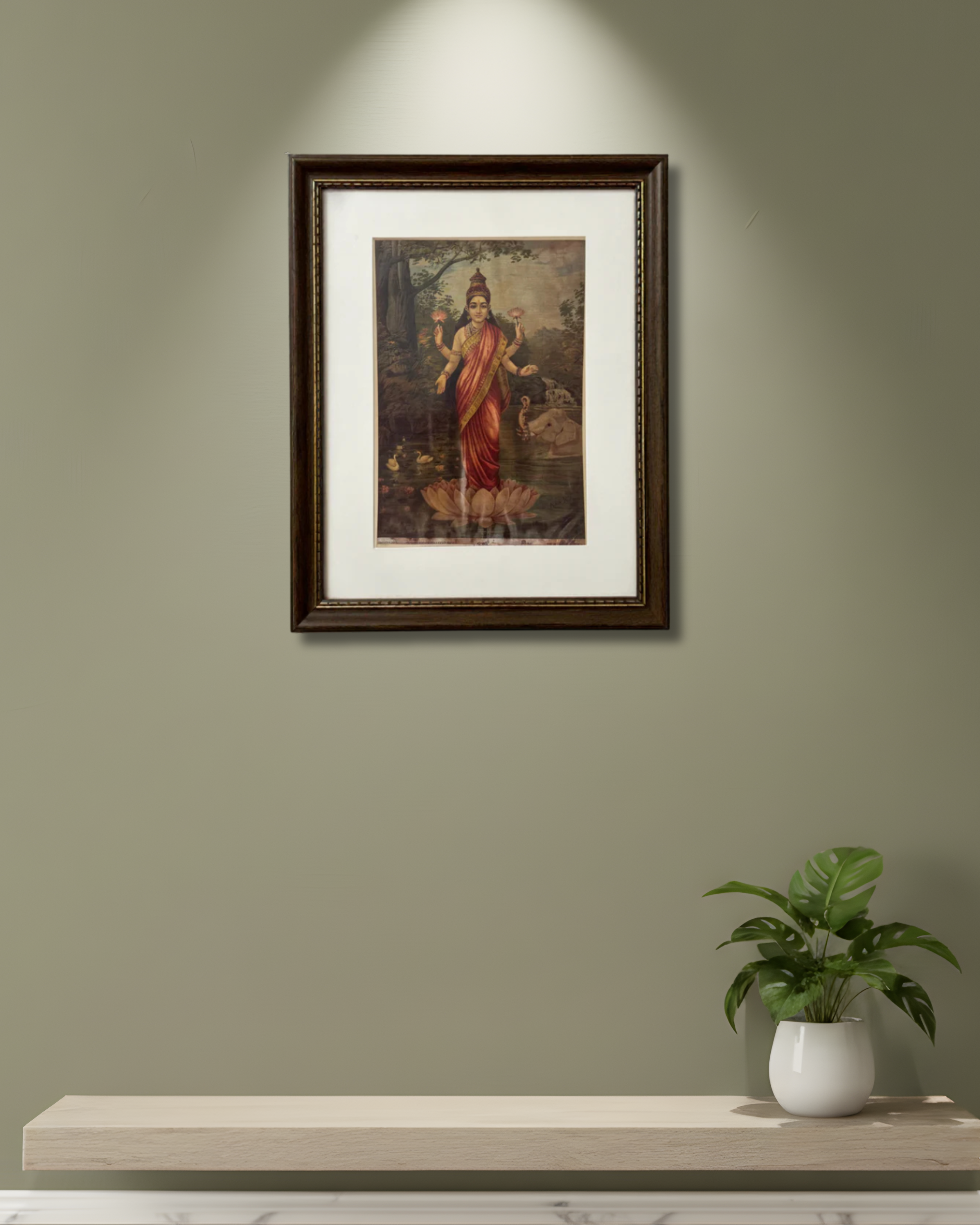
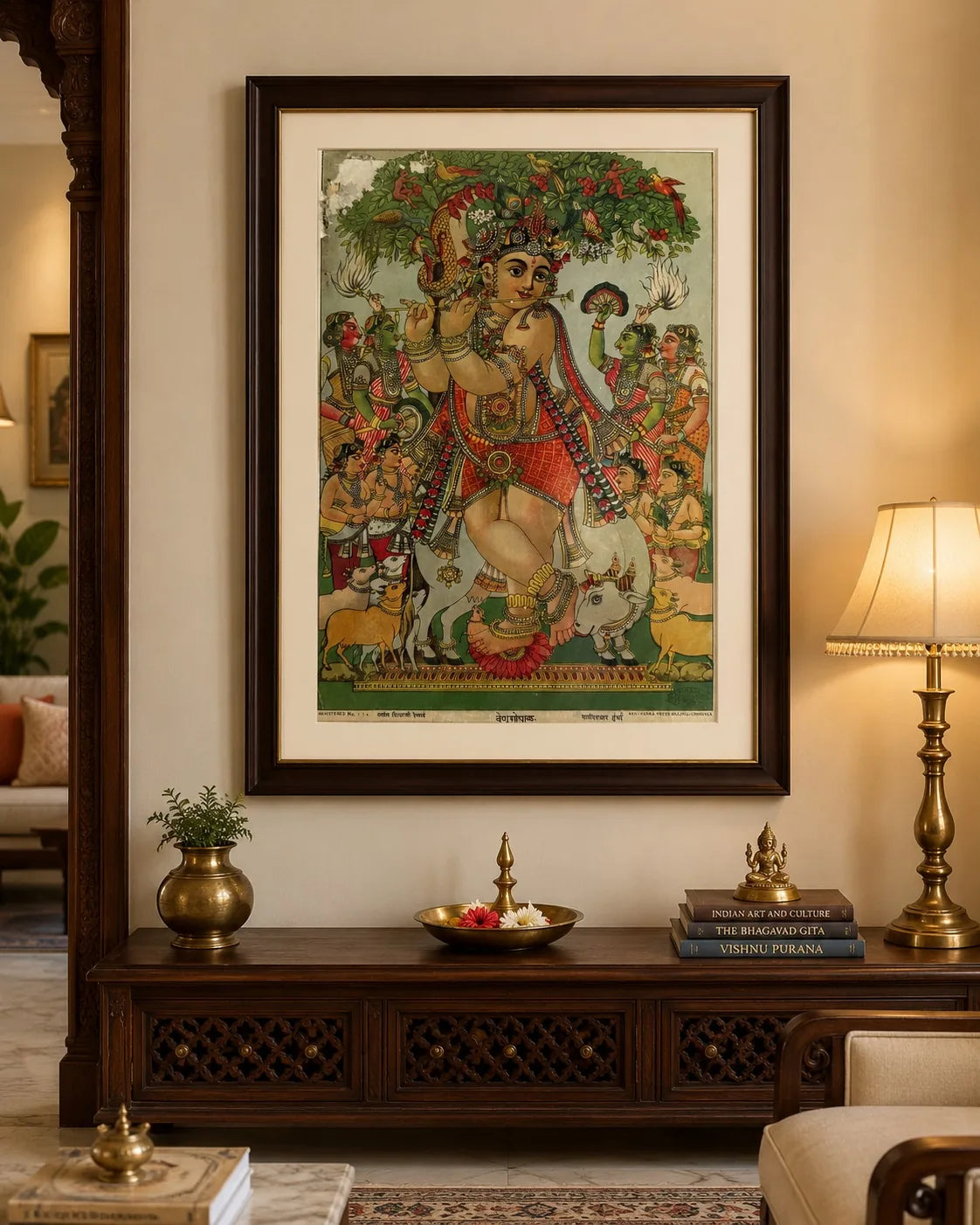
The market for Ravi Varma oleographs has two distinct layers: genuine 19th and early 20th century oleographs produced at the Ravi Varma Press or its successors, and modern reprints of varying quality produced in large quantities for the contemporary market. Both are legitimate products — but they are very different in historical significance, in material character, and in value.
Knowing how to tell them apart is essential for anyone considering a serious purchase.
An oleograph (from oleo- "oil" and -graph "drawing") is a chromolithographic print on textured paper that is made to resemble an oil painting. The name refers specifically to the finish: textured paper, varnish, and multiple colour impressions that simulate the appearance of painted canvas.
Ravi Varma oleographs were produced using the chromolithography technique — printing multiple layers of coloured ink, each layer applied separately with a different lithographic stone or plate, until the accumulated layers produced the full colour image. A typical oleograph might involve 12-15 separate colour layers.
Genuine period oleographs (produced from the 1890s through the 1930s) were printed on paper that is now over 80-130 years old. Age affects paper in specific ways:
Yellowing at the edges and sometimes throughout — natural oxidation of the paper fibres
A slight brittleness — old paper has lost some flexibility
Sometimes foxing — small reddish-brown spots caused by mould or oxidation
The texture of the paper is finer and more consistent than modern paper

Period oleographs were varnished after printing to enhance the similarity to oil painting and to protect the surface. Old varnish yellows and becomes slightly cloudy over time — a phenomenon called "varnish bloom" or "bloom." Genuine period pieces often have a slight yellow cast in the lighter areas, a result of this aged varnish.
Modern prints on coated paper with UV-protective finishes do not yellow in this way — the surface remains bright and even.
Original oleographs have a specific quality of colour that comes from the chromolithographic printing process — slightly warmer, slightly more muted than modern digital prints, with a characteristic gradation in skin tones that reflects the layered inking process. The deepest shadows have a warmth and depth that modern reproduction sometimes flattens.
Modern reprints using high-quality digital printing can come very close to mimicking this quality, but trained eyes can usually spot the difference.
Genuine period oleographs sometimes carry imprint information — the name of the press (Ravi Varma Press, Karla; or later successors), the subject title, sometimes a date. Look for this information on the lower margin of the image or on the reverse. The absence of such marks does not confirm inauthenticity — many genuine pieces have no marks — but their presence is a positive indicator.
When is this believed to have been produced? Is there documentation?
Has the piece been cleaned, restored, or re-varnished? (Restoration is common and acceptable but affects value)
What is the provenance — where has this piece been, and how did the seller acquire it?
Is there any written certification or expert opinion on authenticity?
Genuine period Ravi Varma oleographs are valuable collector's items. Modern reprints are also legitimate and can be beautiful, but they should be priced and represented accurately.
Explore verified Ravi Varma oleographs at https://aavyaan.com/
Loading Mark360 Popup...

