Cart
0
You may also like





By Avyaan | Collector's Guide | 6 min read

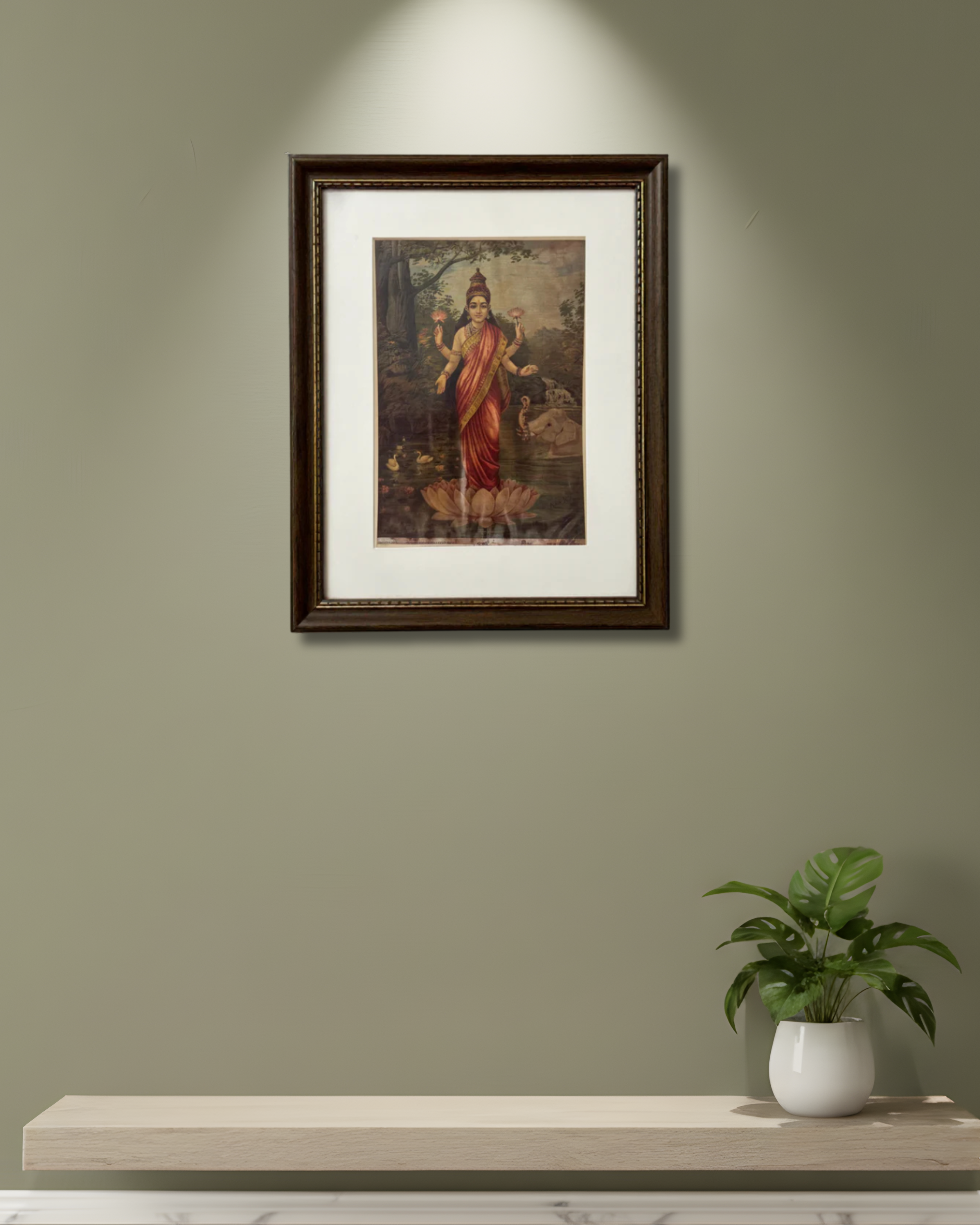
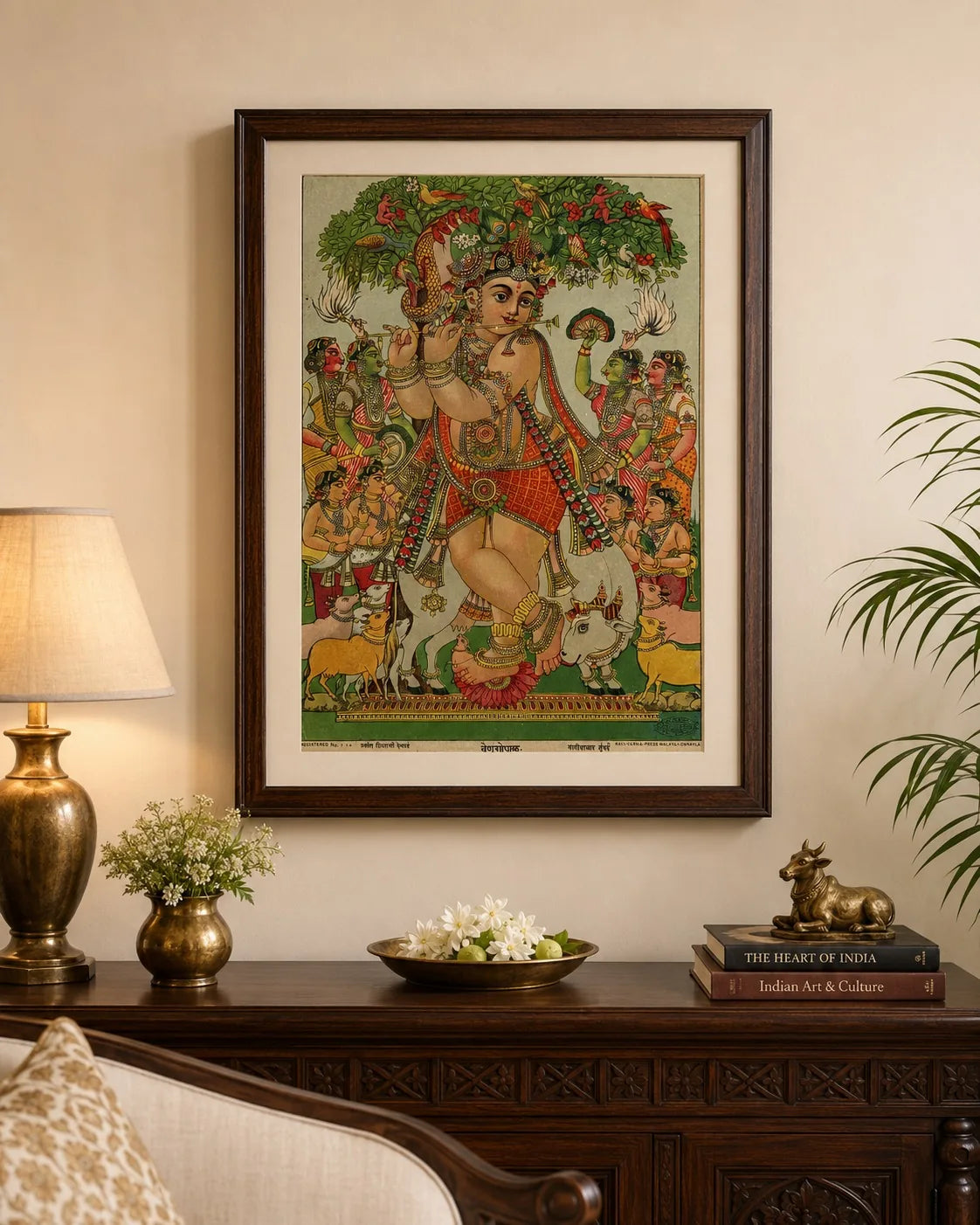
Ravi Varma oleographs occupy a specific and interesting position in the Indian art market. They are not paintings — they are prints, which traditionally occupies a lower position in the hierarchy of art objects. But they are historical objects produced by a specific industrial process that has not been replicated in over a century, depicting subjects by one of the most significant figures in Indian art history.
The result is a market where values vary enormously based on condition, subject, rarity, and provenance — and where both spectacular bargains and significant overpricing are possible for buyers who don't know what they're doing.
Condition is the primary value determinant for period oleographs. A print in excellent condition — vivid colours, minimal fading, no tears, clean margins, original varnish largely intact — is worth significantly more than the same subject in poor condition.
The most common condition issues are: foxing (small spots of mould or oxidation), fading (particularly of reds and yellows), staining (water damage or handling marks), and edge wear (tearing or loss at the margins). Restoration can address some of these issues, but restored pieces are worth less than unrestored pieces in equivalent original condition.
Some subjects are rarer than others — either because they were produced in smaller quantities, or because fewer have survived. The most common surviving oleographs are the major deity subjects (Lakshmi, Saraswati, Ganesha) because these were produced in the largest quantities and treated with care. Mythological narrative scenes are often rarer.
Period oleographs were produced in a range of sizes, from small (suitable for framing) to large (suitable for wall display). Larger pieces are rarer (harder to store and transport without damage) and often more valuable.
Period oleographs require careful handling and storage:
Handle with clean cotton gloves: Skin oils and acids damage paper over time
Store flat or rolled (never folded): Folding creates permanent creases
Keep away from light: UV light fades the inks. Store in darkness or display under UV-protective glass
Control humidity: Fluctuating humidity causes paper to expand and contract, eventually cracking the surface. Aim for 45-55% relative humidity
Frame with archival materials: Use acid-free matboard and backing, UV-protective glass
Do not attempt home cleaning or restoration: Any cleaning of period oleographs should be done by a conservator
Period oleographs look extraordinary when displayed thoughtfully — framed consistently (same frame profile, same mat colour), lit with warm directional light, and given enough space on the wall that each image can be read clearly. A collection of five or six Ravi Varma oleographs, well-framed and displayed together, creates an installation that is both historically significant and visually powerful.
Find authentic Ravi Varma oleographs at https://aavyaan.com/
Loading Mark360 Popup...

