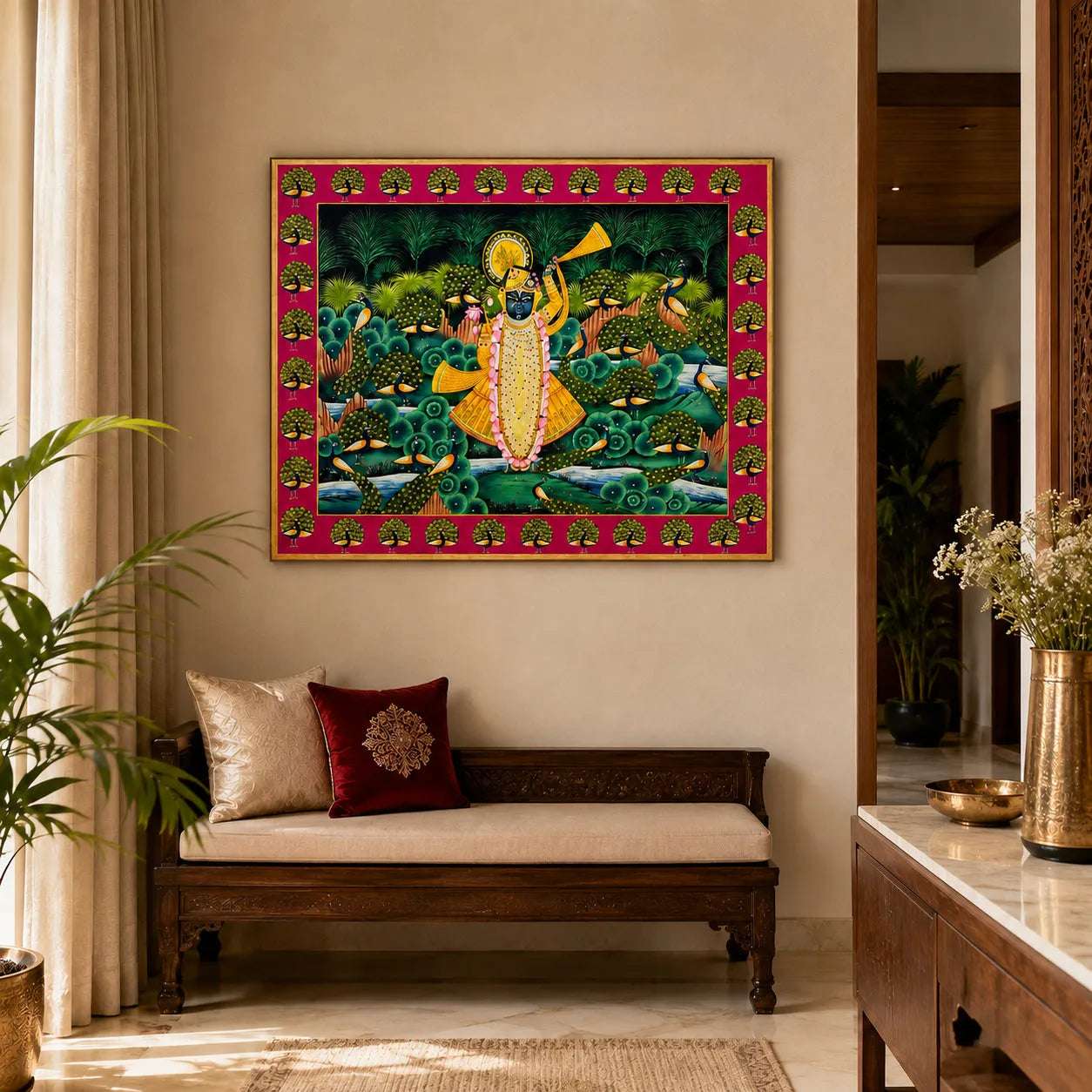
Pichwai Painting Trends: How to Style Traditional Indian Art in Modern Homes
Discover why traditional Pichwai art for living room spaces is trending in modern Indian homes, and what the Pichwai cow and lotus painting meaning reveals about devotion, purity, and abundance. A styling guide plus tips to buy authentic Pichwai art online.
Read more
Discover why traditional Pichwai art for living room spaces is trending in modern Indian homes, and what the Pichwai cow and lotus painting meaning reveals about devotion, purity, and abundance. A styling guide plus tips to buy authentic Pichwai art online.
Modern Pichwai Paintings: A Fusion of Heritage and Innovation
Pichwai painting, a tradition dating back centuries in Nathdwara, Rajasthan, has always enjoyed a revered position in Indian culture. Typically...
Read more
Pichwai painting, a tradition dating back centuries in Nathdwara, Rajasthan, has always enjoyed a revered position in Indian culture. Typically...
Pichwai Krishna Paintings Are a Spiritual Gift for Loved Ones
Are you someone who is a die-hard devotee of Lord Krishna, constantly relating everything to Him, and deeply believes in...
Read more
Are you someone who is a die-hard devotee of Lord Krishna, constantly relating everything to Him, and deeply believes in...
Pichwai Plates Buying Guide: Sizes, Motifs, and What Interior Designers Recommend
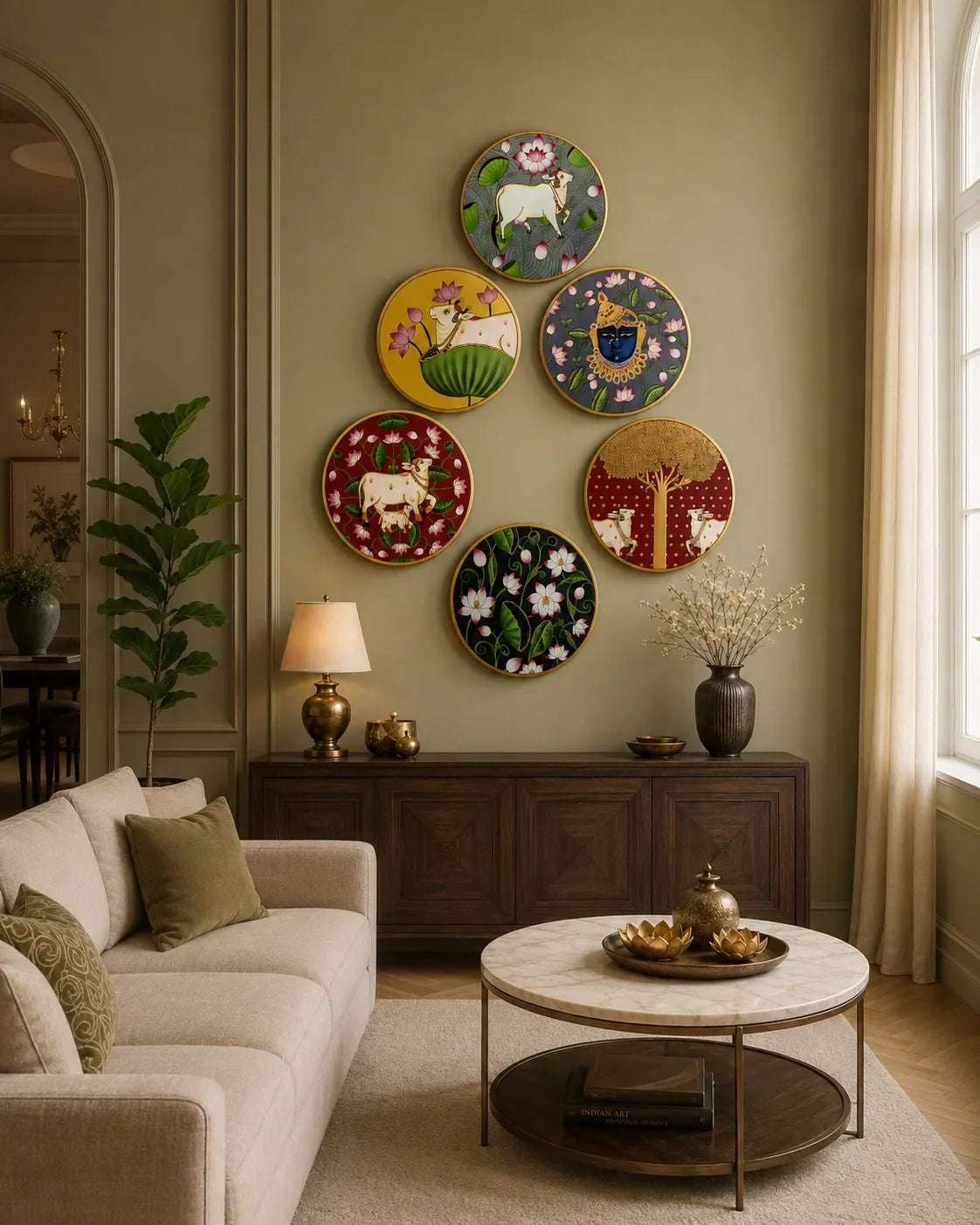
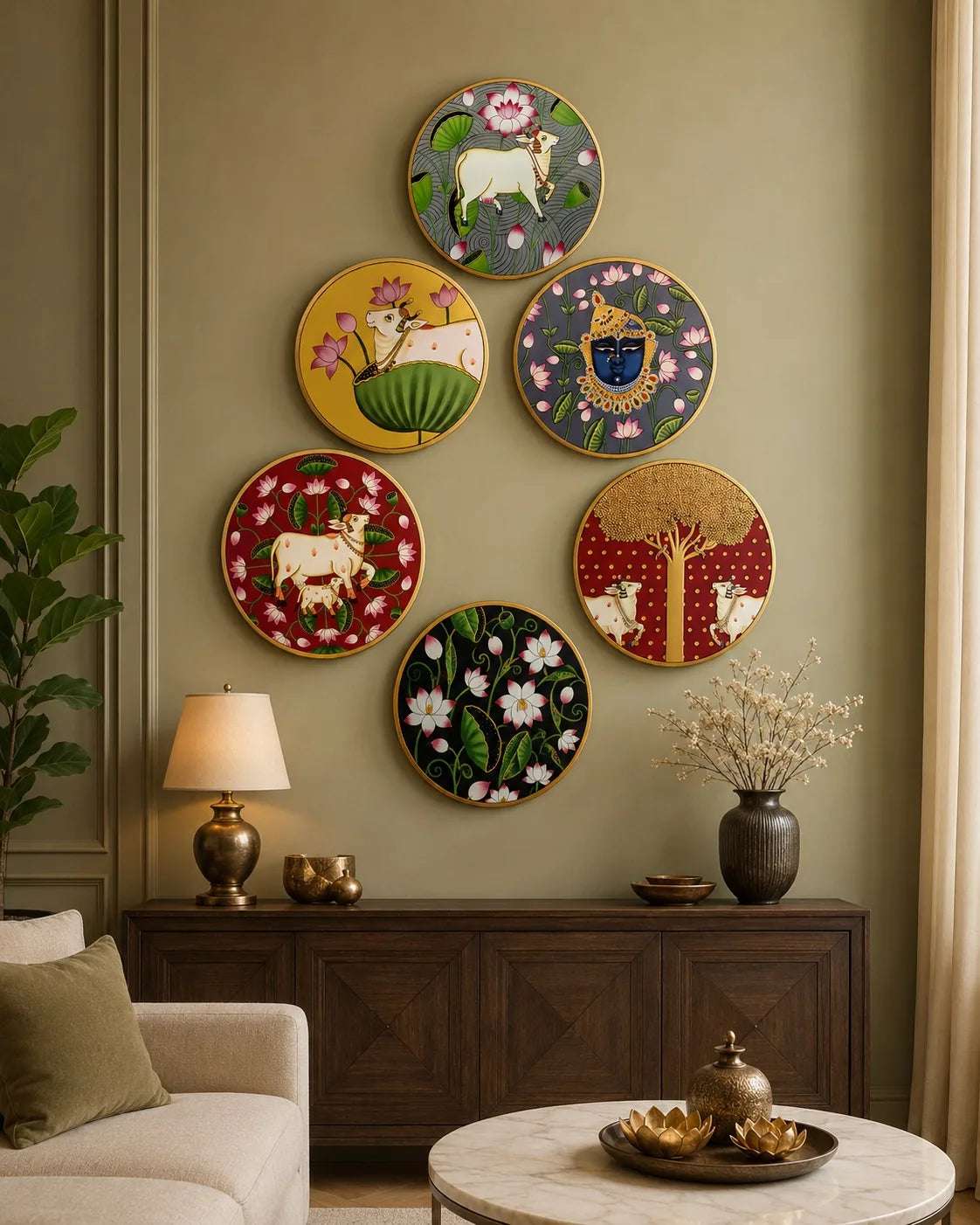
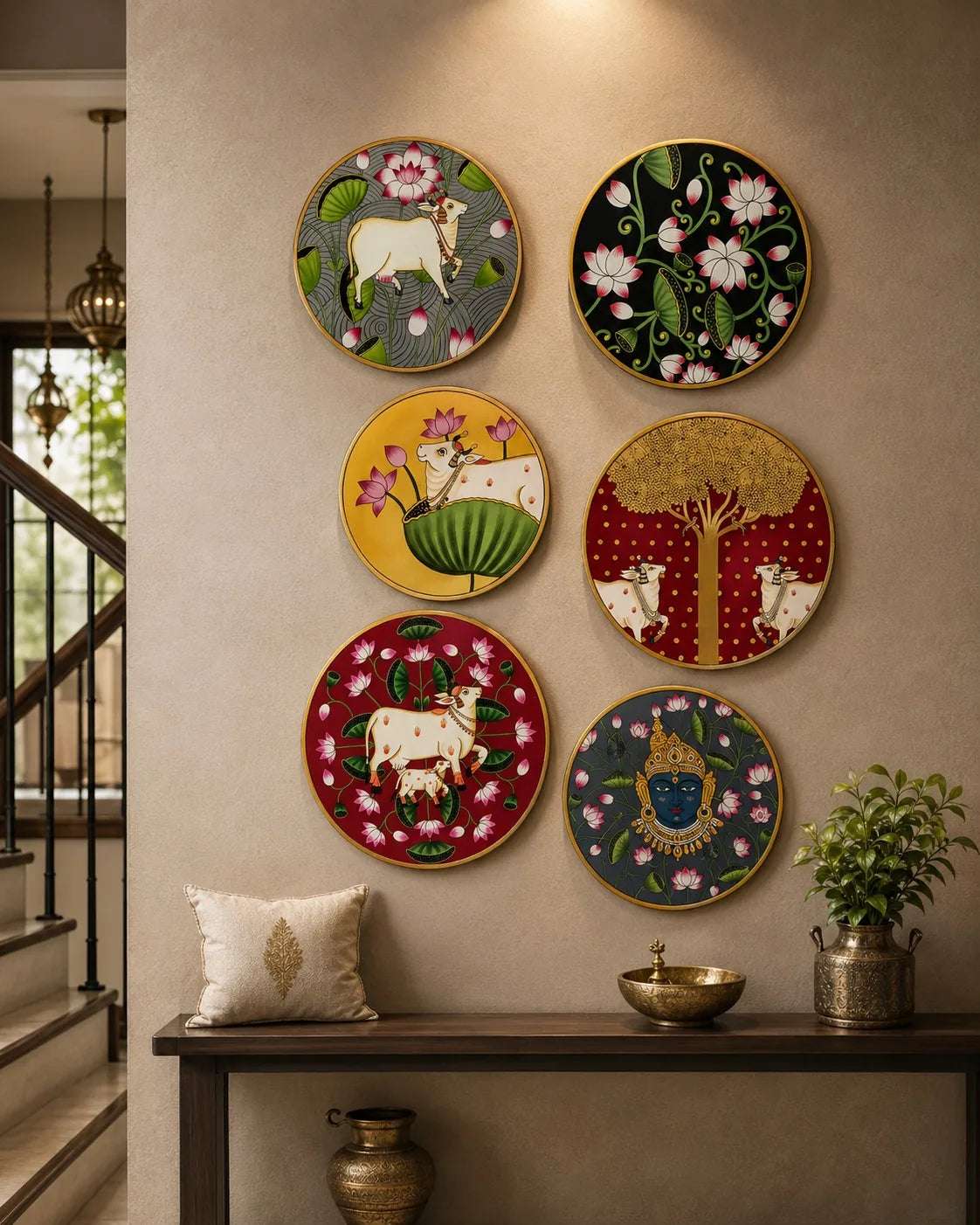
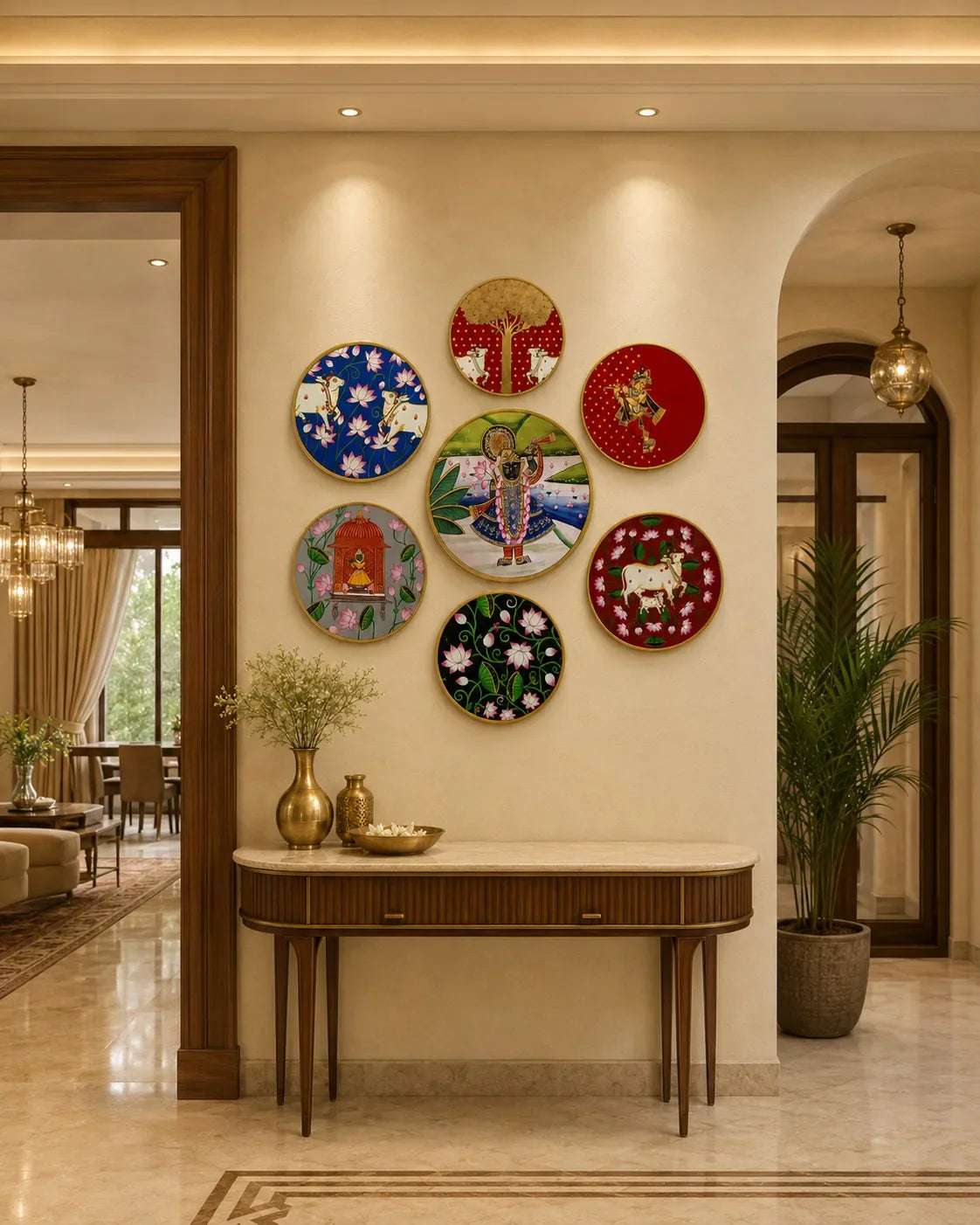
This blog works as a practical buying guide for Pichwai plates. It explains how to choose the right size, measure display spaces, understand popular motifs like Shrinathji with cows, Kamal Talab, monsoon scenes and festival Pichwai, and assess quality through brushwork, gold detailing, artist background and ceramic finish.
Read more
This blog works as a practical buying guide for Pichwai plates. It explains how to choose the right size, measure display spaces, understand popular motifs like Shrinathji with cows, Kamal Talab, monsoon scenes and festival Pichwai, and assess quality through brushwork, gold detailing, artist background and ceramic finish.
Display vs. Use: How to Get the Most From Your Pichwai Plate Collection
This blog explains whether Pichwai plates should be used as decorative objects or food-safe serving pieces. It also guides buyers on building a collection, choosing themes, varying plate sizes, planning wall or shelf displays and caring for hand-painted ceramic plates to preserve gold work and detailing.
Read more
This blog explains whether Pichwai plates should be used as decorative objects or food-safe serving pieces. It also guides buyers on building a collection, choosing themes, varying plate sizes, planning wall or shelf displays and caring for hand-painted ceramic plates to preserve gold work and detailing.
The Gift Nobody Thinks Of: Why Pichwai Plates Outlast Every Other Housewarming Present
This blog positions Pichwai plates as meaningful gifts for housewarmings, weddings, Diwali, milestone birthdays, baby showers and retirement occasions. It explains why they feel unique, culturally rich, thoughtful and long-lasting compared to common gifting options like candles, flowers or gift cards.
Read more
This blog positions Pichwai plates as meaningful gifts for housewarmings, weddings, Diwali, milestone birthdays, baby showers and retirement occasions. It explains why they feel unique, culturally rich, thoughtful and long-lasting compared to common gifting options like candles, flowers or gift cards.
How Pichwai Art Translates to Ceramic: The Craft Behind the Design
This blog explains the craft process behind Pichwai ceramic plates. It covers the ceramic base, curved surface adaptation, underglaze pigments, gold lustre, kiln firing and key quality markers. The blog helps buyers understand why authentic hand-painted Pichwai plates require skill, precision and traditional artistic knowledge.
Read more
This blog explains the craft process behind Pichwai ceramic plates. It covers the ceramic base, curved surface adaptation, underglaze pigments, gold lustre, kiln firing and key quality markers. The blog helps buyers understand why authentic hand-painted Pichwai plates require skill, precision and traditional artistic knowledge.
Beyond Wall Art: How Pichwai Plates Are Redefining Indian Table and Home Décor
This blog explains how Pichwai plates bring the centuries-old Nathdwara tradition into modern Indian homes through hand-painted ceramic art. It highlights Shrinathji motifs, lotus blooms, sacred cows, gold detailing, artisan craftsmanship, display ideas, gifting value and the growing demand for culturally rooted luxury décor.
Read more
This blog explains how Pichwai plates bring the centuries-old Nathdwara tradition into modern Indian homes through hand-painted ceramic art. It highlights Shrinathji motifs, lotus blooms, sacred cows, gold detailing, artisan craftsmanship, display ideas, gifting value and the growing demand for culturally rooted luxury décor.
0 comments
Why Real Gold Never Fades: A Guide to Buying Authentic Tanjore Paintings
This blog explains how to identify an authentic Tanjore painting and avoid cheap replicas. It highlights the importance of genuine 22-karat gold foil, hand-carved gesso relief work, traditional deity composition, temple-style arches and heirloom craftsmanship. The blog positions real Tanjore art as more than wall décor — it is spiritual, cultural, handmade and valuable for generations.
0 comments
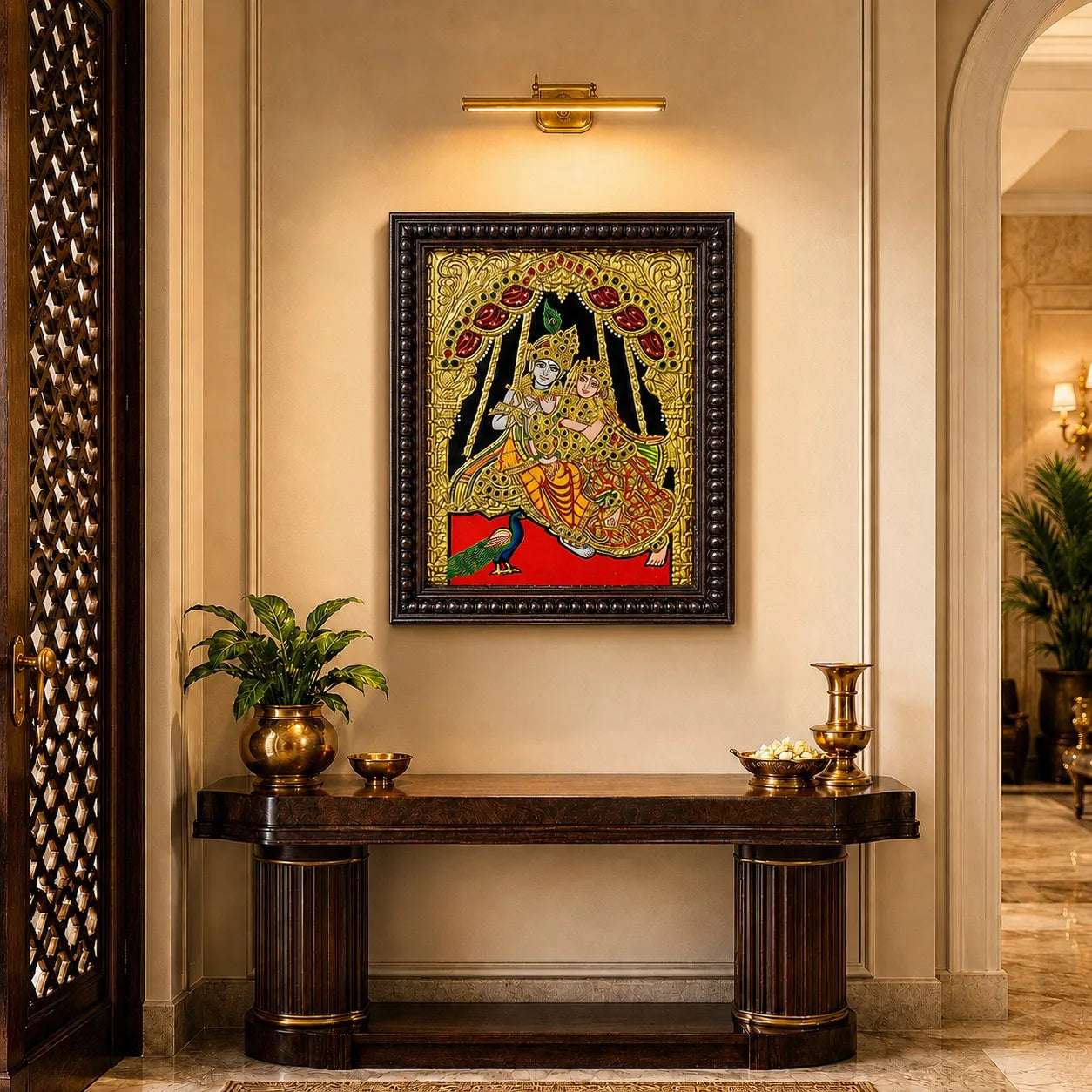
Tanjore Painting Themes Explained: What Each Subject Means
This blog explains the meaning behind popular Tanjore painting subjects such as Ganesha, Lakshmi, Saraswati, Radha-Krishna, Murugan and Dashavatara. It connects each deity to its spiritual symbolism and suggests suitable home placements like entrance, study, living room, office and prayer space.
0 comments
Inside an Artist's Studio: How a Tanjore Painting Takes Three Months to Complete
This blog explains the complete making process of an authentic Tanjore painting. It covers board preparation, cloth mounting, chalk priming, traditional drawing, colour application, raised gesso work, 22K gold leaf application, stone setting and final detailing. It shows why genuine Tanjore art takes months to complete.
0 comments
Original Tanjore vs. Printed Copy: How to Spot a Fake Before You Spend ₹50,000
This blog helps buyers identify the difference between authentic hand-painted Tanjore paintings and printed copies. It explains practical checks like the touch test, gold quality, real stones, eye detailing, price logic and artist provenance so buyers can avoid fake or mass-produced artworks.
0 comments
Tanjore Paintings 101: Gold Leaf, Gemstones, and 1,500 Years of Sacred Art
This blog introduces Tanjore paintings as a sacred Indian art form known for real gold leaf, raised gesso relief work, gemstones, devotional subjects and royal South Indian craftsmanship.
0 comments
A Beginner’s Guide to Buying Radha Krishna Tanjore Paintings Online
Art has never been anything but a bridge between spirituality and beauty, and few pieces as beautifully capture this exchange...
0 comments
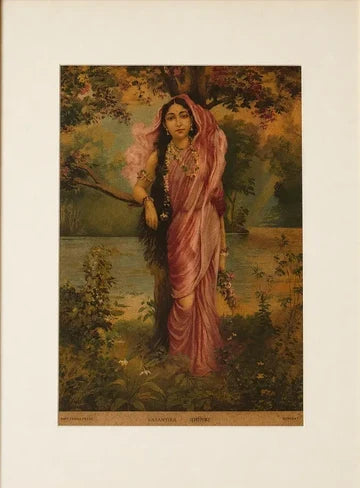
What Is Oleography? The Printing Technique That Made Ravi Varma Famous
This blog explains oleography as the printing technique behind Ravi Varma’s famous art prints. It covers chromolithography, colour layering, textured paper, varnish, the Ravi Varma Press, technical excellence and why original oleographs have historical value that modern digital reprints cannot fully replicate.
0 comments
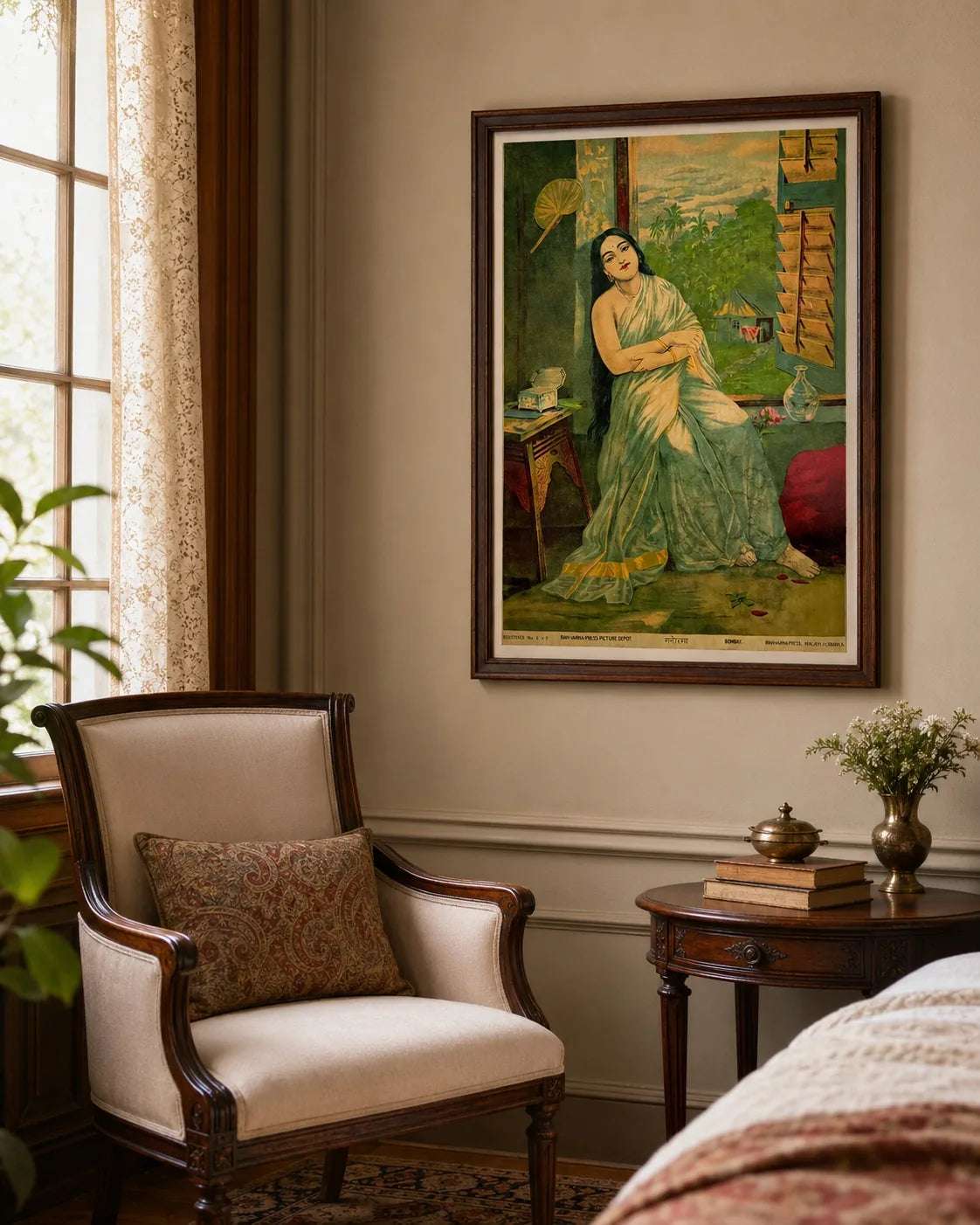
Collecting Ravi Varma Oleographs: Value, Rarity, and How to Care for Them
This blog works as a collector’s guide for Ravi Varma oleographs. It explains what affects value, including condition, subject, rarity, size, provenance and restoration. It also gives care tips for handling, framing, storing and displaying old oleographs safely using archival materials and UV protection.
0 comments
The Women of Ravi Varma: A Guide to His Most Iconic Portraits
This blog explores Raja Ravi Varma’s most iconic female subjects, including Lakshmi, Saraswati, Shakuntala, Damayanti and Radha. It explains how his portraits shaped Indian visual imagination, devotional culture, mythological storytelling and the way many Indians picture goddesses and heroines today.
0 comments
Original Oleograph vs. Modern Reprint: How to Identify a Genuine Ravi Varma Print
This blog helps collectors understand the difference between original Ravi Varma oleographs and modern reprints. It explains how to identify genuine period prints through old paper, aged varnish, colour quality, printing marks, provenance, restoration history and seller documentation.
0 comments
Raja Ravi Varma and the Oleograph: How One Artist Democratized Art in Colonial India
This blog explains how Raja Ravi Varma transformed Indian art by using oleograph printing to make fine art and Hindu deity imagery accessible to ordinary homes. It covers his artistic background, the Ravi Varma Press, chromolithography, colonial India, devotional prints and his lasting impact on Indian visual culture.
![[Product Title] - Avyaan](http://aavyaan.com/cdn/shop/files/Grace_of_Beginnings_Ganesha_in_Tanjore_Gold_800x800_5057dc37-751a-4085-b2c1-a1a947001f54.webp?v=1782757109&width={width})
![[Product Title] - Avyaan](http://aavyaan.com/cdn/shop/files/Mockup_Goddess_Laxmi_1.png?v=1782757021&width={width})
![[Product Title] - Avyaan](http://aavyaan.com/cdn/shop/files/26.png?v=1782757165&width={width})
![[Product Title] - Avyaan](http://aavyaan.com/cdn/shop/files/Tanjore-radhakrishna-png_1.webp?v=1782757119&width={width})
![[Product Title] - Avyaan](http://aavyaan.com/cdn/shop/files/Mockup_3.2_1-1.png?v=1782757070&width={width})
![[Product Title] - Avyaan](http://aavyaan.com/cdn/shop/files/Radiance_of_Prosperity_Gaja_Lakshmi_in_Tanjore_Splendor_2.webp?v=1782757084&width={width})
![[Product Title] - Avyaan](http://aavyaan.com/cdn/shop/files/29.png?v=1782757084&width={width})